What Keir Starmer's resignation means for European security
British Prime Minister Keir Starmer was widely known for his support of Ukraine and his efforts towards a new EU–UK defense partnership. What will happen
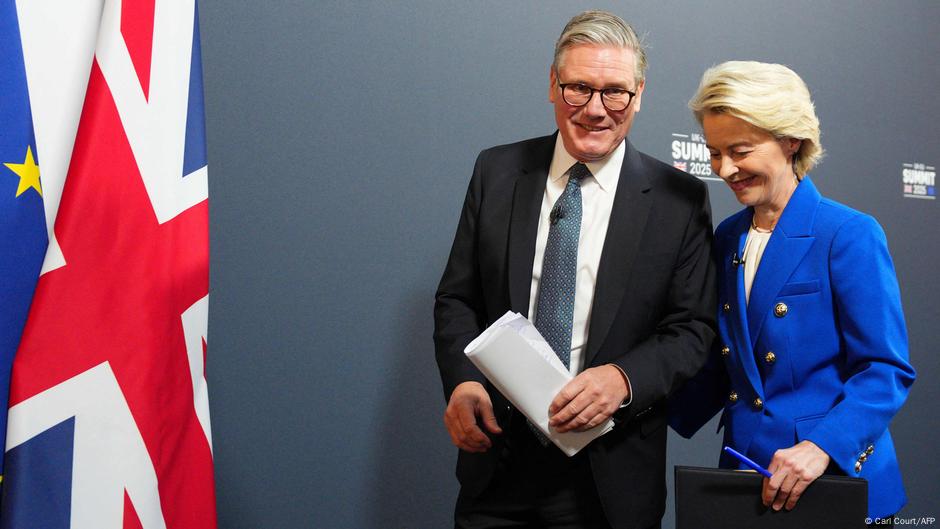
British Prime Minister Keir Starmer was widely known for his support of Ukraine and his efforts towards a new EU–UK defense partnership. What will happen to those policies now that Starmer has announced his resignation? British Prime Minister Keir Starmer, who on Monday announced he would resign, may not have been that popular with his British constituents lately, but he certainly had many friends among the European Union's top politicians. As European Commission President Ursula von der Leyen reacted to his resignation on Monday, she wrote: "European and Ukrainian security is stronger because of you. Thank you, dear Keir." French President Emmanuel Macron also expressed gratitude for Starmer's involvement in Europe's "coalition of the willing" for Ukraine, and for revitalizing EU-UK relations. UK Prime Minister Keir Starmer quits To view this video please enable JavaScript, and consider upgrading to a web browser that supports HTML5 video It was as a supporter of Ukraine in its war against Russia that Starmer really cemented his reputation in Europe. Together with Macron, Starmer was a leader of the so-called "coalition of the willing." The alliance of 35 states supports Ukraine with military aid and, should there be a ceasefire, would then help Ukraine with longer-term defense. On social media platform X, Ukrainian President Volodymyr Zelenskyy also wrote of his gratitude to Starmer.
Starmer was a very active and reliable partner within the "coalition of the willing," confirms Olivia O'Sullivan, director of the UK in the World program at British think tank, Chatham House. O'Sullivan notes that Starmer worked with other leaders to consider how Europe could play a strategic role in securing peace even though he struggled to find the funds needed to meet his self-imposed military spending targets. But that's a challenge that the next British prime minister is also going to face, she points out. Ukrainian President Volodymyr Zelenskyy (center) and EU leaders at a meeting of the 'coalition of the willing' Image: Ukrainian Presidential Press Service/Handout via REUTERS Helping set EU policy Britain also played a major role advocating for Ukraine within what is known as the E3 format. This framework includes Germany, France and the UK and is supposed to help coordinate the foreign and security policy of all three. O'Sullivan says the E3 is behind a lot of European strategy, not only regarding Ukraine but also in dealing with the US government, which is increasingly playing a less significant and also less predictable role in European security. For example, the E3 format has been used to make statements in response to US demands on how Europeans should contribute to securing the Strait of Hormuz.
 The BriefWire