In a first, Canada says Khalistanis planted Air India bomb. Why this is big for India
Over four decades after a bomb exploded aboard Air India Flight 182, killing 329 people, the Canadian Security Intelligence Service (CSIS), Ottawa's primary intel agency
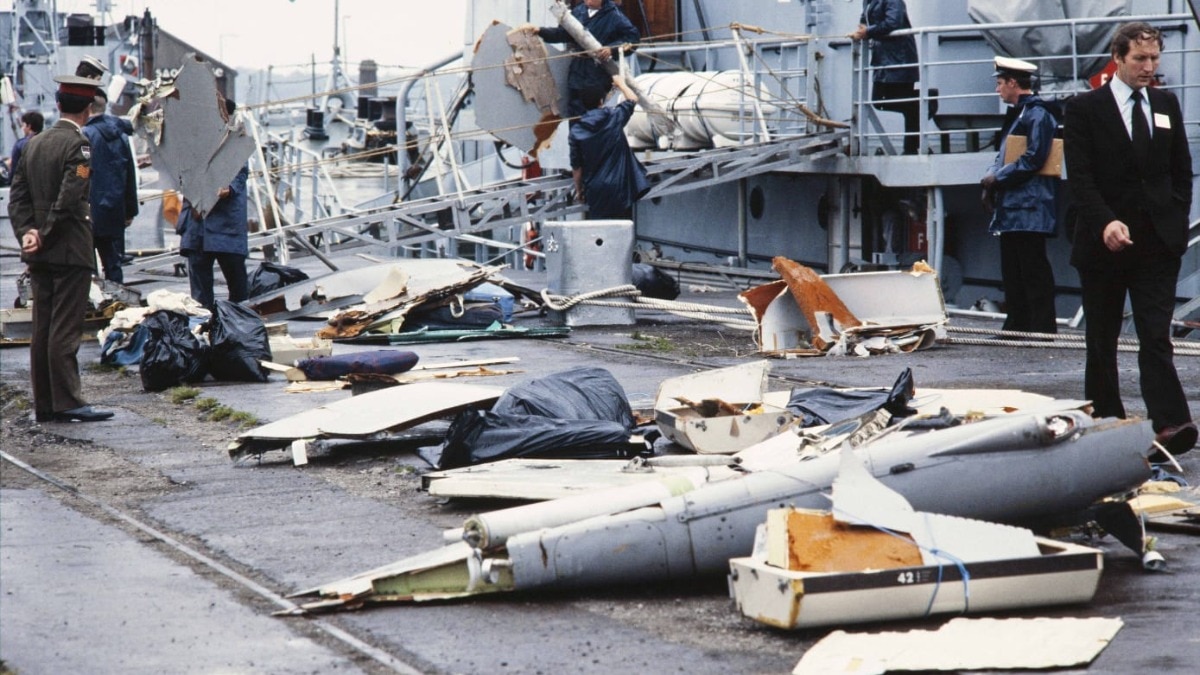
Over four decades after a bomb exploded aboard Air India Flight 182, killing 329 people, the Canadian Security Intelligence Service (CSIS), Ottawa's primary intel agency, has for the first time ever, explicitly blamed Canada-based Khalistani terrorists for planting the explosive device. While New Delhi has maintained since day one that the 1985 tragedy was a Khalistani plot, Ottawa had historically avoided naming the movement in its public memorials. Read Full Story In a Facebook post on Wednesday commemorating the tragedy, CSIS directly attributed the attack to the separatist movement. The agency stated, "On June 23, 1985, a bomb planted by Canada-based Khalistani extremists destroyed the aircraft, killing everyone on board — most of them Canadians. It remains the deadliest terrorist attack in Canada’s history and a defining moment for our national security community." The bombing of Air India Flight 182, a Boeing 747 nicknamed Emperor Kanishka, en route from Toronto to Mumbai, remains the worst terrorist attacks in Canadian history and was the world's deadliest act of aviation terrorism until the September 11 attacks in 2001. The explosion, caused by a bomb planted in the luggage compartment by members of the banned Khalistani group, Babbar Khalsa, tore the aircraft apart over the Atlantic Ocean, killing all passengers and crew on board. In 2005, Canada officially designated the anniversary of the tragedy, June 23, as the Day of Remembrance for Victims of Terrorism. CSIS's decision to explicitly blame the Khalistani movement comes just months after the agency released its annual report flagging Khalistani extremists as a potent national security threat. In that report, CSIS warned that Canada-based Khalistani extremist (CBKE) groups are actively using Canadian soil to "promote their violent extremist agenda" as well as fund and orchestrate "violent activities". Canada has for decades refused to pay heed to New Delhi's concerns that Ottawa was sheltering and enabling Khalistani activities, long after the movement itself fizzled out in India.
Successive Canadian administrations, most notably that of former Prime Minister Justin Trudeau — consistently clashed with India over the issue, with the Trudeau government going as far as to accuse New Delhi of orchestrating a campaign of violent transnational repression against Canadian citizens. But with Canadian agencies finally waking up to the threat posed by Khalistani networks that have been allowed to operate for so long on their soil, India's stance finally seems to have been vindicated. WHY DID IT TAKE SO LONG FOR CANADA TO BLAME KHALISTANIS FOR THE AIR INDIA DISASTER? Before examining why Canada's recent acknowledgement of Khalistani involvement in the Air India bombing matters to India, it is crucial to ask why it took Ottawa more than four decades to arrive at this point. The delay stems primarily from a catastrophic failure within Canada's security apparatus. A 2010 public inquiry, led by former Supreme Court Justice John Major, concluded that a "cascading series of errors" happened by national agencies, which severely undermined the case. Most damningly, an intense turf war between the Canadian Security Intelligence Service (CSIS) and the Royal Canadian Mounted Police (RCMP) paralysed the investigation. While CSIS had actively monitored Babbar Khalsa leader Talwinder Singh Parmar, the agency destroyed hundreds of hours of critical wiretap recordings — erasing evidence that could have secured swift criminal convictions. Compounding this intelligence failure was a profound institutional apathy. Although 268 of the 329 victims were Canadian citizens, the attack was widely dismissed by politicians and the public as a distant "Indian" problem. This systemic bias stripped the investigation of political urgency, a failure later acknowledged by Prime Minister Stephen Harper in 2010, who noted that families were treated with institutional indifference. Legal roadblocks further delayed accountability. Severe witness intimidation, including the targeted murders of key witnesses, hampered investigators for decades.
 The BriefWire