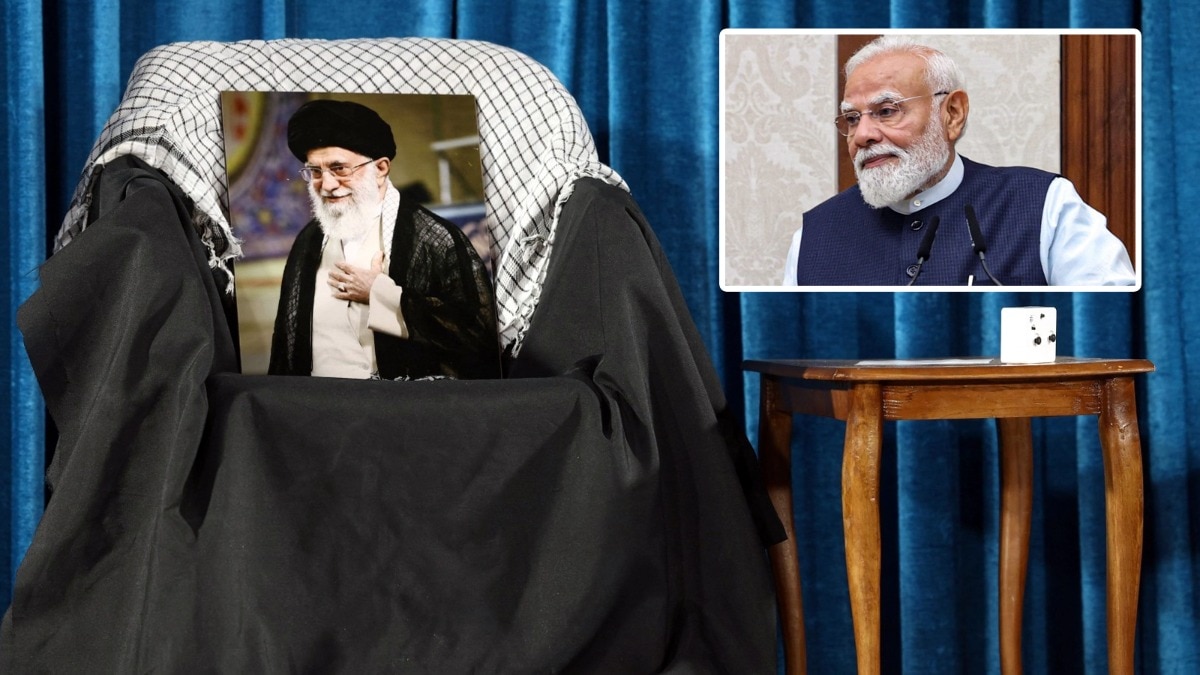
Why Khamenei funeral invite for PM Modi puts India in a delicate spot
The invitation from Iran for Prime Minister Narendra Modi to attend the state funeral ceremonies for the late Supreme Leader Ayatollah Ali Khamenei has presented
The invitation from Iran for Prime Minister Narendra Modi to attend the state funeral ceremonies for the late Supreme Leader Ayatollah Ali Khamenei has presented New Delhi with a diplomatic dilemma. Khamenei, who was killed in US-Israeli strikes on February 28, will be buried in Mashhad after funeral processions in Tehran, Qom and parts of Iraq. The funeral will be scheduled between July 4 and 9. Read Full Story How India responds to Iran's invitation, and whether it sends a high-level representative or not, is likely to be watched closely by countries across the region and beyond. India has had longstanding ties with Iran based on energy, trade, connectivity and cultural links as well. At the same time, its strategic relationships with the US, Israel and key Gulf nations like the UAE have grown significantly over the years. Any decision on representation at the funeral will, therefore, require careful consideration. India has dealt with similar situations before. When Iranian President Ebrahim Raisi died in a helicopter crash in May 2024, New Delhi declared a day of national mourning and sent then Vice President Jagdeep Dhankhar to Tehran for the funeral. The move reflected the importance India attaches to its relationship with Iran while remaining consistent with diplomatic protocol. The circumstances surrounding Khamenei's death, however, make the situation more sensitive. He was killed on the first day of the military confrontation involving the US and Israel. India initially maintained silence following the strikes, with its first formal gesture being Foreign Secretary Vikram Misri signing the condolence book at the Iranian Embassy in New Delhi.
Prime Minister Modi has repeatedly called for dialogue between Iran and the US, restraint and respect for sovereignty, arguing that conflicts cannot be resolved through military means alone. A decision to send a senior representative would be in line with India's earlier approach. It would also underline New Delhi's commitment to maintaining ties with Iran regardless of external pressures. At the same time, such a move could attract attention in Washington and Jerusalem, given their role in the events leading to Khamenei's killing. Khamenei, as the Ayatollah, was also the leader of Shia Muslims worldwide. After Iran, India is home to the biggest Shia population in the world. That makes the funeral of Khamenei even more important for New Delhi. WHY IRAN MATTERS TO INDIA, AND THE US-ISRAEL FACTOR India's relationship with Iran goes well beyond symbolism. The Chabahar Port project, a flagship strategic investment for New Delhi, has faced significant challenges in recent months amid the expiry of the US sanctions waiver in April 2026 and the broader regional conflict. Nevertheless, it continues to hold immense long-term importance, offering vital access to Afghanistan, Central Asia, and Europe while bypassing Pakistan. New Delhi remains engaged with both Tehran and Washington to explore ways to sustain and eventually revive the project's full potential. Energy security is another important factor. Although India has diversified its oil imports, Iran's location near the Strait of Hormuz means developments there have a direct impact on India's energy interests. The presence of millions of Indian expatriates across the Gulf also makes regional stability a priority for New Delhi.
 The BriefWire