India braces for drought as El Nino threatens monsoon rains
Officials and farmers in India are preparing for what meteorologists say could be the driest monsoon season in a decade. Gurpreet Singh, a paddy farmer
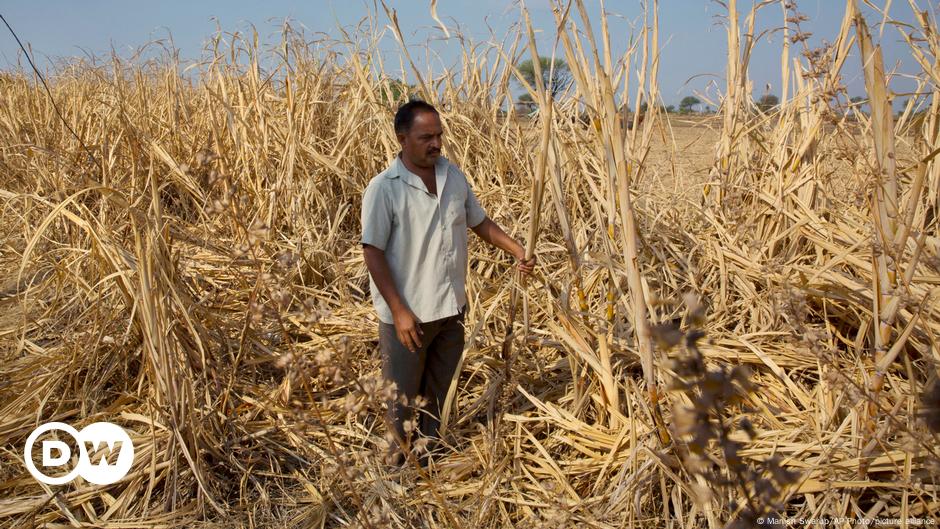
Officials and farmers in India are preparing for what meteorologists say could be the driest monsoon season in a decade. Gurpreet Singh, a paddy farmer in India's northern Punjab state, is among millions of farmers anxiously watching the progress of India's monsoon season, with this year's El Nino raising concerns for agriculture, food prices and water security. El Nino happens when sea surface temperatures in the tropical Pacific Ocean become unusually warm, altering rainfall patterns and weather systems across large parts of the world, including India. This year, a very strong El Nino is forecast, which has historically been associated with weaker monsoon rains in India. A prolonged rainfall deficit during the "kharif," as the summer monsoon crop season is called, could force farmers to rely more heavily on irrigation, raising cultivation costs and increasing pressure on already-stressed groundwater reserves. "We can manage a short dry spell," Singh told DW. "The real worry is if the rains remain below normal through the season," he added. India plans for a weaker monsoon With India facing theprospect of a weaker-than-normal monsoon and potential disruptions to the summer-sown crop season, India's Ministry of Agriculture and Farmers' Welfare has drawn up contingency plans for regions most vulnerable to rainfall deficits. It has identified 111 districts with irrigation coverage of 25% or less as high-priority areas requiring intervention should monsoon conditions deteriorate. Tamil Nadu farmers learn to thrive despite water scarcity To view this video please enable JavaScript, and consider upgrading to a web browser that supports HTML5 video "We are facing potential conditions for a weak monsoon due to El Nino, an impact that is already becoming visible, as the monsoon is currently significantly delayed," said Agriculture Minister Shivraj Singh Chouhan at a recent meeting.
"Overall, rainfall has been 43% below normal so far. Weather forecasts indicate that conditions are likely to remain weak" during July, he added. The Agriculture Ministry has also set up an El Nino Monitoring Cell and a Crop Weather Watch Group, while states have been asked to establish control centers and coordinate closely with the federal government as officials track rainfall, crop conditions and sowing progress. 'Super El Nino' could deepen water shortages The implications of a dry summer extend well beyond crop production. Nearly half of India's farmland remains dependent on rainfall, making the monsoon crucial for agricultural output, rural incomes and food prices. The June-September rains also replenish reservoirs and groundwater supplies that millions depend on for drinking water. Weak rainfall and rising temperatures also harm livestock, fisheries and forests, threatening livelihoods across rural India. Some 260 million people in India work in farming, accounting for over 45% of the country's workforce, according to government figures. El Nino threatens to make the world even hotter To view this video please enable JavaScript, and consider upgrading to a web browser that supports HTML5 video India's driest monsoon in a decade? Sunita Narain, director general of the Centre for Science and Environment, said that this year's strong El Nino is unfolding as climate change is already making India's rainfall more volatile, with more rain falling in fewer days and extreme weather events becoming more frequent. "A super El Nino this year will test how climate change is reshaping India's rainfall economy," Narain told DW.
 The BriefWire