Why is the passport just a travel document? 5 big questions and an answer
A senior official of the Ministry of External Affairs (MEA) on Wednesday said that the Indian passport is just a "travel document" and not a
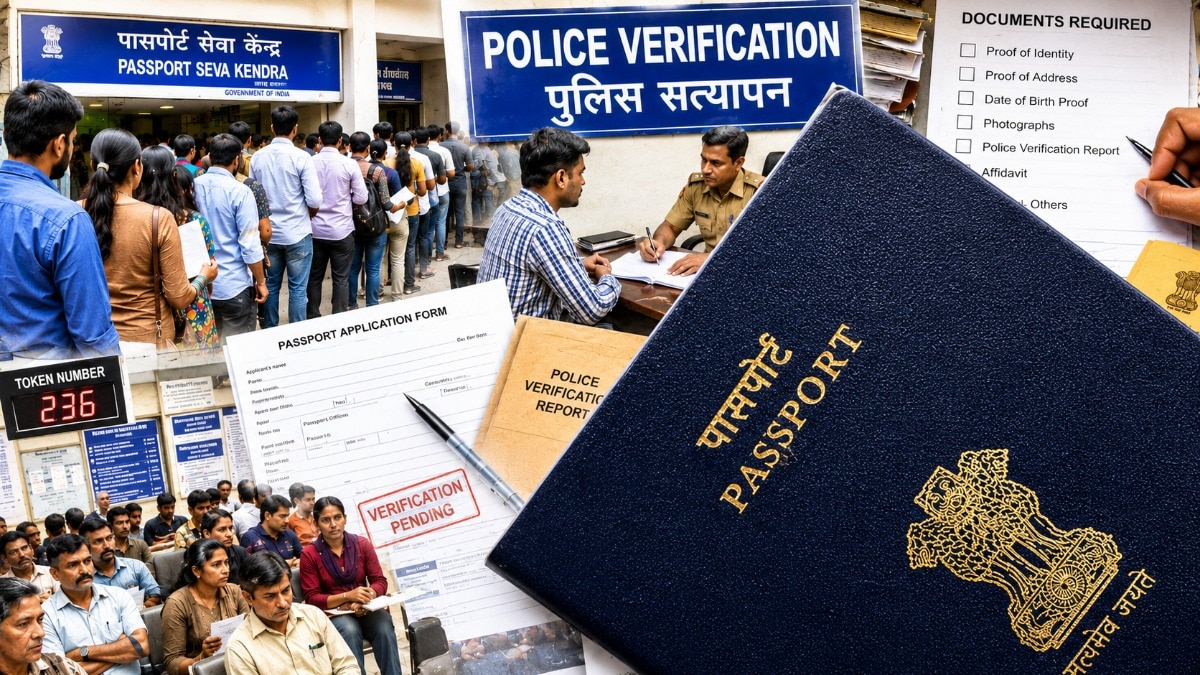
A senior official of the Ministry of External Affairs (MEA) on Wednesday said that the Indian passport is just a "travel document" and not a "citizenship document". The remarks were made while speaking at an event held to highlight the expansion of passport services across the country on the 14th Passport Seva Divas. Since then, people have flooded social media platforms, debating what a passport stands for and why there is so much vetting if it is just a travel document. Read Full Story The reason for such uproar is clear. From extensive paperwork, and queues at Passport Seva Kendras (PSKs) to police verification and payment of fees, obtaining an Indian passport involves a lengthy process. The passport attests the nationality of Indians when they are abroad, but it isn't a document of citizenship, officials clarified in response to a query. However, a passport has never been a document that proves citizenship. The statement by the MEA official is in the spotlight after people and Opposition leaders started questioning, "Which document then is proof of citizenship?" There are five questions, and an answer. 1. Why do people need to surrender their Indian passport after acquiring foreign citizenship? India does not permit dual citizenship under the Citizenship Act, 1955. Once an Indian citizen voluntarily acquires the citizenship of another country, Indian citizenship automatically ceases. Retaining or using an Indian passport thereafter is unlawful and can attract penalties under the Passports Act, 1967. The government says surrendering the passport helps update official records, cancel the document, and issue a Surrender Certificate or a Renunciation Certificate. These documents are often required for obtaining an OCI card or an Indian visa. The argument seems fair. But the question that naturally comes up is that if a passport is not considered conclusive proof of citizenship, why is there such urgency in taking it back? If it is merely a travel document, what exactly is the state reclaiming? Is it a symbol, a record, or something more? The contradiction is difficult to ignore.
On one hand, the passport is described as a document that does not by itself establish citizenship. On the other hand, its possession by a former citizen is treated seriously enough to attract penalties. For a document that supposedly serves a small purpose, why does the government appear keen to get it back? 2. Why is there police verification before a passport is issued? Police verification is intended to confirm an applicant's identity, address, and background. Authorities argue that it helps detect fraudulent applications, prevent duplicate identities, verify criminal records, and ensure that passports are not issued to individuals who may pose a threat to national security. The procedure is hectic, but it still sounds straightforward. Many applicants describe the process of police verification as stressful and intrusive. Over the years, there have been allegations of unnecessary delays, repeated visits to police stations, and demands for excessive documentation. After navigating the maze of paperwork, verification checks, and bureaucratic hurdles, what does the successful applicant finally receive? According to recent official clarifications, he gets access to merely a "travel document". Why the stringent police checks was among the questions posed by Shiv Sena (UBT) MP Aaditya Thackeray. "If the MEA believes Passport is not a document of citizenship: 1) What do the police verify before granting a passport? 2) Does our country give passports as travel documents to non Indians as well?" Thackeray posted on X. 3. Does the government issue passports to non-Indians? If the passport isn't proof of citizenship, does the government issue Indian passports to non-Indians? The answer to this question, surprisingly, is a yes. Section 20 of the Passports Act, 1967, empowers the Central Government to issue a passport or travel document to a person who is not an Indian citizen if it considers such issuance necessary in the public interest. Such cases are rare and exceptional, and receiving such a document does not make the holder an Indian citizen. "Could the government tell us how many non-Indian citizens it has issued Indian passports to?" senior journalist Vir Sanghvi asked on X amid the debate.
 The BriefWire