'Why Not In India If Pakistan Has It': NCP MLA Sana Malik Issues Clarification After 'Demanding' Polygamy In India
'Why Not In India If Pakistan Has It': NCP MLA Sana Malik Issues Clarification After 'Demanding' Polygamy In India Reported By, Last Updated: June 25
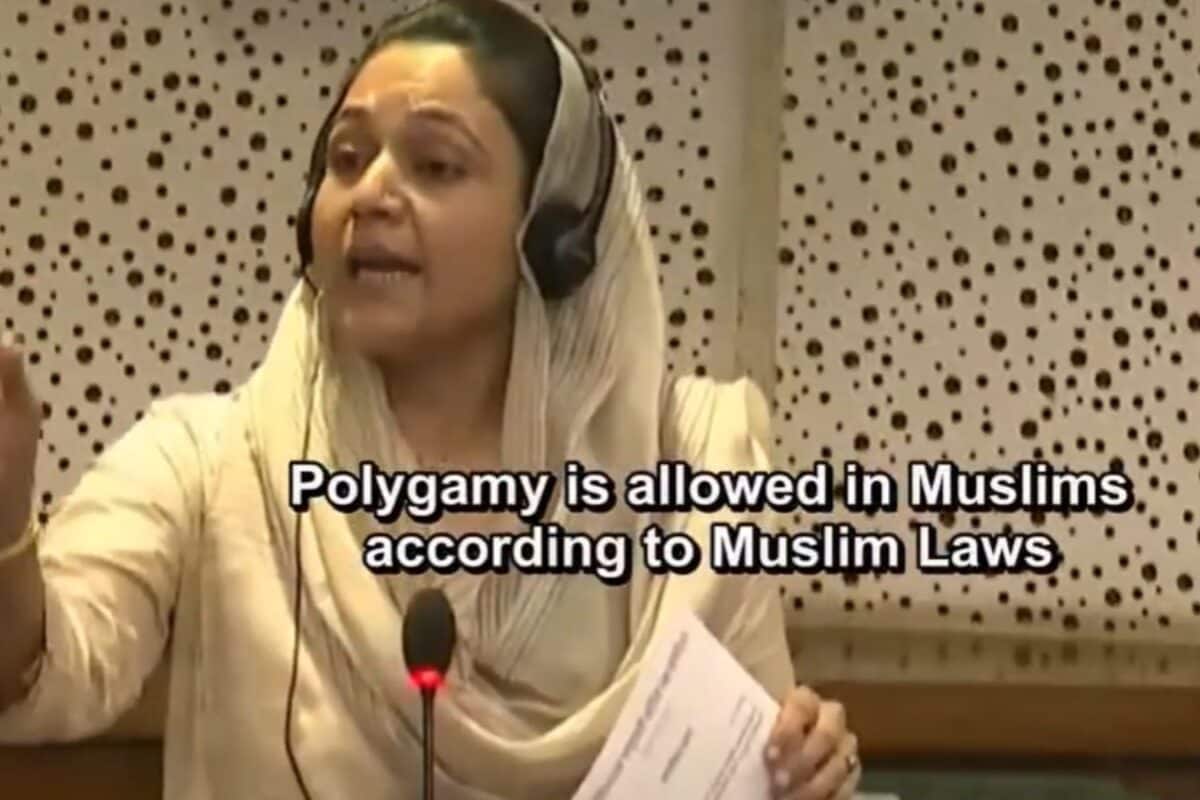
'Why Not In India If Pakistan Has It': NCP MLA Sana Malik Issues Clarification After 'Demanding' Polygamy In India Reported By, Last Updated: June 25, 2026, 14:10 IST Sana Malik clarified that her remarks were limited to the existing legal position under Muslim Personal Law and the constitutional protection available to religious practices. NCP MLA Sana Malik said polygamy is permitted under Muslim personal law and referred to Pakistan while discussing its legal framework. (Source: X) A sharp exchange over the Uniform Civil Code (UCC), polygamy and Muslim women’s rights has triggered a fresh political debate in Maharashtra, with BJP MLA Devyani Pharande, SP leader Abu Azmi and NCP MLA Sana Malik staking out contrasting positions during the ongoing Monsoon Session of the Maharashtra Assembly. The issue surfaced in the Assembly on Tuesday when Nashik BJP MLA Devyani Pharande pushed for the implementation of a Uniform Civil Code in the state, arguing that it was necessary to ensure justice and protection for women affected by polygamy and triple talaq. Speaking to the media, Pharande said she had raised cases in which Muslim women had approached the police after allegedly being forced by their husbands to accept triple talaq and threatened if they refused. Referring to three FIRs lodged in Nashik, she said the police had acted firmly but stressed that the larger concern was ensuring compensation for affected women, their children’s education and their socio-economic security.
Pharande argued that Maharashtra should follow states such as Goa, Assam and Uttarakhand in moving towards a UCC. She maintained that the issue was not about opinions or sentiments, but about ensuring equality under the Constitution. “It is the government’s job to ensure equality for all. This country runs on the Constitution, not on anyone’s opinions. UCC means uniformity for all, and the law should be the same for everyone," she said. Pharande further said that the minister had responded positively in the Assembly and indicated that a committee would be formed to examine the issue and take steps towards implementing the UCC and banning polygamy. Her remarks drew a political response from Samajwadi Party leader Abu Azmi, who accused the government of using the UCC debate to polarise communities and target Muslims instead of focusing on development. Azmi argued that if a law is meant for the entire country, it should apply equally to everyone without selectively targeting one community while making exceptions for others. He said that while criminal and civil matters are already governed by common laws, personal religious practices such as marriage should remain outside government interference. He also criticised the use of terms such as “Love Jihad", calling them fabricated and politically motivated, and warned that any attempt to introduce laws that directly infringe upon religious freedoms would be strongly opposed.
 The BriefWire