Centre offering Ladakh unique governance model, demand for Statehood to continue: Leh Apex Body leader
Last Friday (May 22, 2026), the Union Home Ministry proposed a new mechanism to grant Ladakh greater legislative, financial and administrative powers within the existing
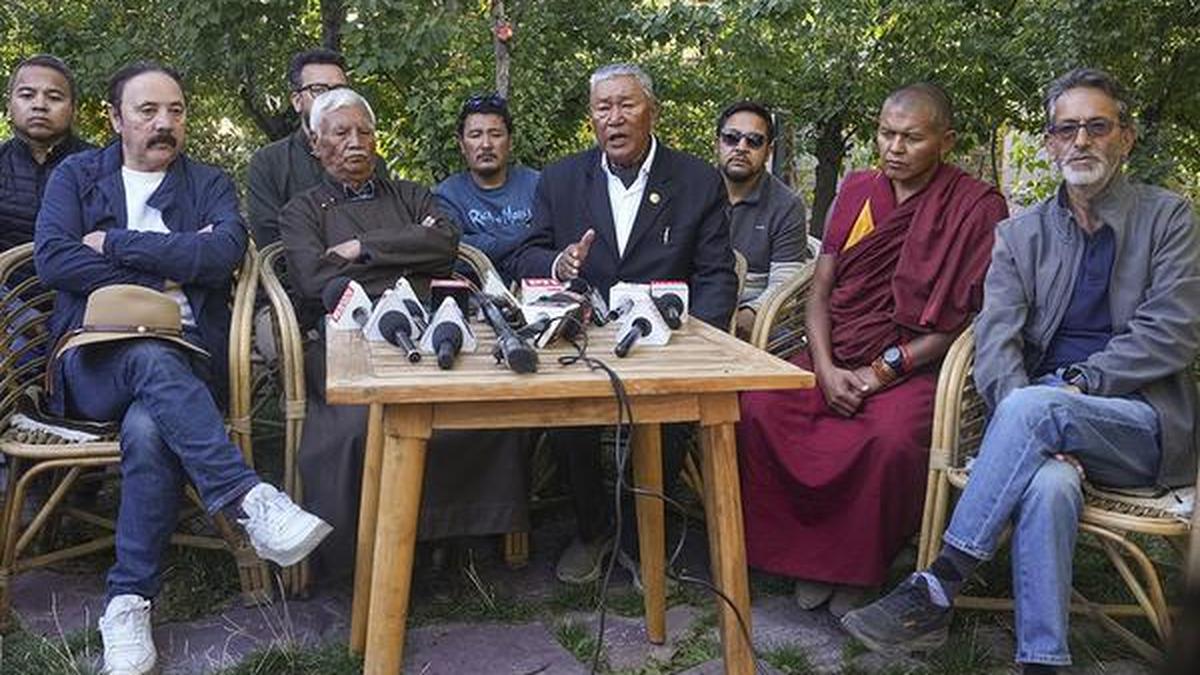
Last Friday (May 22, 2026), the Union Home Ministry proposed a new mechanism to grant Ladakh greater legislative, financial and administrative powers within the existing Union Territory framework. The proposal was made in a meeting with the Leh Apex Body (LAB) and Kargil Democratic Alliance (KDA), the two major civil society bodies from Ladakh. Since 2020, LAB and KDA have been demanding constitutional safeguards such as Statehood and the inclusion of Ladakh under the Sixth Schedule of the Constitution, thus giving it a tribal status and an autonomy to decide the laws on land, jobs and culture. Ladakh, earlier a part of Jammu & Kashmir, became a Union Territory in 2019 following the reading down of Article 370 of the Constitution. Cherring Dorjay Lakruk, co-convenor, LAB and the president of the influential Ladakh Buddhist Association, spoke with The Hindu on the proposed agreement. What were the issues discussed during the May 22 meeting with the Home Ministry? The Central government has reservations about Sixth Schedule status and also in granting Statehood to Ladakh. They never agreed to these two demands in the talks held in the past. During the last round of talks (February 4), they offered safeguards available under Article 371 A of the Constitution. On May 22, we did raise our existing demands. We said if you cannot give Statehood, then give us UT with legislature, even that was not acceptable to them as Ladakh would then have to generate its own revenue without Central assistance. The government has promised us legislature at UT level and protection under Article 371.
If they do not concede to Sixth Schedule, Article 371 is acceptable. Since 2020, you have demanding Statehood and the Sixth Schedule. Is this not a climbdown from your original demands? The government is adamant on not giving Sixth Schedule status to Ladakh. It said the entire State cannot be included under Sixth Schedule. It is not true; Meghalaya is an example. Under this provision, legislative powers are there with districts but under Article 371, we will get safeguards for land, employment, environment at the UT level. Will you continue to demand Sixth Schedule or Statehood? The Centre has agreed broadly to the proposal and intense negotiations will go on to decide the nitty-gritty of it. We are not abandoning our demand for Statehood. Even if at present, Statehood is not possible, we will continue with the demand. So, what you are being offered is a unique arrangement by the Centre where the head of the elected representatives will not be referred to as a Chief Minister? This is a unique arrangement in the entire country. The government did not say that the elected head cannot be referred to as a CM. We are yet to get a clarity on what the elected members would be known as. There are many issues that are to be discussed with the government. They will come up with a proposal and we will also send ours. Is there a timeline? We have said that we will submit our proposal within a week, but the government has not fixed a deadline or a timeline.
We insisted that it should be done as soon as possible and the next meeting should be called soon. The problem is Home Ministry calls for a meeting and then they forget about it for the next four to five months. It is being stretched and we want the issues to be resolved and finalised soon. Was the September 24, 2025, violence in Leh city, where four people were killed during protests, was discussed in the meeting with the Ministry? We reiterated our demand for compensation to the next of kin of the deceased and those injured during the violence and also insisted on withdrawal of criminal cases against the locals. The government said when the final agreement is reached, then these issues can be looked into sympathetically. Does the government agree that the four persons were killed in police firing? It is beyond doubt that they were killed in police firing, nobody else fired other than the police that day. The judicial inquiry led by retired Supreme Court judge (Balbir Singh Chauhan) is yet to submit its report. Those who deposed before the commission have been cross-examined. We are waiting for the final report. The proceedings of the commission have been going on for long and the commission has not functioned regularly. There have been multiple breaks as the judge is in Delhi. The government had earlier detained climate activist Sonam Wangchuk under Security Act and now he is participating in the talks. What is his role in the ongoing negotiations? He is like any other member of the Leh Apex Body.
He attended the sub-committee meeting (May 22) and will participate in the high-powered committee meeting (led by Minister of State for Home Nityanand Rai) next. Why are you protesting since 2020? When we were part of Jammu & Kashmir, we were protected by Article 370 of the Constitution. Our land was safe from outsiders. Since Article 370 was removed, we are without safeguards. There is a lot of barren land here, if outsiders come and settle here, we will be minorities in our own land. People feared this and that is why we hit the streets. Under Article 370, outsiders could not buy land or get jobs here. No one from J&K came and settled here in the past 70 years. How will the economy grow if investments from outside are not allowed? Whatever industrialisation is there or tourism sector, that should happen with the consent of the local people, not with the orders of bureaucrats or outsiders. They do not understand the aspirations of the people. That is why we are demanding legislature so that laws are made in accordance with people’s consent. There is no scope for mining. We demand that solar power plants should be installed with people’s consent, not by uprooting the locals. We will re-look at the new decisions taken by the Lieutenant Governor such as creation of five new districts and the new industrial policy. People were not consulted and stakeholders were also not consulted. We do not want reckless privatisation in Ladakh.
 The BriefWire