What Is A Doublet Earthquake And Why Was Venezuela Hit By Twin Shocks Just 39 Seconds Apart?
What Is A Doublet Earthquake And Why Was Venezuela Hit By Twin Shocks Just 39 Seconds Apart? Published By, Last Updated: June 25, 2026, 09:07
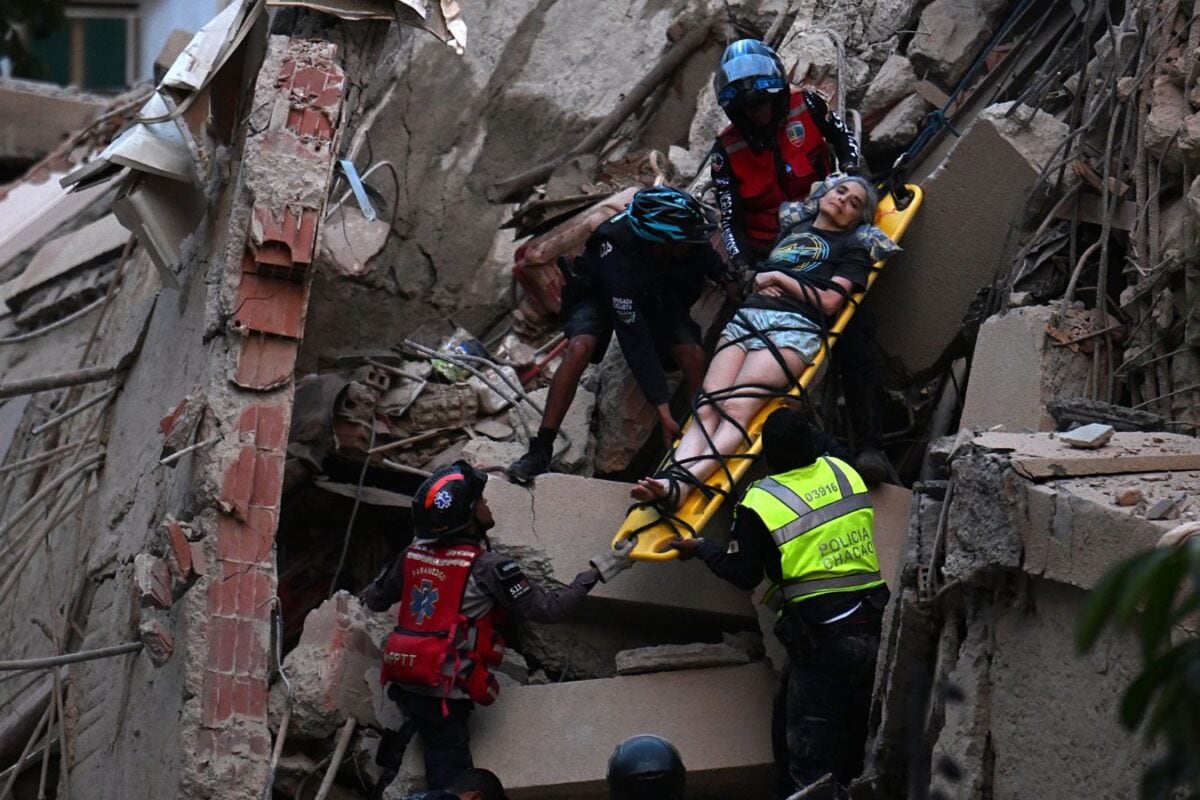
What Is A Doublet Earthquake And Why Was Venezuela Hit By Twin Shocks Just 39 Seconds Apart? Published By, Last Updated: June 25, 2026, 09:07 IST Seismologists classify a doublet when the two earthquakes have similar magnitudes, occur within a relatively short time interval and originate from closely related fault systems Rapid Read The first earthquake measured 7.2 in magnitude and was followed just 39 seconds later by another major tremor measuring 7.5 in the same offshore region north of Venezuela. (AFP) As a powerful 7.2-magnitude earthquake struck off Venezuela’s Caribbean coast on Wednesday, residents had barely begun reacting when another major quake—this time of 7.5 magnitude—hit just 39 seconds later. The unusual sequence triggered tsunami warnings across parts of the Caribbean and forced Venezuelan authorities to declare an emergency. Seismologists describe such rare back-to-back events as a “doublet earthquake", a phenomenon in which two large earthquakes of nearly similar magnitude occur in the same region within a very short period of time. What Happened In Venezuela? According to the US Geological Survey (USGS), the first earthquake measured 7.2 in magnitude and was followed just 39 seconds later by another major tremor measuring 7.5 in the same offshore region north of Venezuela. The quakes were felt across Venezuela, Trinidad and Tobago, Puerto Rico and several Caribbean islands. Tsunami advisories and warnings were briefly issued before being lifted. CNN reported that the twin quakes were among the strongest recorded in the region in almost a century. Videos shared on social media showed buildings swaying, residents rushing into the streets and debris falling from structures. Venezuelan authorities subsequently activated emergency response mechanisms as assessments of damage began.
What Is A Doublet Earthquake? A doublet earthquake occurs when two large earthquakes of comparable magnitude strike close together in time and location. Unlike a typical earthquake sequence, where a large mainshock is followed by smaller aftershocks, a doublet involves two major events that are both capable of causing significant damage. According to the Seismological Society of America, earthquake doublets generally occur when stress released by the first rupture rapidly transfers to a neighbouring fault segment, triggering another large rupture before the crust has time to stabilise. The phenomenon is rare because most earthquakes release enough accumulated tectonic stress to prevent another similarly large rupture from occurring immediately afterwards. Seismologists generally classify an event as a doublet when the two earthquakes have similar magnitudes, occur within a relatively short time interval and originate from closely related fault systems. Why Did The Second Quake Occur So Quickly? The major reason is stress transfer. According to the USGS, large earthquakes can alter stresses on nearby faults, sometimes increasing the likelihood of another earthquake occurring. While most triggered events are smaller aftershocks, in rare cases the transferred stress is sufficient to activate another major fault segment. The agency notes that a large earthquake can “trigger earthquakes on nearby faults" and occasionally even influence faults located much farther away. In Venezuela’s case, experts believe the first rupture likely changed stress conditions on an adjacent section of the fault system, causing a second large rupture just seconds later. Doublet Vs Aftershock: What’s The Difference? The distinction lies primarily in magnitude. In a conventional earthquake sequence, one large mainshock occurs first and smaller aftershocks follow which are generally much weaker than the main event.
 The BriefWire