India's only ancient Colosseum: 275-year-old Ahom marvel built with secret method
Asia’s first amphitheatre or perhaps a canopy that has watched nearly 275 years pass by still stands in silence in India’s northeastern landscape. In Assam
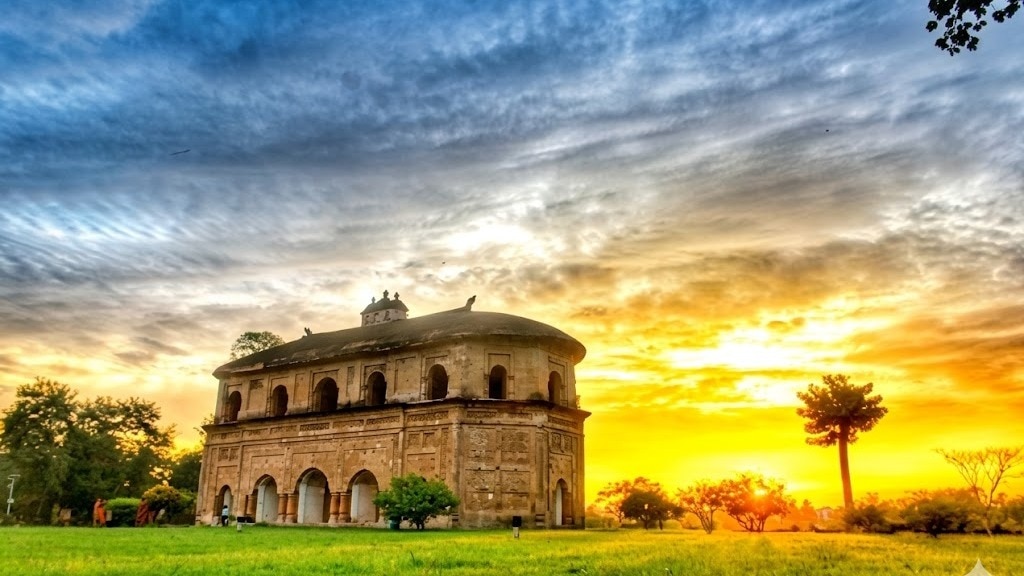
Asia’s first amphitheatre or perhaps a canopy that has watched nearly 275 years pass by still stands in silence in India’s northeastern landscape. In Assam, amid the remains of an old Ahom capital, rises a monument many call the ‘Colosseum of the East’, the Rang Ghar. Built in 1744 by Ahom king Swargadeo Pramatta Singha, the two-storey pavilion appears modest beside Rome’s famed Colosseum. Yet, when Prime Minister Narendra Modi recently shared a photograph with Italian Prime Minister Giorgia Meloni against the backdrop of the Roman amphitheatre, it revived an old curiosity: few know that India too possesses a centuries-old arena, carrying a blend of geometry and indigenous engineering. The royals used to watch games from here. Read Full Story At sunset, the Rang Ghar often turns into a silhouette against Assam’s changing skies. The structure, neither palace nor fort in the conventional sense, was built for spectacle, a balcony from where Ahom royalty witnessed contests, festivities and public gatherings that once animated an empire. A ROYAL GALLERY BUILT FOR ENTERTAINMENT, NOT WARFARE Unlike many monuments associated with kings and conquest, Rang Ghar emerged from leisure.
The amphitheatre overlooked the vast Rupohi Pothar, where festivities unfolded during the Ahom period. Wrestling bouts, buffalo fights, bullfights, cockfights, elephant contests and Bihu celebrations transformed the surrounding grounds into public theatres. For Ahom rulers, Rang Ghar functioned as a viewing gallery. Historians believe the original structure was erected in the late 17th century under Ahom ruler Swargadeo Rudra Singha using bamboo and wood. The early construction deteriorated with time and was destroyed around 1740. The surviving brick monument was later rebuilt by Ahom ruler Swargadeo Pramatta Singha in 1744. Photo:X THE ARCHITECTURE: GEOMETRY, SYMBOLISM AND ASSAMESE IDENTITY Rang Ghar’s design is what attracts tourists most. It is an octagonal layout. The building rises across two levels, while rows of arched openings produce an almost theatrical faade. An external staircase guides visitors upward, reinforcing its function as a royal viewing pavilion. Perhaps the most distinctive feature is the roof. Rather than adopting conventional domes, the roof resembles an inverted Ahom royal boat, a motif deeply embedded in Assamese cultural memory.
At both ends stand decorative makaras, mythical aquatic creatures often interpreted as protectors in South Asian architectural traditions. The structure carries unmistakable Assamese aesthetics instead of imported imperial forms. A STRUCTURE WITHOUT CEMENT, THE ASSAMESE ENGINEERING Rang Ghar survives partly because of a construction technique that appears unusual even today. The monument was built using thin baked bricks locally known as Hira-Kaam. Historical accounts suggest builders avoided modern cement altogether. Instead, an organic mortar mixture reportedly comprising sticky rice paste, duck eggs, fish, pulses and lime was used as binding material, evidence of indigenous engineering practices. Many ancient Indian structures reveal similar experimentation with organic compounds, but Rang Ghar remains among the better-known examples in northeastern India. 'COLOSSEUM OF THE EAST' Comparisons with Rome emerge primarily because of function rather than scale. The Roman Colosseum, constructed between 70 and 80 AD, hosted gladiator combats, animal hunts, executions and elaborate public spectacles before tens of thousands of spectators. Rang Ghar was considerably smaller. The analogy, therefore, rests less on architecture and more on spectacle.
Time has not spared the monument. Beyond the brick framework and arched gateways, much of the sculptural ornamentation has disappeared. What survives today are fragments, enough to indicate artistic detail but insufficient to reconstruct the monument’s original grandeur fully. Even now, local communities organise rituals and celebrations connected to Assam’s traditions. During Bhogali Bihu, Rangpur Mela is held, while Bohagi Bidai during Rongali Bihu recalls older festive associations. The monument was also chosen as the emblem for the 33rd Games hosted by Assam in 2007. Situated around 3 kilometres from Sivasagar town along Assam Trunk Road, Rang Ghar stands amid a wider historical landscape. Nearby lie Talatal Ghar, known for its subterranean passages and military architecture, and remnants of the Rangpur palace complex, together narrating the story of the Ahom kingdom that ruled Assam for nearly six centuries. Ends
 The BriefWire