Kerala CM smells of Bacardi: What's the liquor storm targeting VD Satheesan
Barely a month into office, the Congress government under Chief Minister VD Satheesan appeared to have been hit by the first major political storm after
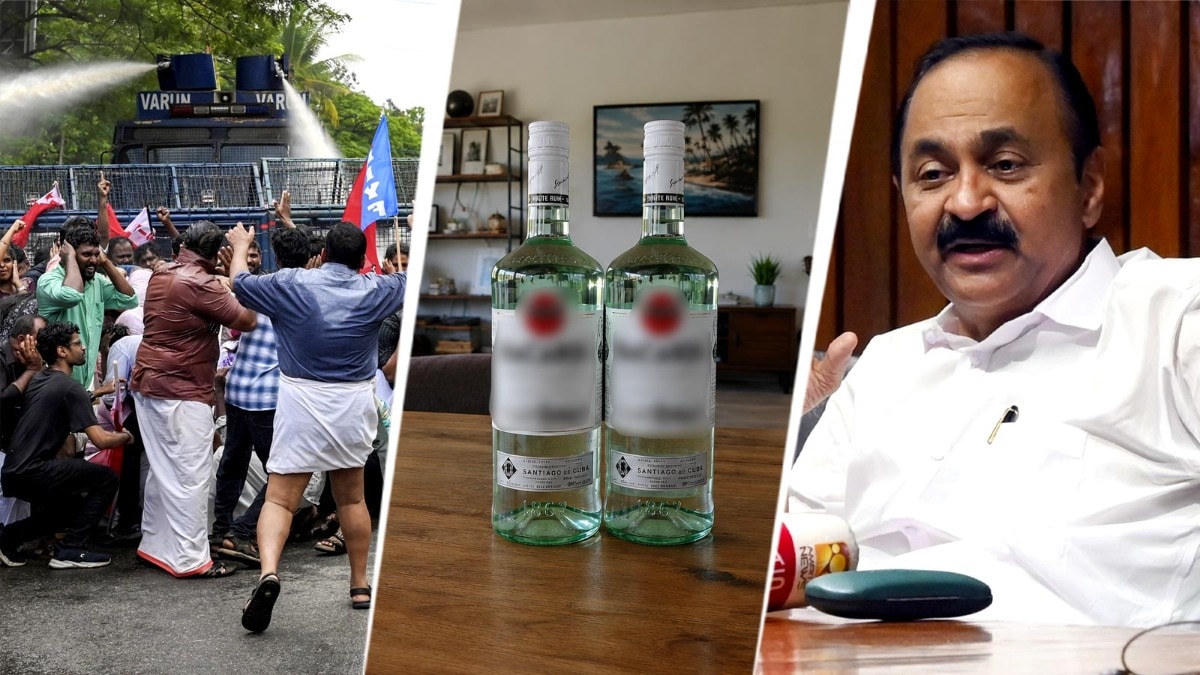
Barely a month into office, the Congress government under Chief Minister VD Satheesan appeared to have been hit by the first major political storm after its proposal to sharply reduce the sales tax on low-alcohol beverages. Touted as a tax rationalisation measure in Satheesan's budget, it quickly snowballed into a controversy of massive scale, drawing sharp attacks from the Left Democratic Front (LDF), criticism from religious organisations, dissent within the Congress, and questions from senior party leaders, including KC Venugopal. Read Full Story The issue escalated into a full-blown political confrontation with the LDF launching its strongest offensive against the new government since its electoral defeat, accusing the government of tailoring the tax proposal to benefit liquor major Bacardi. Left leaders dubbed it the "Bacardi tax" and alleged that the "Chief Minister smells of Bacardi". The controversy spilled onto the streets on Wednesday as Left-backed youth and student organisations staged protest marches across the state, while the Assembly witnessed chaotic scenes during heated exchanges over the issue. As political pressure mounted, Satheesan sought to defuse the controversy by indicating that the proposal would not be implemented without the approval of the ruling coalition. "If the United Democratic Front decides to permit the sale of low-alcohol liquor, the government will proceed accordingly. If the UDF does not approve it, the proposal will not be taken forward," he said, effectively passing the ball to UDF. At the centre of the controversy is the Opposition's allegation that the revised tax structure disproportionately benefits liquor manufacturers, particularly Bacardi, while encouraging alcohol consumption and potentially costing the state exchequer hundreds of crores in revenue. The government has rejected the charge, insisting that it has merely rationalised the tax structure for a category of beverages, created under the previous Left Democratic Front (LDF) government and that it has neither altered Kerala's liquor policy nor expanded the availability of alcohol. TAX OVERHAUL TRIGGERS CONTROVERSY A proposal in the revised Budget 2026-27 presented by Satheesan, who holds the finance ministry, was the trigger of the storm. Under the proposal, alcoholic beverages containing 0.5-10 per cent alcohol by volume (ABV) would attract a 120 per cent sales tax, while beverages with 10-20 per cent ABV would be taxed at 175 per cent, replacing the earlier uniform 251 per cent sales tax applicable to all Indian-made foreign liquor (IMFL). The government has maintained that the move is purely a fiscal rationalisation based on alcohol content and does not amount to a change in liquor policy.
 The BriefWire