‘Dignified workplace is essential for women’
An awareness meeting on the Sexual Harassment of Women at Workplace (Prevention, Prohibition and Redressal) Act, 2013, was held at Justice V.R. Krishna Iyer Community
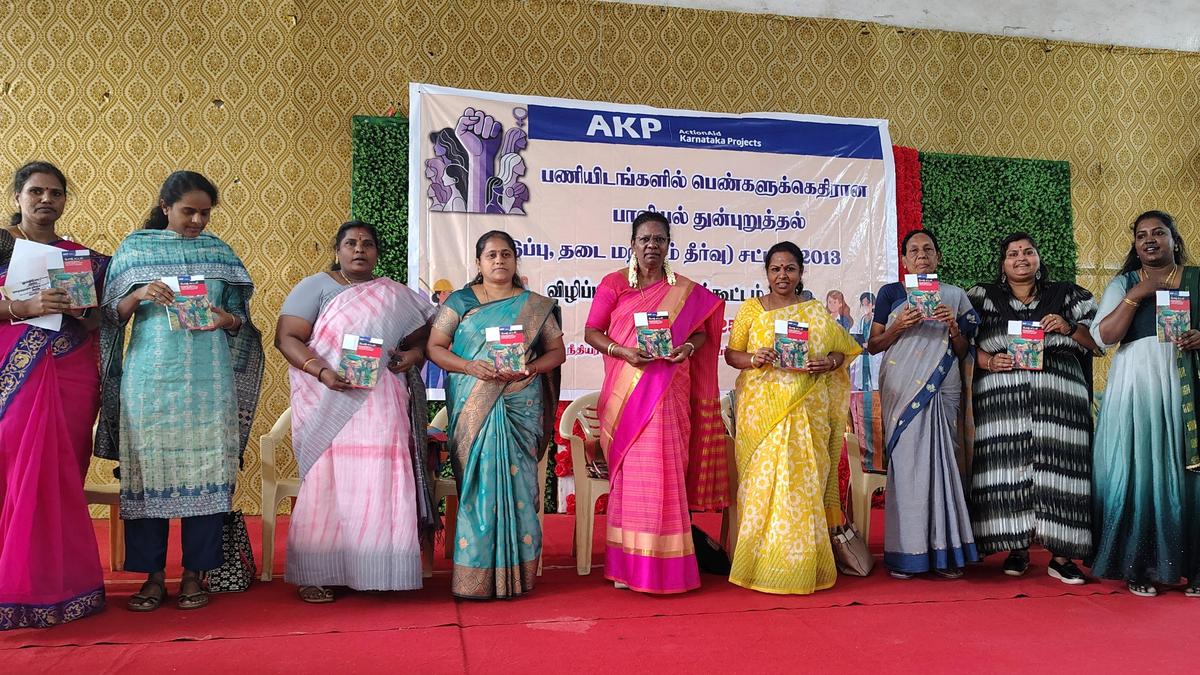
An awareness meeting on the Sexual Harassment of Women at Workplace (Prevention, Prohibition and Redressal) Act, 2013, was held at Justice V.R. Krishna Iyer Community Hall, Madurai, on Saturday, drawing over 200 women students, domestic workers and members of women’s collectives. The programme held by Action Aid Karnataka Project (AKP), in collaboration with SOCO Trust, Tamil Nadu Domestic workers Union and Nilam Trust organised a campaign on POSH Act to raise awareness among women. What constitutes a ‘workplace’ under POSH Act? In her presidential address, Dr. Esther Mariaselvam, associate director of AKP, said the organisation, registered under the Societies Act in 1988 and headquartered in Bengaluru, works to help women, children and marginalised communities move out of poverty through sustained improvements in education, health, and livelihood.
She said the day’s programme aimed to create practical awareness of the POSH Act as “not just a law, but a key tool to secure women’s safety, dignity and rights at the workplace”. She added that a booklet released at the event explains in simple Tamil what constitutes sexual harassment, the rights guaranteed to women, the process for filing complaints and the role of Internal Complaints Committees, which are mandatory in establishments with 10 or more employees. Introducing the session, M. Abinaya, organising secretary of AKP, welcomed participants and underlined the need for women workers in both formal and informal sectors to know the protections available to them. District Social Welfare Officer R. Kanthimathi spoke on sex and gender roles, the multiple burdens placed on women in their personal and professional lives, and detailed central and State welfare schemes such as marriage assistance schemes, Pudhumai Penn scheme, marriage funds, free sewing machines, and welfare provisions for senior citizens.
She also listed key legislations, including the Prohibition of Child Marriage Act, the Protection of Women from Domestic Violence Act, the Dowry Prohibition Act, the POSH Act and the Maintenance and Welfare of Parents and Senior Citizens Act, besides helplines 181 for women and 14567 for senior citizens. District Protection Officer S. Vasugi explained the Domestic Violence Act and provisions relating to physical, sexual, emotional and economic abuse, how survivors can file complaints, and who can seek protection under the law. She highlighted issues such as dowry harassment, financial control and cyber offences, and urged women to use available legal remedies and government support systems. Advocate J.R. Annie Abinaya from the Madurai Bench of the Madras High Court stressed that a “dignified workplace is essential for women”, calling for stronger human‑resource systems, accountability for offences and recognition of domestic workers’ rights on a par with those in corporate offices.
 The BriefWire