Why Austrian author Ingeborg Bachmann remains a literary icon
A new documentary featuring Sandra Hüller celebrates the Austrian poet and author who was a literary star of her era. She would have turned 100
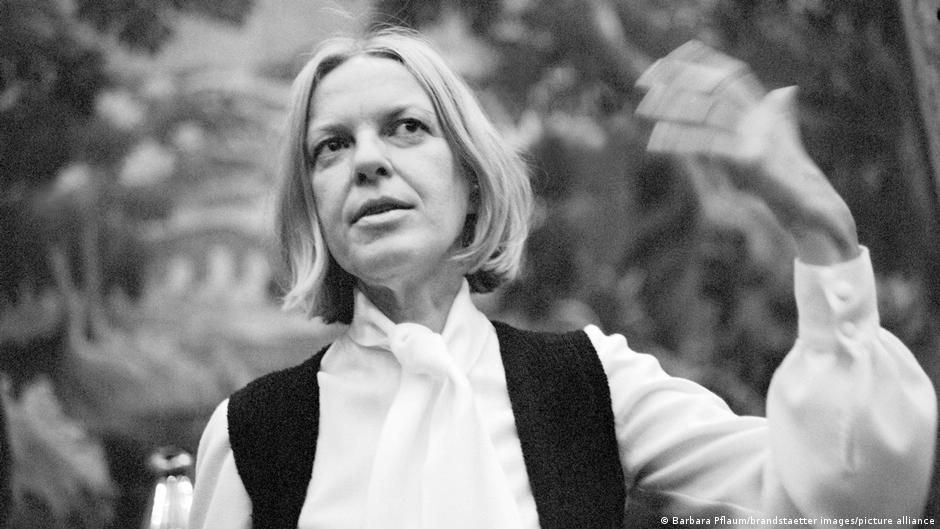
A new documentary featuring Sandra Hüller celebrates the Austrian poet and author who was a literary star of her era. She would have turned 100 this year. How do you put the unspeakable into words? Following the horrors of the Holocaust, this question haunted postwar German authors. They aimed to reject the heritage of the Nazi era while documenting the trauma of bombed-out cities and the country's starving population. They explored the complexities of collective guilt and individual responsibility. But the German-language literary scene that took up these daunting issues was dominated by male authors. Women's writing was frequently dismissed as trivial. The anti-fascist and feminist Austrian writer and poet, Ingeborg Bachmann, was one of the few women to assert their voice in the face of a deeply sexist literary industry. The literary icon remains extremely relevant today, notes Regina Schilling, a longtime Bachmann fan and director of the new documentary, "Ingeborg Bachmann: Someone who was once me." Through her research for the film, Schilling was particularly struck by "how visionary and contemporary Bachmann's texts are." "She addressed themes that are central to today's social discourse, such as gender identity," said Shilling, adding that the author described what came to be known today as "mansplaining." "She was definitely ahead of her time," added the filmmaker. Bachmann at a reading in 1971 Image: Nora Schuster/brandstaetter images/picture alliance Bachmann confronted the way language upheld ruling power structures. "No new world without a new language," says the narrator in her story, "Among Murderers and Madmen." Fighting the limits of language Born in 1926 in the Austrian city of Klagenfurt, IngeborgBachmann was the daughter of an early Nazi Party member.
Even though she never discussed this publicly, the troubling background profoundly influenced her work that dealt with collective guilt, trauma and patriarchal violence. Escaping her home town in the Carinthian Alps was a vital first step towards emancipation: "Though I later traveled to Paris, London and Germany, that matters little; for in my memory, the journey from the valley to Vienna will always remain the longest one," she once said. A prestigious literary competition is still held every year in her home town of Klagenfurt, the Ingeborg-Bachmann Prize Image: Johannes Puch/ORF A student of philosophy, psychology and German literature, Bachmann's doctoral thesis focused on the existentialist thought of philosopher Martin Heidegger. She was also considered an expert of another thinker, Ludwig Wittengenstein, whose philosophy suggested that there are things that cannot be logically described, and that we should rather remain silent about them. Disproving Wittengenstein's conclusion became one of Bachmann's lifelong goals; through her writing, she strived to express "the unsayable, the mystical, the limit." An iconic group of avant-garde authors Through her work at the radio station of the US forces occupying Vienna after the war, she came in contact with the wider German-language literary scene. Bachmann was invited to read her poetry at a gathering of Gruppe 47 (Group 47), an influential avant-garde literary collective. The informal association of German-speaking writers founded in 1947 aimed to free German literature from the propaganda and corruption of the Nazi era. It launched the careers of major writers such as Heinrich Böll and Günter Grass — as well as Bachmann's. In 1953, she won the Gruppe 57 Literature Prize, the organization's highest honor, for poems published as her debut collection, "Die gestundete Zeit" (Borrowed Time).
 The BriefWire