Bangladesh to buy Chinese jets used by Pak in Op Sindoor. What it means for India
Bangladesh is reportedly set to move forward with one of its most ambitious military acquisition plans to date. The Dhaka-based news outlet, Daily Waadaa, reported
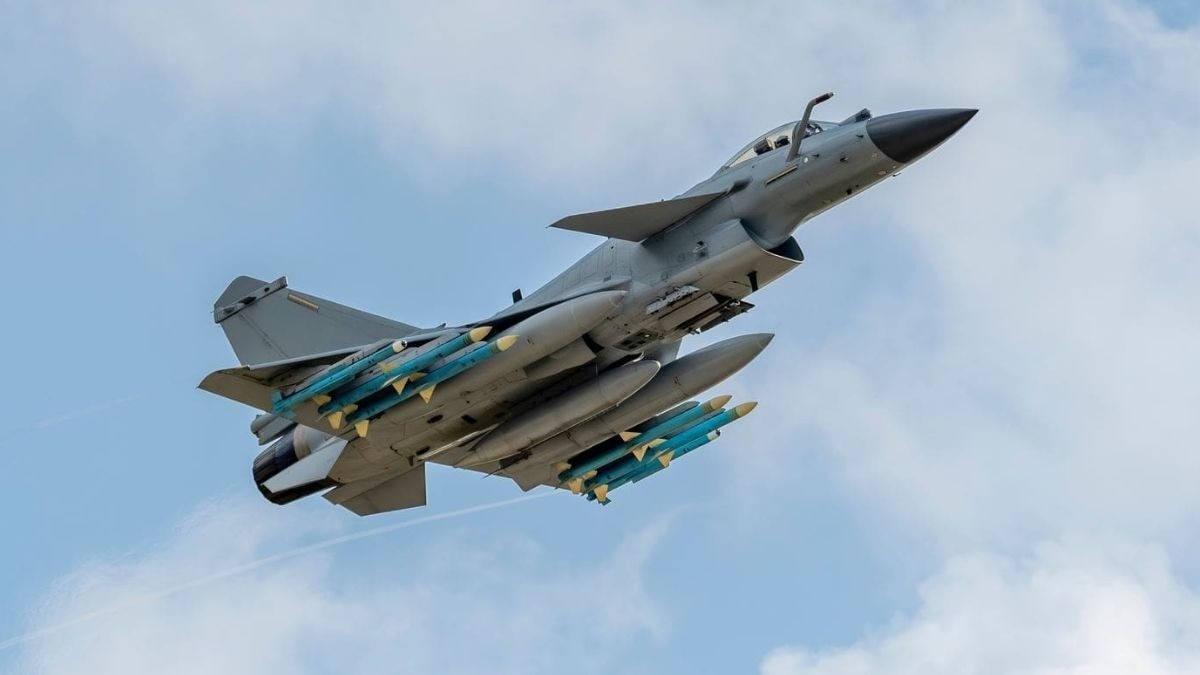
Bangladesh is reportedly set to move forward with one of its most ambitious military acquisition plans to date. The Dhaka-based news outlet, Daily Waadaa, reported that the Tarique Rahman-led administration is expected to advance plans to acquire 24 Chinese J-10CE fighter jets during the PM's visit to China this week. Officials cited by the publication stated that Dhaka hopes to officially sign the procurement agreement by August 2026. Read Full Story The J-10CE is the export variant of the Chengdu J-10C, a highly capable 4.5-generation multi-role fighter jet. The same jet is also used by India's Western neighbour, Pakistan, and was deployed in the aerial skirmishes that took place during Operation Sindoor, tangling with Indian Air Force jets like the SU-30MKI, Sepecat Jaguar, and the Dassault Rafale. Dhaka's pursuit of the platform aligns with its "Forces Goal 2030" defence modernisation programme, which was originally launched in 2009. Should the deal materialise, it will represent one of the most significant leaps in capability for the Bangladesh Air Force (BAF), which has long operated a motley and increasingly obsolete mix of legacy jets from China and Russia. At the same time, though, it will also deepen Bangladesh's dependence on China, and increase Beijing's diplomatic and military influence in India's eastern neighbourhood. WHAT IS THE J-10CE, AND WHY IS BANGLADESH BUYING IT? The J-10CE is the export variant of the Chengdu J-10C, and is widely considered one of China's most capable 4.5-generation combat aircraft available on the international market outside fifth-generation stealth platforms. Powered by the WS-10B afterburning turbofan engine, the aircraft can approach speeds of Mach 1.8 while maintaining a robust combat radius and endurance tailored for air defence and maritime strike missions.
Featuring a delta-wing and canard aerodynamic configuration supported by digital fly-by-wire controls, the platform delivers exceptional agility during dogfights and missile-evasion scenarios. This manoeuvrability is paired with a substantial payload capacity, as the fighter can reportedly carry up to 5,600 kilograms of ordnance, including air-to-air missiles, bombs and precision guided munitions across 11 hardpoints. This enables the J-10CE to carry out a wide range of missions, from hunting enemy fighters, to bombing ground targets. This multi-role capability might be especially valuable for Bangladesh, which maintains a relatively modest air force due to economic and budgetary constraints, and therefore needs to prioritise versatile aircraft that can perform a wide range of missions efficiently. A key strength of the J-10CE is its modern electronics package. Its advanced AESA radar can detect and track multiple targets simultaneously while resisting enemy jamming efforts. The aircraft is also equipped to carry the Chinese long-range PL-15 air-to-air missile, which can engage enemy aircraft at considerable distances before they are able to strike back. Consequently, the acquisition of J-10CE fighters would dramatically enhance the capabilities of the Bangladesh Air Force. The BAF currently operates a modest fighter fleet of roughly 40 to 44 aircraft, consisting primarily of around 36 obsolete and ageing Chengdu F-7/J-7s (a Chinese derivative of the Soviet MiG-21) and eight Russian-origin MiG-29s. BANGLADESH AIR FORCE MIGHT GET A BOOST IF THE J-10CE DEAL MATERIALISES With the J-10CE and its wide array of advanced munitions, Bangladesh might gain the ability to undertake a much broader range of missions. The planned purchase forms a key component of Dhaka's ongoing military modernisation programme titled Forces Goal 2030, that was launched in 2009.
 The BriefWire