Gulf States, Private Investors Or The US? Who Pays For Iran’s $300 Billion Reconstruction Fund
Gulf States, Private Investors Or The US? Who Pays For Iran’s $300 Billion Reconstruction Fund Published By, Last Updated: June 24, 2026, 13:22 IST The
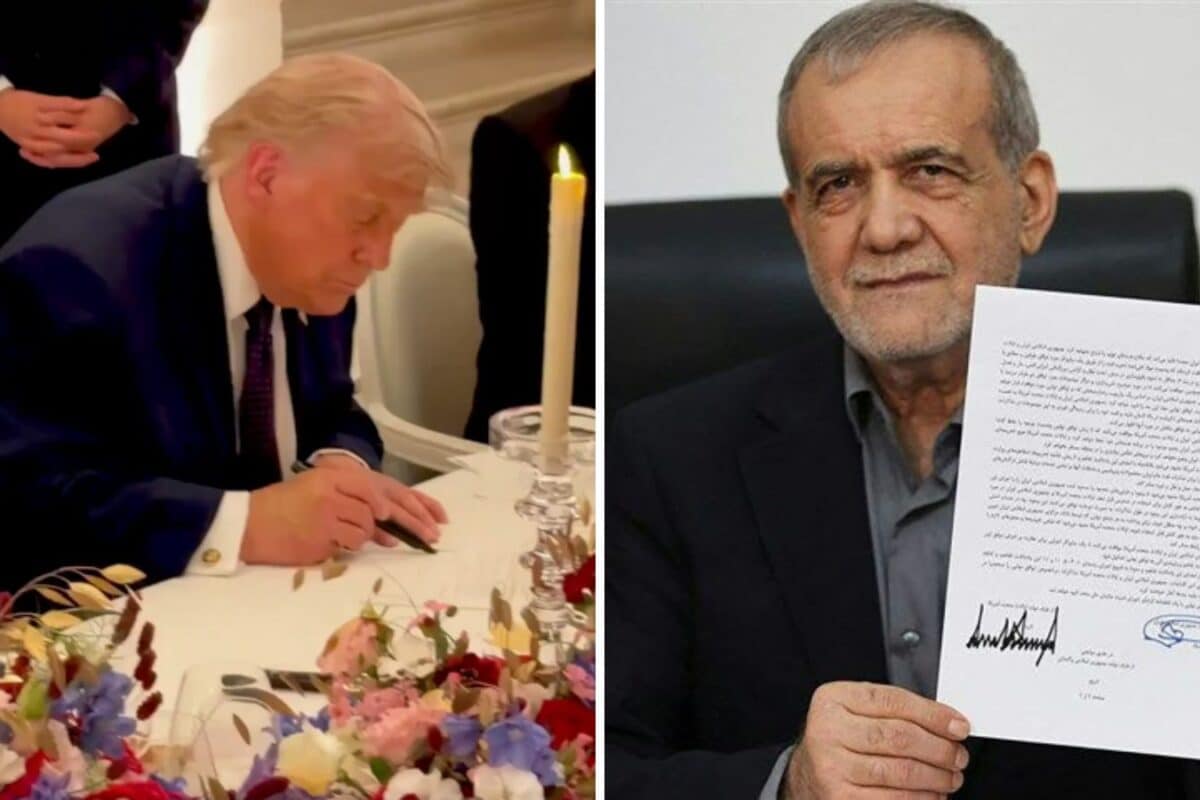
Gulf States, Private Investors Or The US? Who Pays For Iran’s $300 Billion Reconstruction Fund Published By, Last Updated: June 24, 2026, 13:22 IST The US-Iran agreement promises Tehran a massive post-war reconstruction package, but the route to raising and delivering the $300 billion remains far from straightforward. Rapid Read Donald Trump signing a deal with Iran to end the Middle East war inside the Chateau de Versailles, in Versailles (R). Iran's President Masoud Pezeshkian holding a document showing a memorandum of understanding he signed to end the Middle East war. Iran could receive at least $300 billion for post-war reconstruction and economic development under the preliminary agreement with the United States. But behind the eye-catching promise lies a question: who will provide the money? Washington insists US taxpayers will not foot the bill. The funding mechanism will instead be worked out over the next 60 days, putting the focus on Iran’s wealthy Gulf neighbours and private investors as possible backers. What Does The US-Iran MoU Promise? The memorandum says Washington “undertakes with regional partners to develop a definitive mutually agreed plan with at least $300 billion for the reconstruction and economic development" of Iran. “The mechanism for the implementation of this plan will be finalised as part of a final deal within 60 days. All required licenses, waivers, and permissions needed for the relevant financial transactions will be granted by the United States of America," it adds. US Vice President JD Vance has said Iran would receive the economic benefits only if it proves that it has complied with the terms agreed during that period. Is The US Paying Iran $300 Billion? Before the agreement was signed, US President Donald Trump dismissed reports that Washington would pay Iran $300 billion as “fake news". Vice President JD Vance similarly stated in an interview with The New York Times that Iran will “never get a dime" from American taxpayers and that “not a cent of American money" would go to Tehran under the arrangement. The US role, according to the MoU, is to work with regional partners to develop the reconstruction plan and grant the licences, waivers and permissions required for the financial transactions.
Jake Sullivan, who served as national security adviser under former President Joe Biden, told NPR that Iran was expecting the $300 billion to come from outside sources, with Washington committed to helping secure the investment. He described that commitment as “something entirely new". “That is something that never happened in the Obama-era deal," Sullivan said. How Is The Fund Expected To Work? Reuters, citing sources familiar with the negotiations, reported that the fund is being conceived as a privately financed investment vehicle rather than a conventional aid or reparations package. According to the report, more than half of the proposed amount has already been pledged by private-sector participants from multiple regions. Reuters also reported that the vehicle would contain no government money and would remain separate from discussions over sanctions relief and Iran’s frozen overseas assets. Who Could Provide The Money? The MoU refers to “regional partners" but does not name them. Vance has suggested that Arab states and international investors interested in Iran’s economic development could support the initiative. The regional countries being discussed are widely understood to include Iran’s wealthy Gulf neighbours. But none has publicly committed money to the fund so far, according to Al Jazeera. That is a major complication because Gulf states were themselves targeted by Iranian drones and missiles during the war. Saudi Foreign Minister Prince Faisal bin Farhan declined to discuss the details of the fund when asked about it. He said trust would have to be rebuilt before economic cooperation could be considered. “We’re going to have to have a conversation on how we rebuild that trust, how we rebuild that relationship before any concept of economic cooperation, mutual investment or anything like that can rationally be addressed," he said. The UAE, which bore the brunt of Iran’s attacks during the war, had repeatedly demanded reparations from Tehran, although its language became less confrontational in the weeks before the agreement. At the same time, the UAE was one of sanctions-hit Iran’s main trading partners before the war. Why Would Gulf States Consider Investing? The proposed fund is one of several economic incentives being offered to Iran as part of the negotiations.
 The BriefWire