Can Your Smart Lock Turn Into A Death Trap During A Blaze? What Delhi, Lucknow Fires Reveal
Can Your Smart Lock Turn Into A Death Trap During A Blaze? What Delhi, Lucknow Fires Reveal Written By, Last Updated: June 24, 2026, 12:07
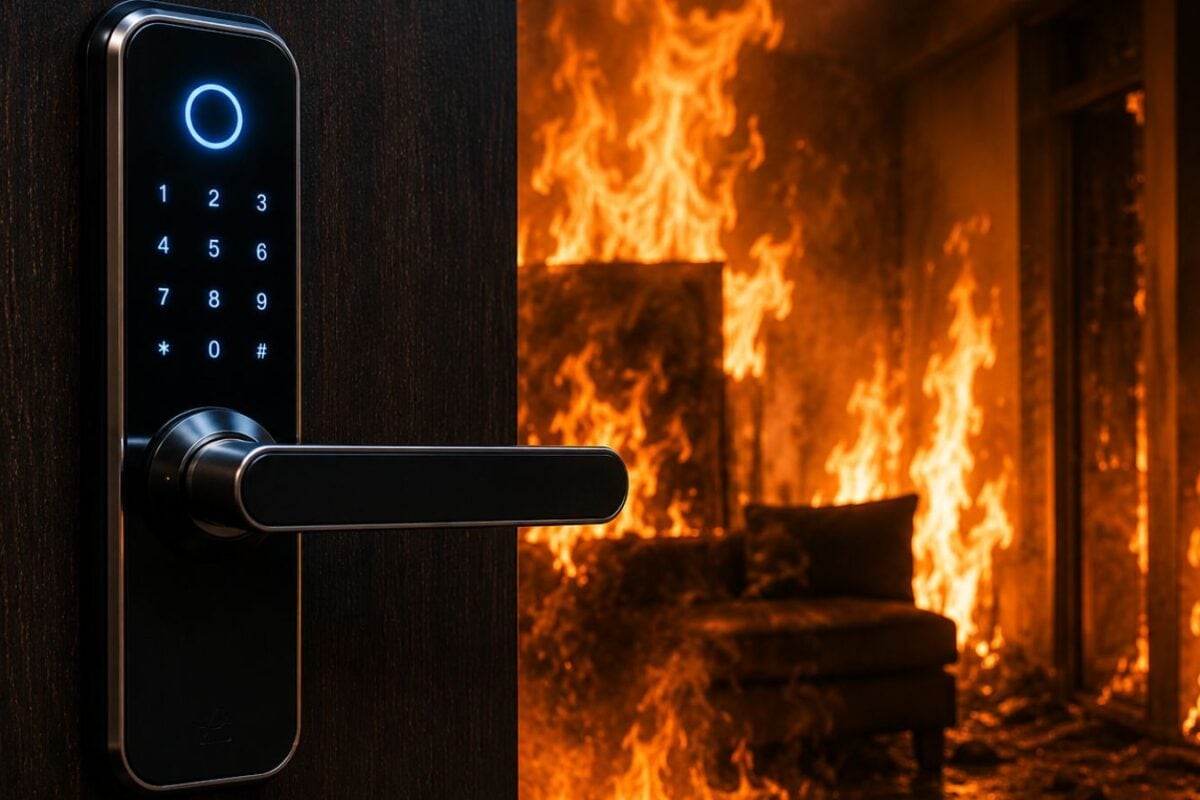
Can Your Smart Lock Turn Into A Death Trap During A Blaze? What Delhi, Lucknow Fires Reveal Written By, Last Updated: June 24, 2026, 12:07 IST If locks are not designed to automatically unlock during outages, occupants can find themselves trapped behind doors that no longer respond to buttons, keypads or access cards Rapid Read Many smart-lock manufacturers provide manual overrides. But during a fire, occupants may not know where override switches are located or how to operate them. (AI-Generated Image) From a residential building in Delhi’s Vivek Vihar to a hotel in Malviya Nagar and a fire-ravaged apartment block in Indore, one common feature keeps surfacing in fire investigations—electronically controlled doors. Investigators probing multiple incidents have found that smart locks, biometric access systems and electronically controlled gates either malfunctioned during fires or delayed evacuations when occupants needed to escape within seconds. Experts, however, caution against blaming the technology alone. The larger problem, they say, is the absence of fail-safe systems, manual overrides, emergency exits and proper fire-safety compliance. Why Electronic Locks Can Become Dangerous During Fires Most electronic locks rely on electricity, batteries, access-control panels or magnetic systems. During a fire, several things can go wrong ALSO READ | MCD Official Inspected Malviya Nagar Hotel A Day Before Fire That Killed 23. He Is Now Sacked 1. Power Failure Can Disable Exit Systems A fire often causes power cuts, either because wiring is damaged or electricity is deliberately shut off. If locks are not designed to automatically unlock during outages, occupants can find themselves trapped behind doors that no longer respond to buttons, keypads or access cards. This is exactly what investigators are examining in the June fire at Delhi’s Malviya Nagar, where guests at a bed-and-breakfast could not open electronically controlled room doors after a power cut disabled the door-control system. Twenty-two people were killed in the blaze.
2. Heat Can Jam Electronic Components Extreme temperatures can damage lock circuitry, sensors and control mechanisms. Fire-safety experts told Hindustan Times that heat and smoke can interfere with electronic systems precisely when they are needed most. Even where battery backup exists, components may fail under fire conditions. 3. Panic Makes Complex Systems Harder To Use Many smart-lock manufacturers provide manual overrides. But during a fire, occupants may not know where override switches are located or how to operate them. Experts note that emergency exits should be intuitive and immediately operable. Any system requiring multiple steps can become a liability when visibility is low and panic sets in. 4. Locked Gates Can Block Rescue Efforts ALSO READ | From Malviya Nagar To Uphaar: Delhi’s Deadliest Fire Tragedies Through The Years Electronic locks do not just affect evacuation. They can also slow down firefighters trying to reach trapped occupants. Several recent investigations found rescuers losing precious minutes attempting to break through electronically secured entrances. The Cases That Triggered The Debate 1. Delhi’s Vivek Vihar Fire: Smart Locks, Grills And A Single Staircase In May, a fire ripped through a residential building in Delhi’s Vivek Vihar, killing nine people. Investigators found that electronic smart locks allegedly malfunctioned after a short circuit and power disruption. Combined with iron window grills, locked terrace access and a single staircase serving the entire building, the malfunctioning locks severely restricted escape routes. Residents reportedly found themselves trapped as flames spread through common areas. 2. Malviya Nagar Hotel Fire: Guests Trapped In Their Rooms A month later, Delhi witnessed another tragedy at a bed-and-breakfast in Malviya Nagar. According to investigators, a power outage disabled electronic door-control buttons, leaving guests unable to open their rooms. The incident left 21 people dead and reignited concerns about hotels relying on electronically controlled exits without adequate fail-safe mechanisms. 3. Lucknow Fire: Auto-Lock Gates Under Investigation On Monday, blaze at a commercial complex in Lucknow’s Aliganj area killed 15 people.
 The BriefWire