Colombia Becomes The Latest To Swing Right: How Latin America’s Political Map Is Changing
Colombia Becomes The Latest To Swing Right: How Latin America’s Political Map Is Changing Published By, Last Updated: June 24, 2026, 10:21 IST Colombia has
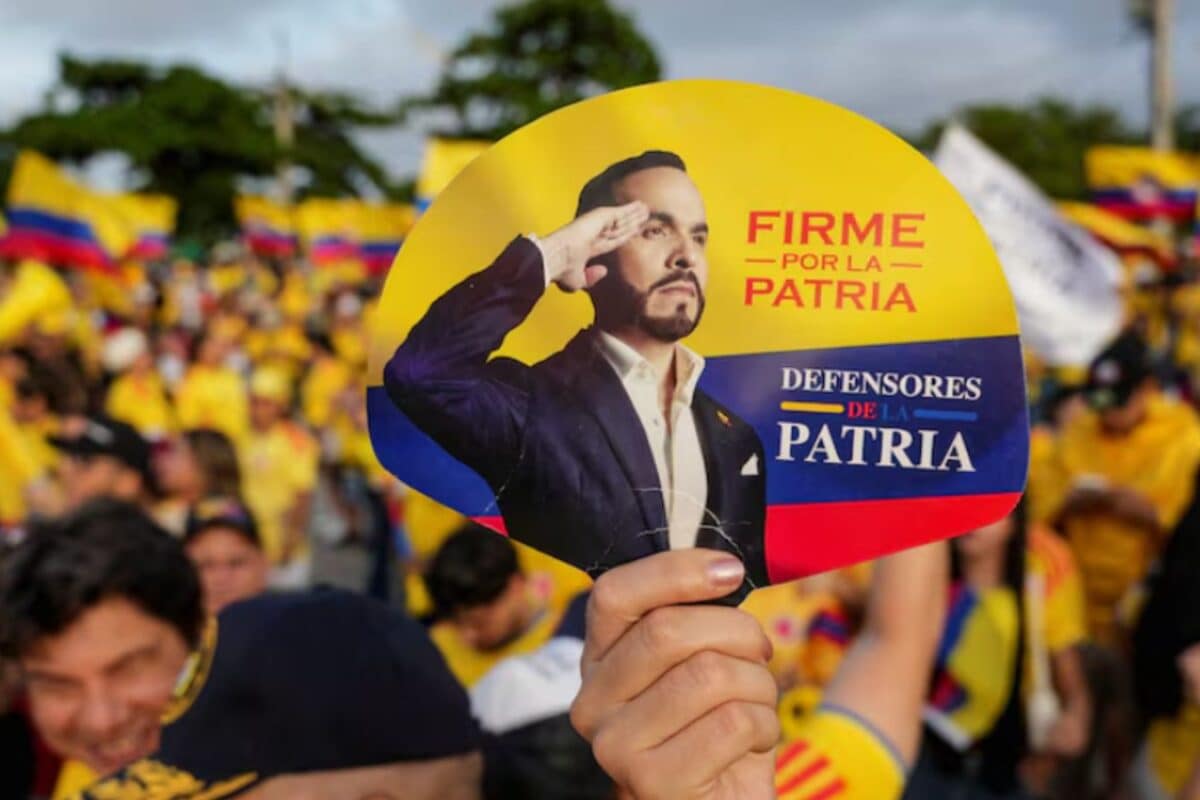
Colombia Becomes The Latest To Swing Right: How Latin America’s Political Map Is Changing Published By, Last Updated: June 24, 2026, 10:21 IST Colombia has become the latest Latin American country to turn right, joining Argentina, Chile, Ecuador, Bolivia, Costa Rica, Honduras and Panama in a widening conservative shift. Rapid Read A supporter of Abelardo De La Espriella holds up a sign on the day of a runoff between De La Espriella and leftist candidate Ivan Cepeda in Barranquilla (Credits: Reuters) Only a few years ago, Latin America appeared to be turning decisively left. Colombia in 2022 had elected its first left-wing president, Gustavo Petro, while progressive governments also came to power in countries including Chile and Brazil. That political wave is now receding. In Colombia, Trump-admiring far-right lawyer Abelardo De La Espriella appears to have won the 2026 presidential election by a razor-thin margin, defeating left-wing senator Iván Cepeda. With 99.99% of ballots counted in the preliminary tally, De La Espriella had secured 12.96 million votes, or 49.66%, against Cepeda’s 12.7 million, or 48.7%. The gap stood at just 250,830 votes, while another 1.6% of ballots were cast blank. Colombian authorities have not yet formally declared a winner, and the result must still undergo a final verification process overseen by notaries and judges. However, the review is not widely expected to overturn the result. De La Espriella’s apparent victory would place Colombia alongside Argentina, Chile, Ecuador, Bolivia, Costa Rica, Honduras and Panama, which have all moved towards conservative or right-leaning leadership in recent years. Peru may be next. Conservative Keiko Fujimori is projected to win the June 7 presidential runoff by just over 0.2%, although authorities are still counting contested ballots. The shift marks a stark reversal of the so-called “pink tide", the term used for the rise of left-wing governments across Latin America in the early 2020s. What is driving the change is not one single issue. Across the region, voters have become increasingly concerned about crime, weak economic growth, inflation, migration and governments seen as unable to improve daily life. Why Colombia Voted For De La Espriella De La Espriella, a millionaire lawyer, business owner and political outsider nicknamed “The Tiger", campaigned on a tough-on-crime platform. He has promised to cancel peace talks with Colombian rebel groups, intensify action against drug traffickers and build mega-prisons similar to those constructed in El Salvador.
He has also pledged to lower taxes, ease business regulations and restart oil and gas projects halted under Petro. These promises gained support in a country where drug trafficking, illegal mining and the weak presence of the state in some areas remain major challenges. His election could also change Colombia’s approach to its decades-long armed conflict. Petro had pursued negotiations with rebel groups, while De La Espriella has promised a more confrontational strategy. His rise also reflects the increasingly important role of US President Donald Trump in Latin American politics. De La Espriella is a naturalised US citizen who previously lived in Miami and has openly supported Trump. The US president endorsed him before the runoff and described him as the candidate who could restore law and order in Colombia. De La Espriella has also promised to join the Shield of the Americas, a right-wing regional alliance launched by Trump. The contrast with Petro has been clear. Colombia’s outgoing president has been one of Trump’s most outspoken critics in the region and has faced threats of sanctions and military action from Washington. How Crime Became A Major Election Issue Rising crime has become one of the biggest concerns shaping elections across Latin America. Conservative candidates have gained support by promising stronger police action, a larger military role, stricter migration controls and tougher prison policies. De La Espriella’s promises of mega-prisons and a crackdown on criminal groups have drawn comparisons with El Salvador’s President Nayib Bukele, who calls himself the “world’s coolest dictator". Bukele’s government has built the CECOT mega-prison as part of a mass campaign against gangs. His approach has become a model for other right-wing candidates in the region. De La Espriella has denied that he is copying Bukele. Analysts have also warned that the Salvadoran model cannot easily be transferred to Colombia. “Colombia is a much larger country and far more complex to manage than El Salvador, and importing El Salvador’s security solutions into Colombia is not feasible, whether legally, budget-wise or in terms of international engagement," Sergio Guzman, founder of Colombia Risk Analysis, told Reuters. The limits of tough-on-crime policies are already visible elsewhere. In Ecuador, conservative President Daniel Noboa was re-elected in April 2025 with 56% of the vote after giving the military a larger role in coastal cities affected by drug gangs fighting over ports and trafficking routes.
 The BriefWire