The lost Hellship of 1944 finally found beneath 160 feet of ocean depths
The 1944 sinking that became a decades-long archival mystery Confirming Hōfuku Maru beneath 160 feet of silence and seafloor sediment Inside the modern search for
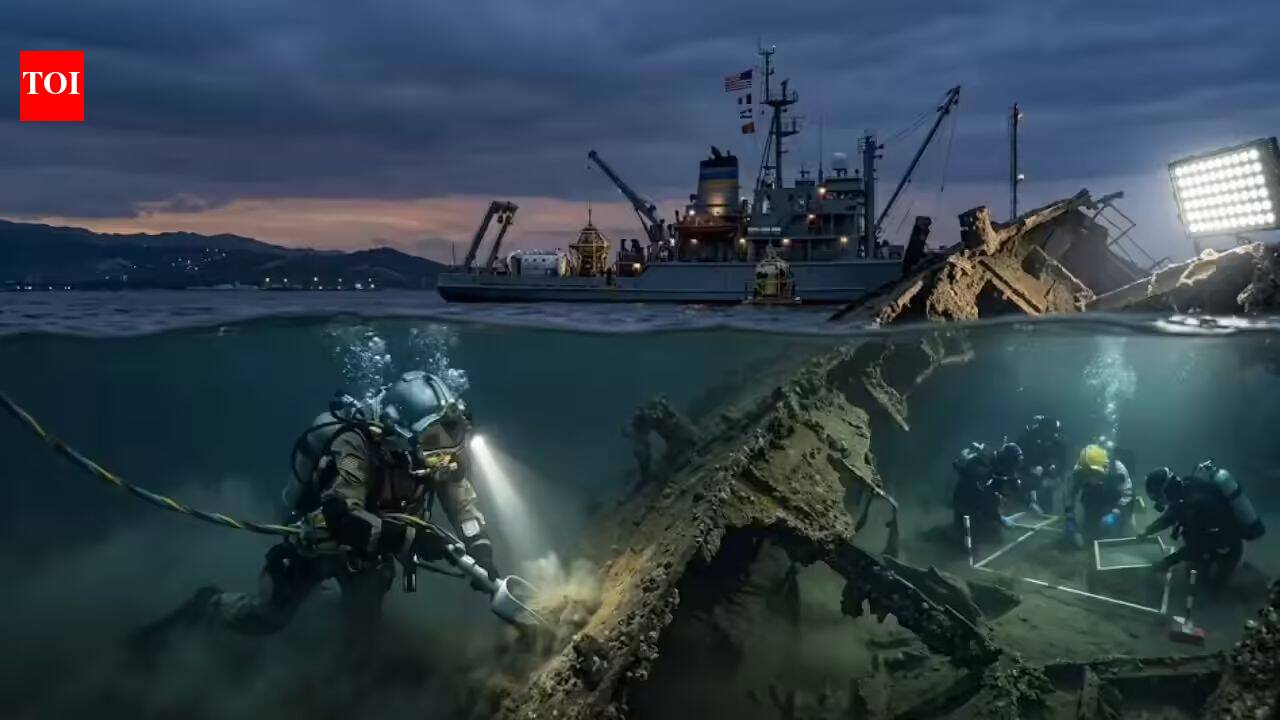
The 1944 sinking that became a decades-long archival mystery Confirming Hōfuku Maru beneath 160 feet of silence and seafloor sediment Inside the modern search for a forgotten Hellship Philippines ’ deepening role in Hellship recovery operations In the shallow churn of waters off the Philippine coast, a long-forgotten wartime story has been pulled back into view, not through ceremony or excavation on land but through the slow, patient work of sonar scans and archival digging. What began as a search guided by scattered wartime records has ended with the identification of a Japanese transport ship believed to have carried more than a thousand Allied prisoners during the final stretch of the Pacific war. The vessel, known as Hōfuku Maru, had effectively vanished into conflicting reports and uncertain coordinates for decades. Its rediscovery sits at the centre of a televised investigation involving underwater teams, historians and divers, with footage captured for an upcoming broadcast season on the Discovery Channel. The find is being framed less as spectacle and more as a recovery of location and context, a fixed point in a history that had drifted for eighty years.The ship itself was part of the so-called “Hellship ” network, a grim wartime system where cargo vessels and passenger liners were repurposed to move prisoners across the Japanese wartime sphere.
Conditions were notoriously harsh, but beyond that, documentation was often fragmented, destroyed, or simply misrecorded in the chaos of the final war years.Hōfuku Maru slipped into that gap.As reported by Naval History and Heritage Command, its sinking in September 1944, after being struck during an Allied attack on a convoy, had been recorded, yet the exact resting place remained uncertain. Different wartime accounts placed the wreck in slightly different positions, enough variance to send later searches drifting miles off target. Over time, assumptions hardened into accepted fact, even as certainty quietly eroded.The turning point came not underwater but in filing rooms and digitised military archives. Researchers working with the Hellships Memorial Foundation began to cross-check Japanese convoy logs with Allied attack reports. In doing so, they uncovered details that suggested long-standing coordinates were off by a significant margin.The search team eventually locked onto an uncharted wreck lying at roughly 160 feet as reported by WARNER BROS. DISCOVERY press release. At first it was only a distorted outline, half-buried in sediment and marine growth. Then a clearer structure emerged: a hull broken into sections, masts collapsed in a way that suggested sudden violent force rather than gradual decay.Divers confirmed what sonar had hinted at.
 The BriefWire