'It's An International Waterway': Rubio Says No One Allowed To Impose Toll On Strait Of Hormuz
'It's An International Waterway': Rubio Says No One Allowed To Impose Toll On Strait Of Hormuz Published By, Last Updated: June 23, 2026, 23:29 IST
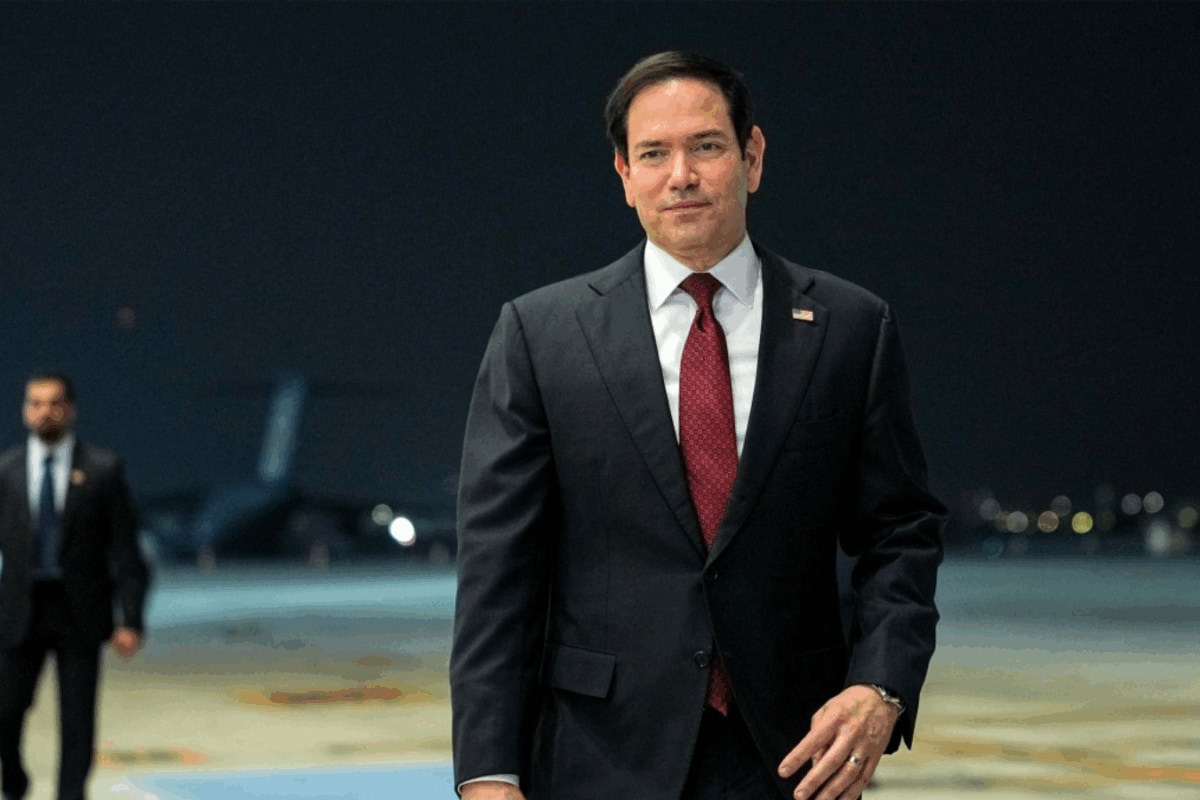
'It's An International Waterway': Rubio Says No One Allowed To Impose Toll On Strait Of Hormuz Published By, Last Updated: June 23, 2026, 23:29 IST US Secretary of State Marco Rubio, in the UAE, said international law bars any country from charging ships fees in the Strait of Hormuz, amid reports Iran seeks such revenue US Secretary of State Marco Rubio arrived in Abu Dhabi on Tuesday. (AFP photo) Amid ongoing negotiations to end the West Asia war, US Secretary of State Marco Rubio on Tuesday said that no country is allowed to charge fees from ships transiting the Strait of Hormuz, citing “existing international law." “It’s an international waterway. No country is allowed to charge tolls or fees on an international waterway. That’s existing international law," Rubio said as he arrived in the United Arab Emirates. Rubio Rejects Idea Of Fees On Strait of Hormuz Shipping The US leader’s remarks came as Iran seeks to generate revenue from the strategically important waterway.
The US and Iran have reached an initial agreement to pause hostilities and have completed a first round of negotiations in Switzerland as part of a 60-day process aimed at resolving key issues, including sanctions relief and Tehran’s nuclear programme. Maritime traffic through the Strait of Hormuz, which had been severely disrupted after Iran imposed a blockade in the early stages of the conflict, has started to recover since the deal was finalised. The blockade had triggered a sharp rise in global oil prices by restricting movement through one of the world’s most important shipping lanes. Iran, Oman Discuss Strait Administration, Charges Iran has continued to assert its authority over the strategic waterway. On Tuesday, Tehran and Oman said in a joint statement that they would examine the future administration of the strait and assess charges for services provided there, underlining their sovereign rights over the passage. However, US Secretary of State Marco Rubio rejected the idea of levying fees on vessels using the route, saying it is an international waterway where no country has the right to impose tolls or charges.
He added that countries in the region “would agree" with Washington’s view. Iran’s chief negotiator, Mohammad Bagher Ghalibaf, earlier insisted that the Strait of Hormuz would not revert to its pre-war status, even though communication channels had been established between the rivals to ensure that shipping continues uninterrupted. Meanwhile, the head of the UN’s International Maritime Organization said preparations were underway to evacuate more than 11,000 sailors stranded by the Hormuz blockade, adding that the required security assurances had been obtained from Iran, Oman and the United States. According to maritime tracking platforms, vessel traffic through the strait on Monday climbed to its highest level since the conflict began, reaching slightly over 40 per cent of normal peacetime activity, which averages around 120 ships a day. News18 Newsletter Handpicked stories, in your inbox A newsletter with the best of our journalism submit About the Author Manisha Roy Manisha Roy is a Senior Sub-Editor at News18.com's general desk.
 The BriefWire