11 India-bound ships transited Strait of Hormuz after sealing of US-Iran peace MoU
Eleven India-bound ships have passed through the Strait of Hormuz since the United States and Iran signed a Memorandum of Understanding on June 17 to
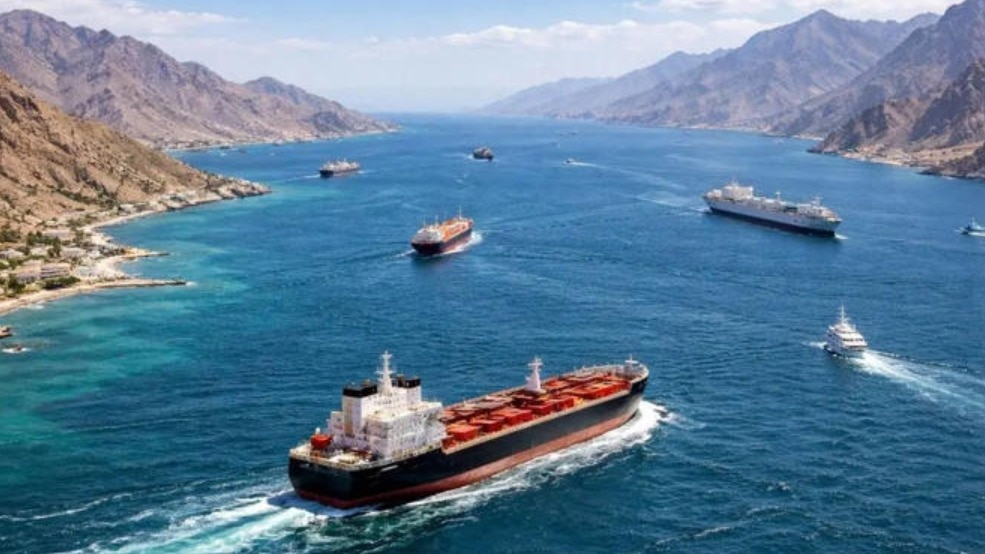
Eleven India-bound ships have passed through the Strait of Hormuz since the United States and Iran signed a Memorandum of Understanding on June 17 to end the West Asia conflict, the Ministry of External Affairs said on Tuesday. The agreement provides for an immediate halt to military operations, the reopening of the Strait, and the lifting of the US naval blockade on Iranian ports. Read Full Story India said it is closely watching developments in West Asia, while stressing that its energy sourcing policy is guided by national interest. The MEA also said 10 Indian-flagged vessels remain in the Persian Gulf region and two more have recently arrived there. At a media briefing, MEA spokesperson Randhir Jaiswal said, "As of today, we have 10 Indian-flagged vessels still in the Persian Gulf region.
In addition, two have recently arrived there." He added, "Since the signing of the MoU on June 17, 11 India bound vessels have transited through the Strait of Hormuz." He said the vessels that have crossed include three Indian-flagged crude oil tankers, each carrying over 285,000 metric tonnes of crude oil, one foreign-flagged LPG carrier, one foreign-flagged crude oil tanker, and six foreign-flagged bulk carriers carrying fertilisers. "We hope that the remaining India flagged vessels would also be able to cross the Hormuz soon," Jaiswal added. Oil and gas prices had risen sharply after Iran virtually blocked the Strait of Hormuz, a route through which around a fifth of the world's oil and liquefied natural gas usually passes. The blockade had hit energy supplies to countries around the world, including India, and West Asia remains a major source of India's energy procurement.
Asked about the US decision to remove sanctions on Iranian crude oil, Jaiswal said, "We are closely monitoring all developments related to West Asia. As far as our energy sourcing is concerned, you are well aware that our policy is guided by national interest." He added, "Our priority is to ensure that 1.4 billion people have access to energy at affordable prices and from diverse sources. This has consistently been our policy." On a separate question, Jaiswal said India has maintained good relations with Palestine for decades. He said India has extended several development projects to Palestine under its development partnership framework, both bilaterally and through the United Nations Relief and Works Agency for Palestine Refugees. "In addition, we have extended humanitarian assistance to the Palestinian people on numerous occasions.
 The BriefWire