India: What’s driving the intense pressure on students?
The reported deaths of aspiring medical students in India have exposed the immense pressures of the country's high-stakes examination system and a worsening mental-health crisis
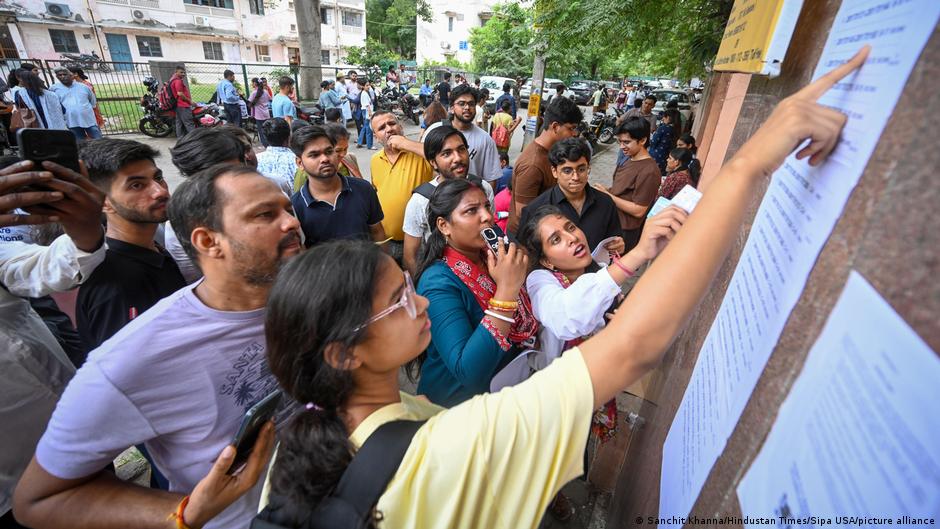
The reported deaths of aspiring medical students in India have exposed the immense pressures of the country's high-stakes examination system and a worsening mental-health crisis. When 18-year-old Nelima Patel sat down to retake the Eligibility cum Entrance Test (NEET) medical entrance examination in the western Indian city of Ahmedabad on Sunday, she felt completely drained before the exam had even begun. The original test in early May was canceled over suspicions that the questions had been leaked. Patel had to prepare all over again, navigating uncertainty, exhaustion and anxiety. "It was mentally exhausting, but I had to keep my wits about me while writing," Patel told DW. "There was just too much preparation that went into it." "Just a few days earlier, another student I knew died by suicide. It was all upsetting," she said. A generation under unrelenting pressure Across the country, thousands of students found themselves in a similar position. What was supposed to be the culmination of years of preparation suddenly morphed into just another period of insecurity following the cancellation of the original exam. The emotional strain surrounding NEET has exposed a larger and more troubling reality of India's growing crisis of student distress Image: Sanchit Khanna/Hindustan Times/Sipa USA/picture alliance This weekend, over 2 million medical aspirants retook the exam under multi-layered security across thousands of centers, featuring strict surveillance measures like facial authentication, biometric checks, and thousands of signal jammers. India offers roughly 130,000 medical undergraduate seats — distributed across over 800 medical colleges nationwide — for the 2.27 million students who took the NEET medical entrance exam this year. That means fewer than one in 17 candidates can secure a place in a medical college. For many students and their families, the stress is immense. "It is unfair to put children through such a torturous process," said Rukmini Madhavan, whose son, Mahesh, also took the examination again.
"If they don't make the cut-off, the problems are compounded and can have a mental toll," she said. Growing crisis of student distress The emotional strain surrounding NEET has once again exposed a larger and more troubling reality of India's growing crisis of student distress. Worryingly, 12 NEET aspirants have reportedly died by suicide in the days since the examination controversy erupted. Some left behind notes detailing the immense strain they were under, while others had expressed anxiety about enduring another round of preparation and testing. Their deaths have sparked fresh questions about an education system in which a handful of examinations often determine access to universities, careers and, many believe, a family's future. Many of these students come from low-income or rural backgrounds where parents take out massive private loans, sell land, or drain savings to fund years of expensive coaching institute fees. India's Gen Z 'Cockroaches' protest national exams fraud To view this video please enable JavaScript, and consider upgrading to a web browser that supports HTML5 video ‘More than a wake-up call' India's suicide issue stretches far beyond NEET. The country recorded 14,488 student suicides in 2024, according to the latest Crime Records Bureau data released last month. Students accounted for 8.5% of all suicides in the country and represented the fifth-largest occupational category among suicide victims. The figure was 4.3% higher than that of the previous year and continued a decade-long rise that has alarmed mental health experts, educators and policymakers. "We have created a culture where success is celebrated in very narrow ways, while failure is more often than not stigmatized,” neuropsychiatrist Anjali Nagpal told DW. "This is more than a wake-up call as it can leave young people feeling trapped between expectations and reality," she added. A highly competitive ecosystem Every year, students spend months or even years preparing for entrance examinations such as NEET, JEE and a host of government recruitment tests.
 The BriefWire