The 1973 Lesson: Why Modi Didn't Repeat Indira Gandhi's West Asia Gamble In Win For India
The 1973 Lesson: Why Modi Didn't Repeat Indira Gandhi's West Asia Gamble In Win For India Published By, Last Updated: June 23, 2026, 15:37 IST
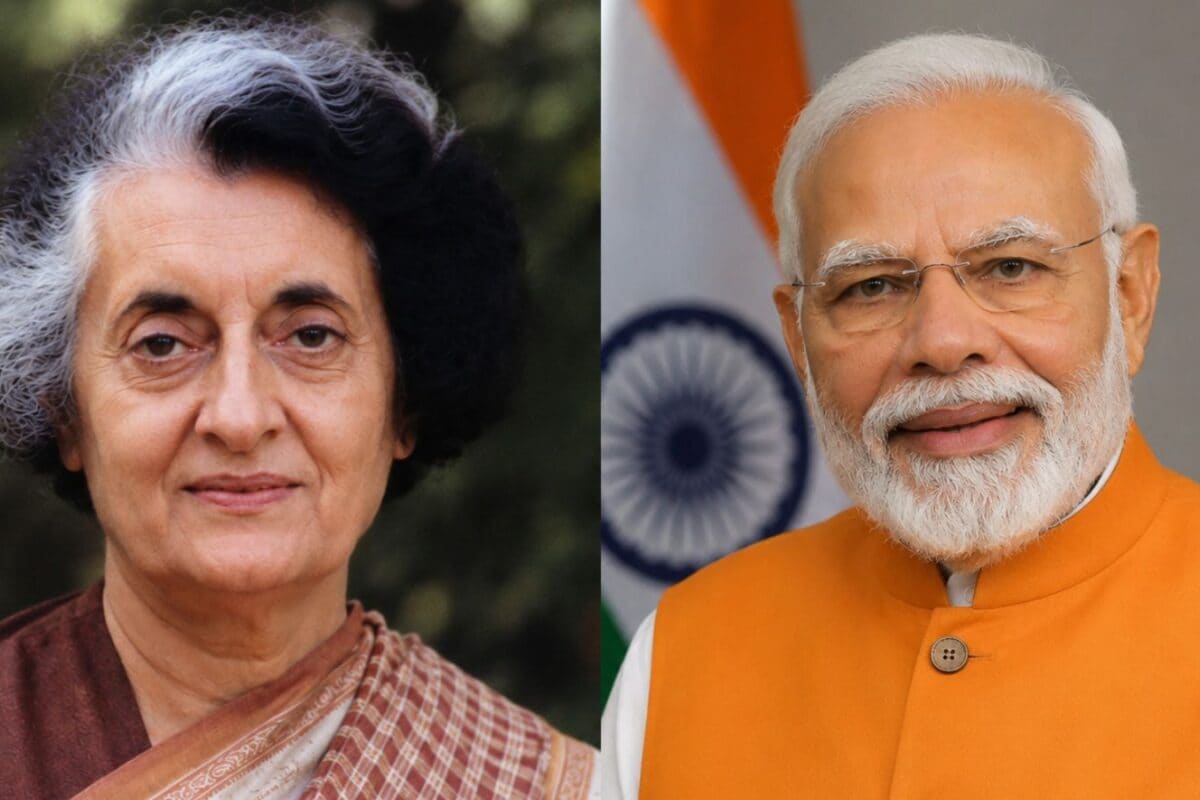
The 1973 Lesson: Why Modi Didn't Repeat Indira Gandhi's West Asia Gamble In Win For India Published By, Last Updated: June 23, 2026, 15:37 IST Supporters of a more realist approach often point to 1973 as evidence that countries protect their own interests first, regardless of political friendships or diplomatic solidarity Rapid Read Indira Gandhi and PM Narendra Modi had different approaches to India's oil security. (AI-Generated Image) The bombs and missiles may have fallen silent after the US-Iran ceasefire, but the brief conflict once again exposed a vulnerability that has long haunted energy-importing nations like India—what happens when war threatens the flow of oil through West Asia. During the crisis, disruption in the Strait of Hormuz sent markets on edge and revived concerns about a potential energy shock. For India, the episode inevitably invited comparisons with another West Asian conflict more than five decades ago—the 1973 Yom Kippur War—when then Prime Minister Indira Gandhi threw her support behind the Arab bloc, only to see India hit by a crippling oil price shock despite that diplomatic backing. The contrast with Prime Minister Narendra Modi’s approach could hardly be sharper. While Indira Gandhi’s government wagered that political solidarity with Arab nations would safeguard India’s interests, PM Modi’s supporters argue that New Delhi’s response to the recent Israel-Iran crisis was guided by a single principle: protecting India’s energy security regardless of which side prevailed. Rather than aligning with any camp, the government focused on diversifying oil supplies, strengthening strategic reserves and maintaining ties across the region. Indira Gandhi’s Pro-Arab Position The Yom Kippur War erupted in October 1973 when Egypt and Syria launched a surprise attack on Israel. The conflict quickly evolved into a wider geopolitical confrontation involving the United States, the Soviet Union and major Arab oil-producing nations. For India, which relied heavily on imported crude, the stakes were enormous. At the time, New Delhi believed that maintaining close ties with Arab countries was both strategically and economically prudent. Millions of Indians worked or sought opportunities in the Gulf, while India’s energy dependence on the region was steadily increasing.
Indira Gandhi’s government therefore left little ambiguity about where it stood. During the conflict, Indira Gandhi openly backed the Arab side. Her government blamed Israel for the war and argued that Israeli “intransigence" was the principal cause of the hostilities. India’s diplomatic posture was among the most pro-Arab in the non-aligned world. The support continued long after the guns fell silent. India backed the Palestine Liberation Organisation’s bid for observer status at the United Nations in 1974. In 1975, India became the first non-Arab country to grant formal diplomatic accreditation to the PLO and hosted a PLO office in New Delhi. New Delhi also voted in favour of the controversial UN resolution that equated Zionism with racism. The expectation within sections of the Indian establishment was that such unwavering support would ensure goodwill from Arab countries and potentially secure favourable treatment during an energy crisis. That expectation, however, did not survive contact with reality. Following the war, OPEC launched a dramatic increase in oil prices. Crude prices surged from roughly $3 per barrel to about $12 per barrel, an increase of nearly 300 per cent. India hoped Arab producers would recognise its support and offer concessions through a dual-pricing arrangement or some other preferential mechanism. But that never happened. OPEC refused to create any special category for India. Despite New Delhi’s strong backing for Arab causes, India paid the same sharply higher prices as other oil-importing countries. For critics of Indira Gandhi’s approach, this remains the central lesson of 1973: diplomatic loyalty did not translate into economic protection. The consequences were severe. India’s oil import bill, which stood at around $414 million in 1973, was projected to jump to nearly $1.35 billion in 1974. That figure amounted to roughly 40 per cent of the country’s potential export earnings and almost twice India’s foreign exchange reserves at the time. The impact was felt across the economy and for many analysts, the episode demonstrated that international relations are ultimately driven by interests rather than sentiment. Supporters of a more realist approach often point to 1973 as evidence that countries protect their own interests first, regardless of political friendships or diplomatic solidarity.
 The BriefWire