Europe's defense ambitions get reality check
European countries have been trying to scale up and integrate their military capabilities, but their current defense production and procurement model is not fit for
European countries have been trying to scale up and integrate their military capabilities, but their current defense production and procurement model is not fit for purpose, say experts. For decades after the end of the Cold War in 1989, defense was not a high priority for European leaders. Military spending was slashed, armed forces were downsized, and equipment stockpiles depleted, resulting in diminished combat readiness. Russia's full-scale invasion of Ukraine in February 2022, however, served as a wake-up call and prompted European governments to reverse course and focus on defense. Growing uncertainty about US security commitments under President Donald Trump accelerated the trend. Germany even amended its constitution to remove borrowing limits for defense, giving Berlin free rein over military spending. Last year, the 29 European members of the North Atlantic Treaty Organization (NATO) together spent as much as $559 billion (€487 billion) on defense, according to the Stockholm International Peace Research Institute (SIPRI), a think tank. Germany alone spent $114 billion on its military, a 24% rise from the year before, it said. How Europe's defense sector is trying to gear up To view this video please enable JavaScript, and consider upgrading to a web browser that supports HTML5 video Strengthening the defense industry Europe has also sought to strengthen its defense industry to ensure self-sufficiency and supply chain security in critical weapons systems. To that end, many countries have joined forces to execute advanced military projects such as the development of next-generation fighter jets. Per Erik Solli, senior defense analyst at the Norwegian Institute of International Affairs (NUPI), highlighted several key airpower initiatives in Europe, such as the GCAP program run jointly by the UK, Italy and Japan, or Sweden's developing ecosystem around its Gripen fighter jet and drones.
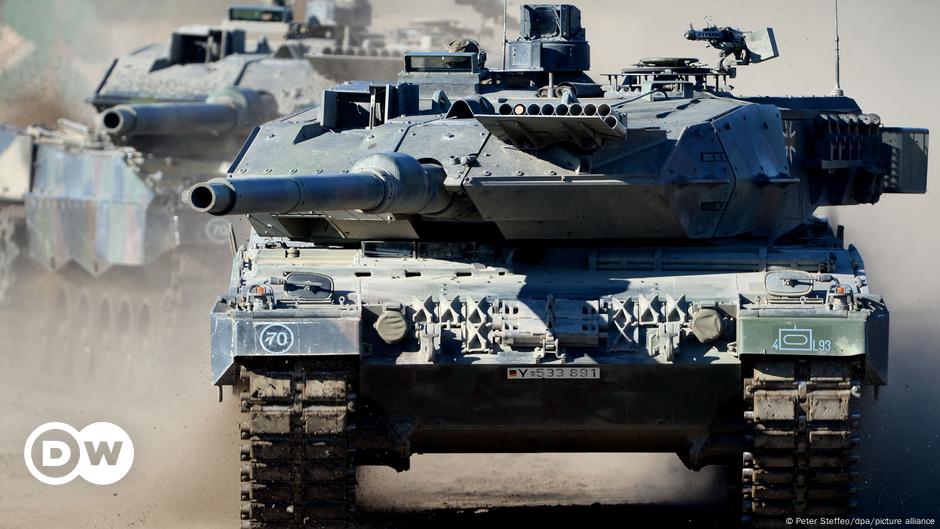
European arms manufacturers such as Rheinmetall, Thales, and Leonardo have benefited from the spending boom, with their order books filling up. But a significant gap persists between ambition and outcomes, with many weapons makers struggling to accelerate production. Their underwhelming revenue and profit figures in the first quarter of 2026 raised investor concern and doubts about the firms' ability to translate orders into earnings. Fragmentation and diverging national interests Europe's defense sector also faces structural challenges such as scale disadvantage compared to US companies and national fragmentation, resulting in duplication and coordination issues. Joint initiatives often face severe delays due to diverging national priorities. The Franco-German Future Combat Air System (FCAS) fighter jet initiative is a case in point. The project was recently scrapped due to disagreements between France's Dassault Aviation and Germany's Airbus Defense and Space, dealing a heavy blow to European efforts to cooperate more closely on defense. The FCAS program was meant to develop a diverse next-generation airpower system with manned aircraft, unmanned drones and a combat cloud for information connectivity, said Solli. Even though the companies will no longer co‑develop the manned aircraft, he said, the fate of the drones and combat cloud remains uncertain. Germany considers new fighter project after FCAS collapse To view this video please enable JavaScript, and consider upgrading to a web browser that supports HTML5 video There's also uncertainty over the future of a long-delayed French and German joint initiative to develop a next-generation tank. Multinational projects among European states work when governments align priorities and coordinate, Emil Archambault, an expert on security and defense policy at the German Council on Foreign Relations, told DW. He cited the Airbus A400M Atlas military transport aircraft as an example of a successful collaborative European defense program.
 The BriefWire