Arctic alarm: Earth's frozen carbon stores in the Arctic may stop absorbing CO2 and start releasing it by the 2050s
Why Earth's frozen carbon stores may not absorb CO2 forever What the researchers changed The main finding What is driving the change Why the result
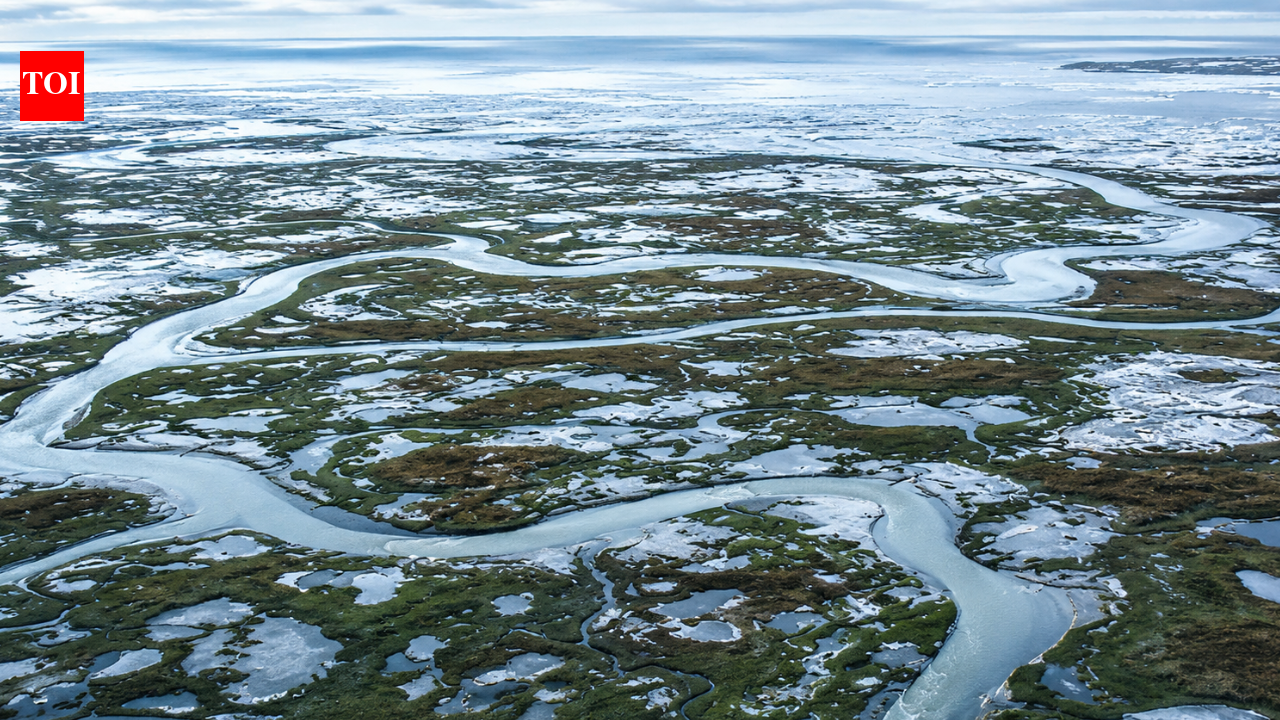
Why Earth's frozen carbon stores may not absorb CO2 forever What the researchers changed The main finding What is driving the change Why the result may still be conservative Why scientists are worried The study's bottom line The Arctic is warming far faster than the rest of the planet, and a new study published in Science Advances suggests that this warming could transform one of Earth's biggest natural carbon stores sooner than scientists once thought. Researchers say northern soils above 30°N, including vast areas of permafrost, may switch from absorbing carbon to releasing it around the 2050s when deep frozen carbon is taken into account. The findings challenge a key assumption in many climate models, which currently consider only the upper layers of soil and overlook huge amounts of ancient carbon buried much deeper underground. That hidden carbon, scientists say, could make the Arctic a much stronger contributor to climate change in the decades ahead.For years, climate models have assumed that northern lands would continue acting as a giant carbon sponge for much of this century. Although warming temperatures can thaw frozen ground and release greenhouse gases, they can also encourage plants to grow faster and absorb more carbon dioxide from the atmosphere. Overall, many models suggested that these regions would remain a net absorber of carbon.But the new study says that picture is incomplete. Researchers argue that current models largely ignore huge stores of ancient carbon buried deep underground in peatlands and Yedoma deposits, a type of ice-rich permafrost found mainly in Siberia, Alaska and parts of Canada.The authors write that these omissions "lead to an underestimation of permafrost extent and high-latitude carbon stocks" and hinder understanding of how thawing affects future carbon release.
They note that carbon-rich peat can extend to around 10 metres below the surface, while Yedoma deposits can reach depths of about 20 metres.To address this problem, scientists upgraded the ORCHIDEE-MICT land surface model. In simple terms, they taught the model to reconstruct how carbon accumulated underground over thousands of years.The new version simulates the formation of deep Yedoma deposits since the last ice age and the development of northern peatlands during the Holocene, the geological period that began around 11,700 years ago. It includes more realistic estimates of carbon buried beneath lands north of 30°N.The researchers then ran historical simulations covering the period from 1900 to 2014 and projected future conditions from 2015 to 2100 under three shared socioeconomic pathway scenarios, which are widely used by climate scientists to represent different possible futures. They compared these results with older versions of the model to see how including deep carbon changed the outlook.The updated model showed that northern soils actually stored much more carbon before the industrial era than standard models previously suggested. But that also means there is more carbon available to escape as the Arctic warms.As frozen ground thaws deeper into the soil, microbes begin breaking down organic matter that has remained frozen for thousands of years. This decomposition releases carbon dioxide and other greenhouse gases into the atmosphere.The simulations show that the Arctic's ability to absorb carbon weakens steadily throughout this century. By around the 2050s, northern lands could start releasing more carbon than they absorb, effectively changing from a climate helper into a climate amplifier.In earlier versions of the model, that shift was projected to occur later, beyond the middle of the century.According to the study, much of the additional carbon loss comes from deep permafrost layers, especially Yedoma deposits.
 The BriefWire