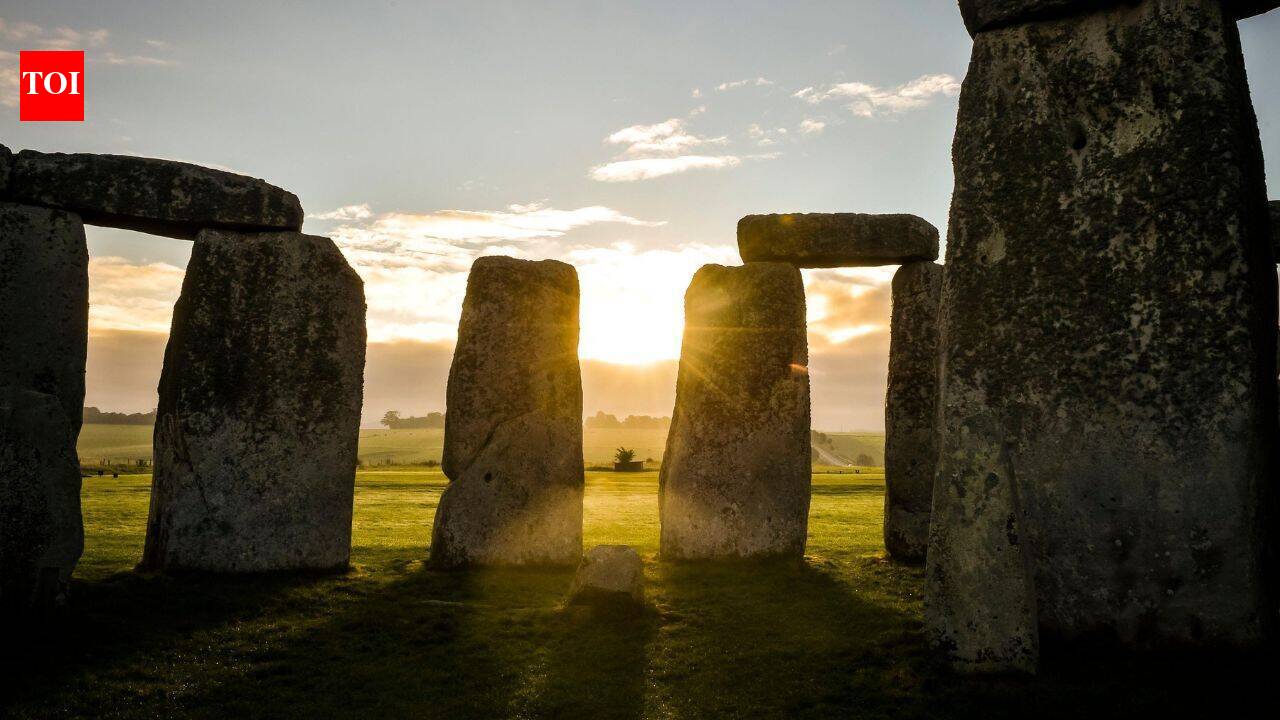
Stonehenge mystery revealed: A forgotten wooden structure may reveal how ancient Britains first tracked the sun
BBC Hidden patterns in Neolithic occupation layers discovered during excavation in the UK Unearthing the unusual postholes that hint at a deliberate wooden alignment Reconstructing
BBC Hidden patterns in Neolithic occupation layers discovered during excavation in the UK Unearthing the unusual postholes that hint at a deliberate wooden alignment Reconstructing a possible Neolithic solar alignment in prehistoric Britain Stonehenge before Stonehenge feels like a stretch, but it persists What remains uncertain in the soil On a low stretch of countryside not far from Stonehenge, where the road from Bulford cuts across open grassland, archaeologists have been piecing together something that never quite forms a full picture. Scattered postholes, fragments of pottery, bits of bone and charcoal that seem ordinary until they are placed in relation to each other. The suggestion now is that this quiet patch of Wiltshire may once have held a wooden structure aligned with the midsummer sunrise, built centuries before the first stones of Stonehenge were raised. It is a tentative idea, drawn from angles and soil stains, but it suggests the landscape was being marked long before stone entered the story.The site itself sits on a gentle rise overlooking the sort of farmland that rarely draws attention unless something is planned for it. In this case, it was a housing development linked to the UK Ministry of Defence that prompted a full archaeological sweep, carried out in stages between 2015 and 2017, as reported by The Geographic. What came up from the ground was not a monument in any obvious sense, more a scatter of impressions left behind by activity that had long since disappeared.Reportedly, teams working with Wessex Archaeology recorded dozens of pits spread across a wide area, many containing the usual domestic remnants of late Neolithic life.
Grooved ware pottery, animal bone, flint fragments, the sort of material that often signals repeated but unremarkable occupation. Nothing about it initially suggested anything aligned or deliberate in the architectural sense.The ground, though, kept giving small inconsistencies. Two of the deeper features refused to behave like the rest.Most of the pits had straight profiles, as if dug quickly and filled in just as casually over time. The two outliers were different. Their sides narrowed as they went down, almost funnel-shaped, as if designed to grip something upright rather than simply store refuse or rubble.Chalk had been packed into them, tightly, and there was little else inside. One held traces of ash wood charcoal, which is not unusual in itself, though its presence felt more deliberate when set against the lack of everyday debris. These were not dumping pits. They read more like sockets, intended to hold weight.Taken together, they formed a rough line across the hillside, though not one that would immediately stand out without measurement. It is only when plotted that the suggestion emerges: something once stood there, tall enough to cast a positional relationship with the horizon.Reconstruction work is always part calculation, part guesswork. In this case, archaeologists imagine heavy wooden posts, perhaps four metres or so in height, set firmly into the chalk-filled sockets. Nothing survives above ground, so the shape of the monument is inferred rather than seen.What drew attention was the direction they appear to point.
 The BriefWire