Release Of Frozen Assets, Nuclear Inspections: Why US And Iran Differ On Switzerland Talks
Release Of Frozen Assets, Nuclear Inspections: Why US And Iran Differ On Switzerland Talks Published By, Last Updated: June 23, 2026, 07:39 IST After Switzerland
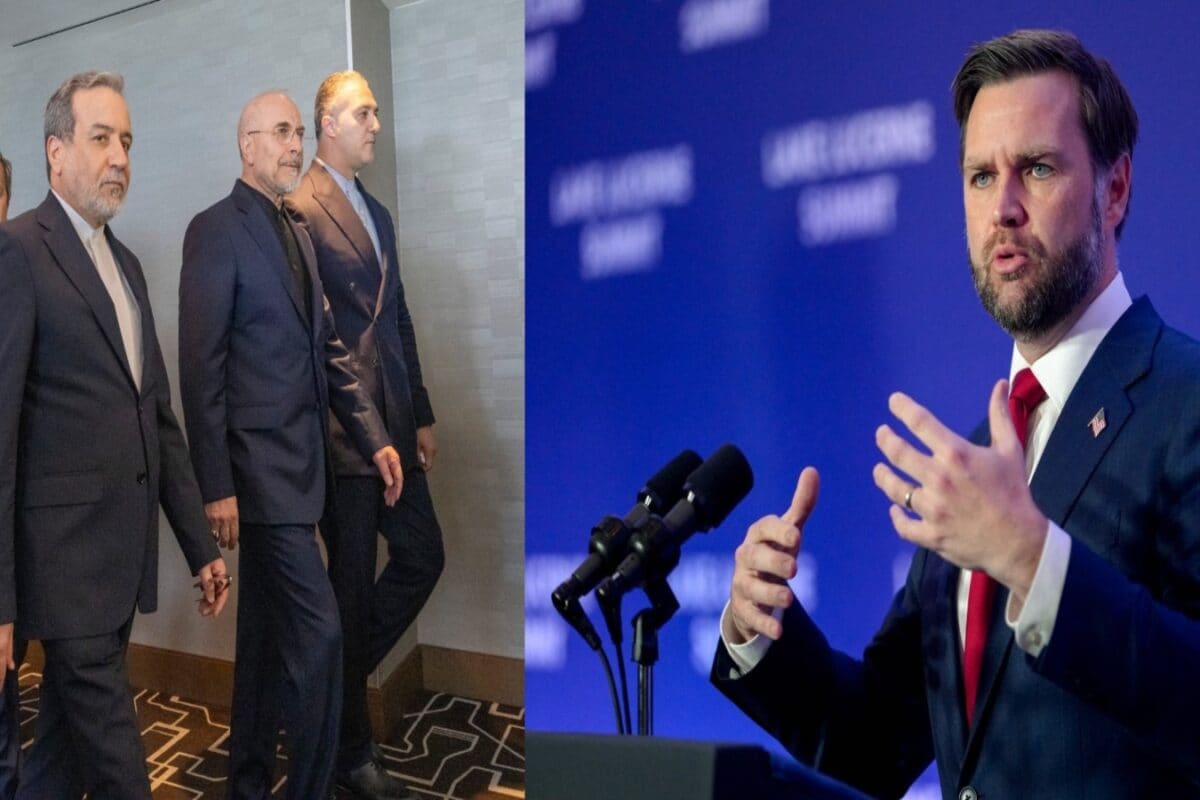
Release Of Frozen Assets, Nuclear Inspections: Why US And Iran Differ On Switzerland Talks Published By, Last Updated: June 23, 2026, 07:39 IST After Switzerland talks, JD Vance said that Iran had agreed to allow inspectors from the IAEA back into the country, which was rejected by Tehran. US, Iran Offer Contrasting Versions of Switzerland Talks on Assets, Nuclear Inspections (Photo: AFP) There appears to be a significant divergence between the United States and Iran over what was agreed during the first round of talks held in Switzerland on Sunday. While US Vice President JD Vance said any release of frozen Iranian assets would depend on Tehran’s future commitments and verification measures, Iran has maintained that Washington has already agreed to ease restrictions and release some sanctioned assets. Differences have also emerged over the issue of nuclear inspections. Vance suggested that Iran had agreed to allow international inspectors greater access, a claim Tehran has pushed back against. What Vance said on frozen assets A day after returning to the United States following talks with Iran in Switzerland, Vance said the release of frozen Iranian assets would be linked to continued progress in negotiations. “Fundamentally, that money is not going to be unfrozen unless we continue to see progress, and that will obviously be a big part of the negotiation in the days to come," he said. Vance stressed that Washington would assess Iran based on its actions rather than its assurances.
He also highlighted the importance of international inspections and said the United States would closely monitor Iran’s cooperation with nuclear inspectors. “You can’t trust anybody’s words—you have to trust what they actually do. Letting in the inspectors is a big deal—but again, we’re going to see what they actually let the inspectors do once they’re in the country. That’s going to continually be part of our negotiation," Vance said. Disagreement over nuclear inspections Vance also claimed that Iran had agreed to allow inspectors from the International Atomic Energy Agency (IAEA) back into the country, describing it as “probably what we’re most excited about as Americans". However, Iran rejected that interpretation. Responding to Vance’s remarks, Tehran said its cooperation with the United Nations nuclear watchdog would continue “under the current procedures", signalling that no new arrangement regarding inspections had been agreed upon. The differing statements have added to uncertainty over the precise outcomes of the Switzerland talks. The remarks came after the first round of US-Iran negotiations concluded at the Burgenstock resort in Switzerland on Sunday. Iran projects a different outcome Iranian Foreign Minister Seyed Abbas Araghchi presented a markedly different assessment of the talks. Speaking after the negotiations, Araghchi said, “Oil and petrochemical exports have been waived, the blockade has been lifted, some frozen assets have been released, and a major reconstruction and development plan has been launched for Iran." His statement suggested that tangible economic relief had already been secured, contrasting with Vance’s position that any asset release would depend on future progress and compliance.
 The BriefWire