Iran-US talks to end war beset by tension, mistrust
While both sides claim "encouraging progress," experts say there's a long way to go to turn the shaky diplomatic framework into a durable agreement. US
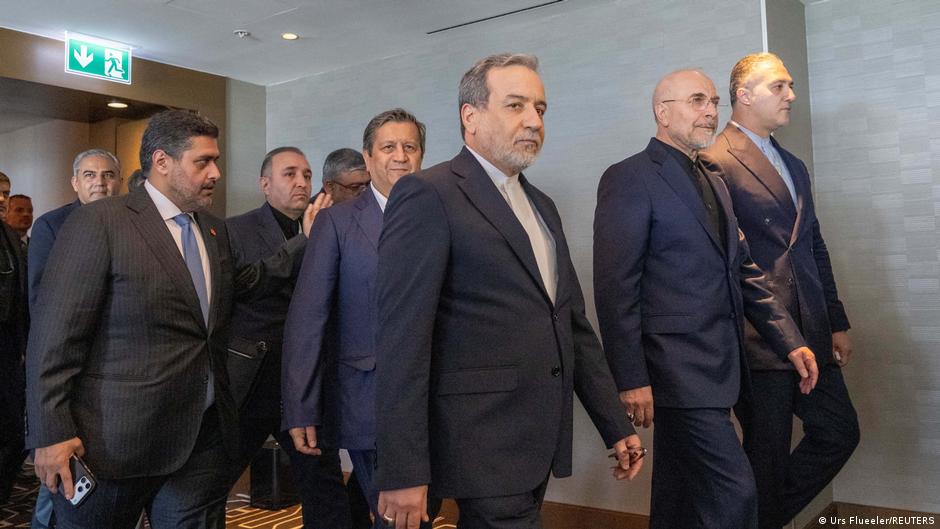
While both sides claim "encouraging progress," experts say there's a long way to go to turn the shaky diplomatic framework into a durable agreement. US Vice President JD Vance declared Monday that a "very good foundation" had been laid for a successful final deal with Iran following direct talks between the two sides at a mountain-top resort in Switzerland. The talks were the first stage of a two-month negotiating period set out under a preliminary deal agreed last week, aimed at ending the war launched by the United States and Israel on February 28. Iranian Foreign Minister Abbas Araghchi wrote on X that there had been "major progress to end the Lebanon War," in reference to the clashes between Israel and the Iran-backed Hezbollah militants. He also said Tehran had secured waivers for oil and petrochemical exports, the release of some of its frozen funds and the launch of a reconstruction and development plan for Iran. While Iran's top negotiators left for Tehran after the talks, the technical team — led by Deputy Foreign Minister Kazem Gharibabadi — is still in Switzerland and will continue talks, Iranian state media reported. The peace process between the US and Iranian officials, however, has been under pressure from multiple directions since before the talks began. Hardliners in Iran denounced negotiations as a retreat. In the United States, parts of the memorandum of understanding faced criticism for offering too much to Iran while leaving key questions unresolved. At the same time, Israel has continued its strikes in Lebanon, even as Tehran insists that a ceasefire there is part of the interim deal. 'We laid a very good foundation for a successful final deal,' Vance told reporters at Switzerland's luxury Burgenstock resort Image: Nathan Howard/AP Photo/picture alliance A delicate and fragile ceasefire The negotiations got off to a rocky start on Sunday, with the Iranian delegation briefly pausing talks after US President Donald Trump threatened in a social-media post to restart attacks on Iran if Tehran doesn't rein in its allied proxies in Lebanon. Iranian Parliament Speaker Mohammad Bagher Qalibaf, Tehran's chief negotiator along with Foreign Minister Abbas Araghchi, responded by saying that Iran did not take American threats seriously and warned Washington to be careful with its words.
"They better be careful with their statements, our armed forces are ready to respond in a different way," he said on his X account. "Whatever they say, we are the ones who will act." The exchange underscored the difficulties in turning the shaky diplomatic gambit into a durable agreement. Kambiz Ghafouri, a Finland-based political analyst, told DW that the basic ideological contradiction between the two sides has never been resolved. "The Iranian government is still a revolutionary government," he said. "It still has a supreme leader of the revolution, it still has the Islamic Revolutionary Guard Corps, and it still chants against America and Israel. Under these conditions, it has to be clear how Iran wants to negotiate with a country it still defines in those terms." In his view, this tension is not simply a diplomatic issue, but rather a problem of political identity, as a system built around permanent hostility cannot easily pivot to stable coexistence without creating internal strain. One of the clearest signs of that strain is the fighting in Lebanon, he said. Shipowners hope Strait of Hormuz will reopen soon To view this video please enable JavaScript, and consider upgrading to a web browser that supports HTML5 video Iran unlikely to abandon Hezbollah? Iran has treated the Lebanon ceasefire issue as part of the negotiation framework, while the American side has tried to narrow the talks and separate regional escalation from the core deal. But events on the ground have made that separation difficult. Analyst Ghafouri said Iran is unlikely to abandon Hezbollah, the Lebanon-based Shiite political party and militant group, in any meaningful way. "Hezbollah is like a child for the Iranian regime," he told DW. "It built it and strengthened it. Under these conditions, it is very unlikely that Iran will accept reducing Hezbollah to the level of an ordinary political party." For Tehran, Hezbollah is not just a policy instrument. It is part of the regime's long-term regional architecture and ideological self-image. For Washington and Israel, that makes Iranian commitments harder to trust, Ghafouri said. The US, Israel and many other countries label Hezbollah a terror group.
 The BriefWire