Starmer's Resignation Reflects A Fracture In Britain's Two-Party Politics. Here's Why
Starmer's Resignation Reflects A Fracture In Britain's Two-Party Politics. Here's Why Published By Last Updated: June 22, 2026, 18:20 IST Kier Starmer will step down
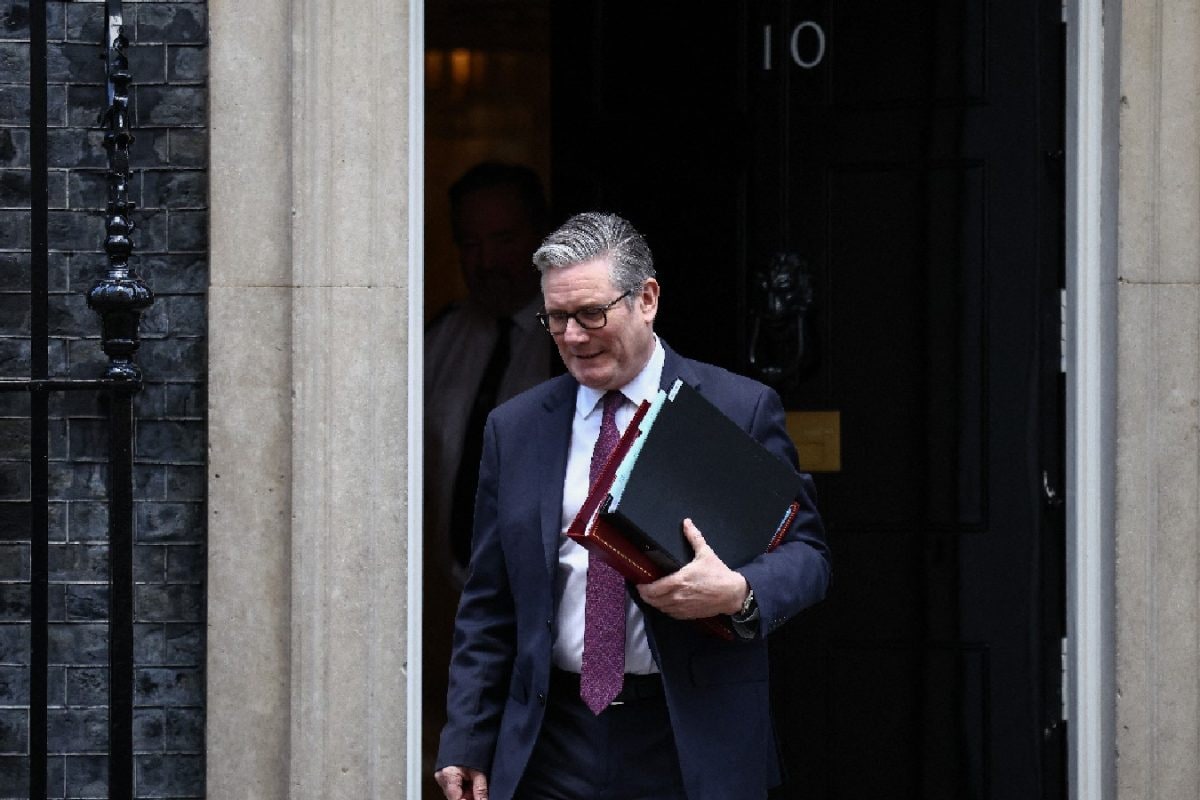
Starmer's Resignation Reflects A Fracture In Britain's Two-Party Politics. Here's Why Published By Last Updated: June 22, 2026, 18:20 IST Kier Starmer will step down as UK Prime Minister amid chronic issues that disillusion masses, as rising parties like Reform UK challenge the historic Conservative-Labour dominance Britain's Prime Minister Keir Starmer has announced he will stepping down as Prime Minister. (Source: AFP) Keir Starmer, the center-left politician of British politics, has announced that he would be stepping down as the Prime Minister of the United Kingdom. He will be the sixth person in his job to do so in ten years. His fall from grace with the British public has come amid an unending cost-of-living crisis, high-profile scandals, and an inability to provide promised high growth. All this has caused a continuous decline in popularity for Starmer in polls. Interestingly, it is more or less these same issues that have brought down other Prime Ministers too. All the while, once fringe political forces have consistently been rising in polls.
This has cast doubts over the established two-party system in the UK. Fragmentation Of British Polity A BBC analysis of the local council elections in May this year found that the vote share of the major parties would be almost evenly split between them if parliamentary elections were held at the time. Reform UK was ahead of all other parties, according to the BBC analysis, at 26 percent. Conservative and Labour were at 17 percent each. Greens and the Liberal Democrats followed them closely at 18 percent and 16 percent respectively. For context, the Conservative and Labour parties have always been coming either first or second, both in terms of vote shares and seat, in every election since 1922. British politics was always known for being bipartisan, much like the US. “Multi-party competition has replaced stable two-party dominance, mainstream parties are losing ground to challengers," Sara Hobolt, Professor of Political Science at the Department of Government of the London School of Economics and Political Science, wrote for their official blog.
What Does That Mean? The fracturing of British polity reflects long-term changes in the relationship between people and established parties, due to the decline in the ‘class-based structure’ of politics, wrote Hobolt. That political structure has now been replaced by ‘demographic divides, she believes. A report in Reuters listed issues ranging from cost-of-living, immigration, public services, to local level governance problems that been persistent. This goes a long way to explain why different leaders from both the Conservatives and Labour have quickly lost their initial popularities. These issues have been sticky. For example, citing Organisation For Economic Cooperation and Development (OECD) data, the Reuters report showed that income inequality in the UK has been higher than average European nation. Net migration to the UK even increased after the Brexit polls, during which a major demand for the ‘leave’ bloc was to curb migration into the country. This has repeatedly pulled down poll numbers for sitting Prime Minister. Similarly, wait times for Health Services and the poor state of affairs at the local council levels have caused distress to the average Briton.
 The BriefWire