Indian Navy set to induct two more indigenous warships in July
Barely weeks after commissioning three naval platforms in a landmark expansion of its fleet, the Indian Navy is set to induct two more indigenous warships
Barely weeks after commissioning three naval platforms in a landmark expansion of its fleet, the Indian Navy is set to induct two more indigenous warships in July, underlining its accelerating modernisation drive and the country's growing shipbuilding capabilities. The Navy is preparing to commission stealth guided-missile frigate INS Mahendragiri and anti-submarine warfare vessel INS Malvan next month, further strengthening India's maritime combat capabilities amid evolving security challenges in the Indian Ocean Region. Read Full Story The twin inductions follow the recent commissioning of INS Dunagiri, INS Sanshodhak and INS Agray, reflecting the Navy's sustained push to expand its fleet with indigenously built platforms under the government's Aatmanirbhar Bharat initiative. COMPLETING THE PROJECT 17A FLEET INS Mahendragiri, the seventh and final warship of the Project 17A Nilgiri-class stealth frigates, is scheduled to be commissioned at Visakhapatnam.
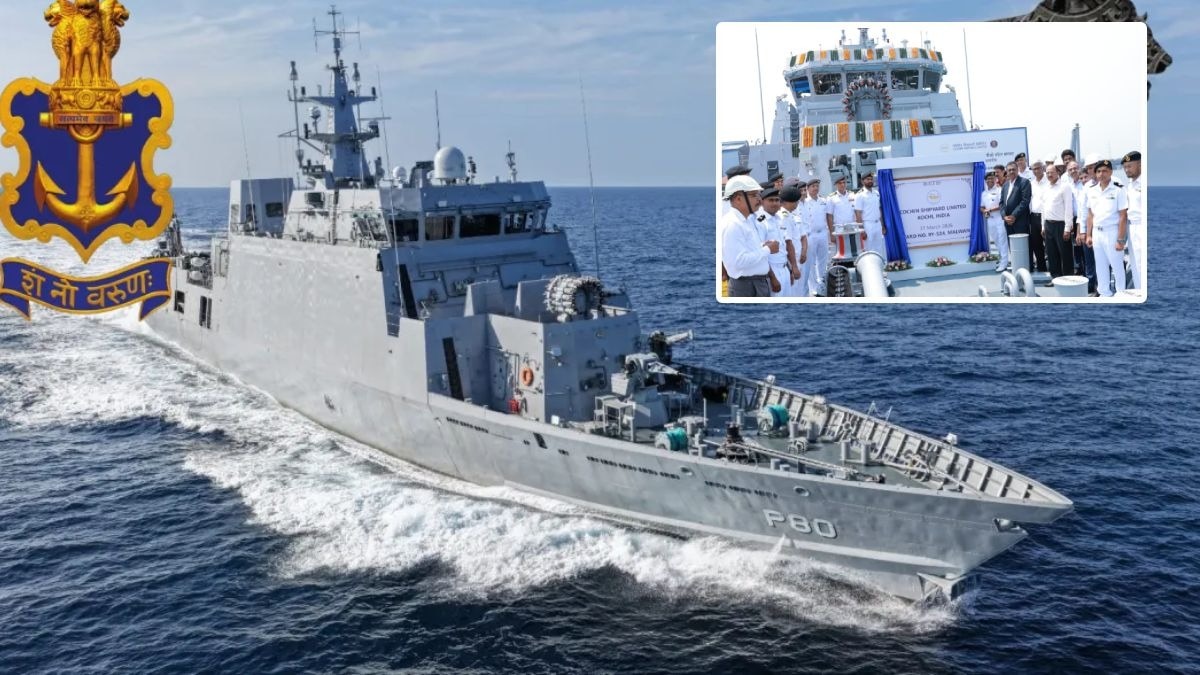
Designed by the Navy's Warship Design Bureau and built by Mazagon Dock Shipbuilders Limited, the frigate marks a significant milestone in India's indigenous warship-building programme, with nearly 75 per cent indigenous content. Equipped with advanced stealth features, the warship is designed for multi-dimensional operations across air, surface and underwater domains. It is armed with BrahMos supersonic cruise missiles, medium-range surface-to-air missile systems and an array of advanced sensors and weapons that enhance the Navy's ability to undertake anti-air, anti-surface and anti-submarine missions. STRENGTHENING ANTI-SUBMARINE WARFARE The Navy is also set to commission INS Malvan, the second vessel under the Anti-Submarine Warfare Shallow Water Craft (ASW-SWC) programme, at Kochi. Built by Cochin Shipyard Limited and delivered earlier this year, the vessel has been designed primarily for underwater surveillance and anti-submarine operations in coastal waters.
The 80-metre-long ship, with a displacement of around 1,100 tonnes, is equipped with torpedoes, anti-submarine rockets, advanced sonar suites and modern radar systems. In addition to anti-submarine duties, it is capable of undertaking low-intensity maritime operations and mine warfare missions. Named after the historic coastal town of Malvan in Maharashtra, the vessel revives the legacy of an earlier naval minesweeper that served the Indian Navy until 2003. The ship has more than 80 per cent indigenous content and incorporates systems and equipment supplied by India's domestic defence industry, including several micro, small and medium enterprises. PUSH FOR SELF-RELIANCE The back-to-back induction of indigenous warships comes at a time when strategic competition and submarine activity in the Indian Ocean Region are drawing increasing attention.
 The BriefWire