Aravalli park helps Delhi retain 3 million litres of rainwater: Reseachers
As Delhi prepares for the monsoon, a new study has found that the Aravalli Biodiversity Park helps retain nearly three million litres of rainwater every
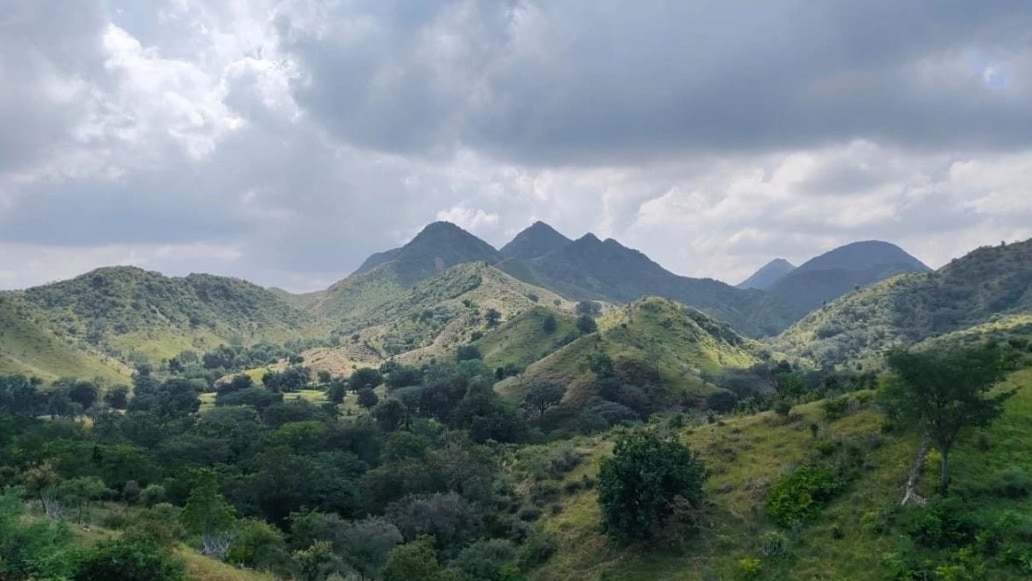
As Delhi prepares for the monsoon, a new study has found that the Aravalli Biodiversity Park helps retain nearly three million litres of rainwater every year, reducing surface runoff that can add to waterlogging and urban flooding. The 692-acre restored forest, the study said, is doing far more than serving as a green space in the middle of urban expansion. Researchers said the park’s roughly 2.02 lakh trees also improve air quality, store carbon and help recharge groundwater. The findings also trace the park’s transformation from a heavily degraded mining site into a biodiverse landscape of forests, grasslands and wetlands. Read Full Story The study, titled "Structure, ecosystem services and economic evaluation of native tree diversity: a case study of the restored Aravalli Biodiversity Park, Delhi, India", was carried out by researchers from the Centre for Environmental Management of Degraded Ecosystems, Biodiversity Parks Programme, Department of Finance and Business Economics and Satyawati College, all affiliated with the University of Delhi. It said the park sits in an important groundwater aquifer recharge zone and plays a key role in replenishing underground water reserves. By slowing the movement of rainwater across the ground, the forest allows more water to seep into the soil instead of flowing quickly over paved surfaces. "Delhi has a dry-winter humid subtropical climate bordering on a hot semi-arid climate and receives an average annual rainfall of 774.4 mm, most of it during the monsoon months between July and September," the study said.
Researchers added that such ecosystem services are becoming increasingly important in fast-urbanising cities, where shrinking green spaces and expanding built-up areas often worsen flooding and waterlogging during heavy rain. Besides regulating water, the park was found to play a major role in cleaning the air. The study estimated that its trees remove around 126.89 tonnes of air pollutants every year, with environmental benefits valued at nearly Rs 1.89 crore. The researchers said the trees help remove particulate matter and other harmful pollutants from the atmosphere, and noted that structurally diverse urban forests are particularly effective in trapping airborne pollutants and improving environmental quality. The park was also found to be a growing carbon sink. Researchers estimated that its trees currently store around 8,360 tonnes of carbon, valued at nearly Rs 11.34 crore, while absorbing another 1,236 tonnes of carbon every year as they grow. The study explained that carbon storage refers to the amount of carbon locked in tree biomass at a given time, while carbon sequestration refers to the annual build-up of carbon by growing trees. For economic valuation, the carbon estimates were converted into carbon dioxide equivalents using a standard molecular conversion factor. The researchers also found that bigger trees generally store and absorb more carbon, with trees that have thicker trunks, greater height and wider canopies proving more effective at capturing carbon from the atmosphere.
 The BriefWire