Royal Ascot: Where the real spectacle isn't the horses
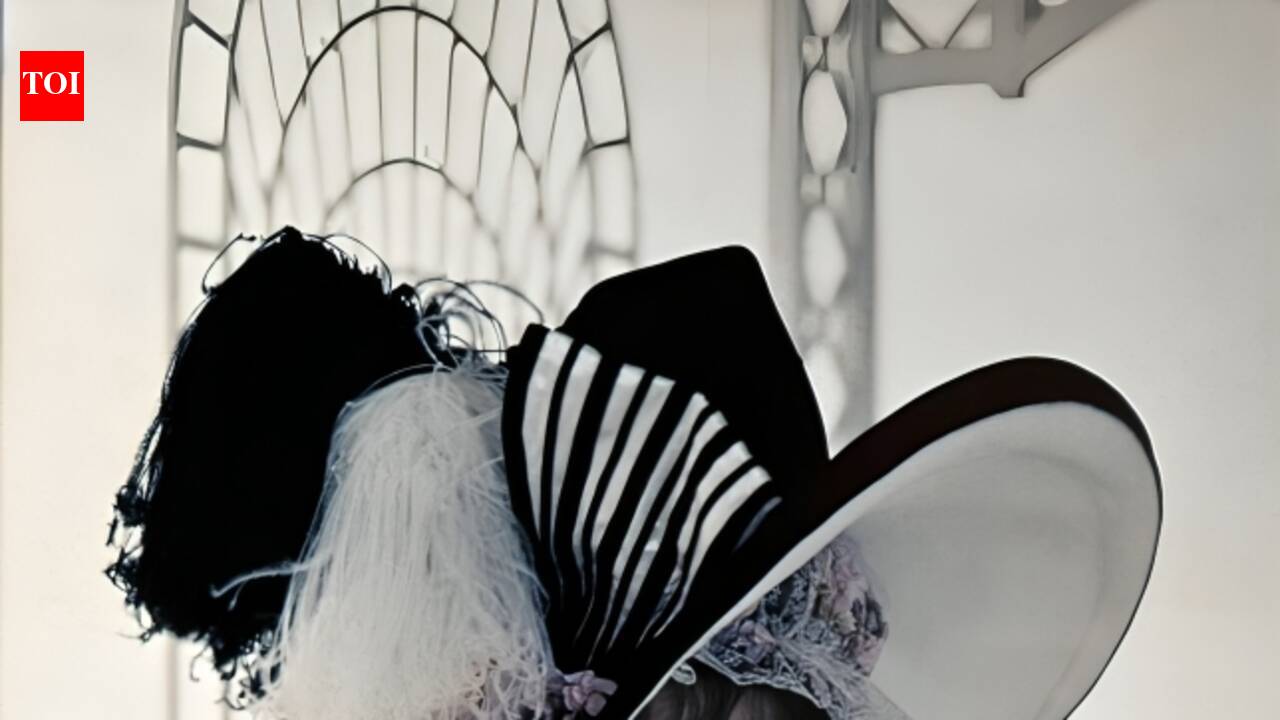
A solo portrait of Audrey Hepburn as Eliza Doolittle from My Fair Lady (1964), showing her in the elaborate white lace costume with the iconic
A solo portrait of Audrey Hepburn as Eliza Doolittle from My Fair Lady (1964), showing her in the elaborate white lace costume with the iconic black-and-white hat and parasol My Fair Lady The scene everyone remembers My Fair Lady The iconic Ascot scene from My Fair Lady (1964) A crowd that barely moves Then comes Eliza My Fair Lady Audrey Hepburn as Eliza Doolittle The dress that became history A solo portrait of Audrey Hepburn as Eliza Doolittle from My Fair Lady (1964), showing her in the elaborate white lace costume with the iconic black-and-white hat and parasol A stage before it was a film My Fair Lady The famous "Ascot Gavotte" scene from the original 1956 Broadway production of the musical My Fair Lady Why directors love Royal Ascot The Black Ascot When fashion became mourning Attendees at the famous "Black Ascot" horse race in June 1910, an event where the entire crowd uniquely dressed in somber black The crowd is the performance The Crown The horse lover behind the crown The Crown Imelda Staunton and Jonathan Pryce portraying Queen Elizabeth II and Prince Philip in the acclaimed Netflix series The Crown Downton Abbey: Where society comes to watch itself Downton Abbey Central cast members of the period drama film Downton Abbey: The Grand Finale dressed in formal 1930s high-society attire during a prominent horse racing scene Absolutely Ascot: A new kind of status symbol Absolutely Ascot The cast members of Absolutely Ascot dressed in vibrant formal attire complete with traditional race-day headwear and fascinators Why the Ascot look never goes out of style British fashion model Erin O’Connor attending the Royal Ascot 2026 horse racing event The greatest race of all Lady Madeleine Lloyd Webber, Amanda Caledon, Countess of Caledon and Lord Andrew Lloyd Webber attends Day 4 of Royal Ascot at Ascot, Royal Borough of Windsor and Maidenhead on June 19, 2026 in Ascot King Charles III and Queen Camilla attend Day 4 of Royal Ascot at Ascot, Royal Borough of Windsor and Maidenhead There are sporting events.
And then there are social theatres disguised as sporting events. For more than three centuries, Royal Ascot has been one of Britain's most glittering fixtures. Officially, it's about horse racing. Unofficially, it's a masterclass in status, spectacle and social choreography. Which is precisely why filmmakers can't resist it.In cinema and television, Ascot rarely appears as a story about winning races. Instead, it becomes shorthand for Britain's class system — a place where aristocracy performs tradition, etiquette and privilege under the watchful gaze of society.Every outfit matters. Every gesture is scrutinised. Every conversation carries weight.Think of it as society's most elegant audition.When people think of Royal Ascot on screen, one image invariably comes to mind: the iconic Ascot sequence from(1964).Ironically, the horses barely matter.The famous "Ascot Gavotte" is less about racing and more about belonging — about who gets to enter elite society and who merely imitates it.Costume designer Cecil Beaton transformed Ascot into one of cinema's most unforgettable visual spectacles.Guests arrive dressed almost entirely in black, white and grey. They glide in perfect synchrony, looking less like racegoers and more like exquisitely dressed mannequins.The effect is deliberate.The world of high society appears beautiful, refined and controlled — but also strangely lifeless.Into this sea of monochrome steps Eliza Doolittle. She looks impeccable. The dress is right. The hat is right. The posture is right. She has mastered every visible rule of aristocratic behaviour.But ascleverly reminds us, appearance alone isn't enough to secure acceptance.Few costumes in film history are as instantly recognisable as Eliza's Ascot ensemble. The black-and-white striped silk gown. The towering floral hat. One unforgettable silhouette.The outfit remains one of cinema's most celebrated fashion moments because it perfectly captures transformation, aspiration and the desire to belong.The visual language of the Ascot sequence actually predates Hollywood.
 The BriefWire