ISRO Invites Indian Astronomers To Explore XPoSAT Data For New Cosmic Discoveries
ISRO Invites Indian Astronomers To Explore XPoSAT Data For New Cosmic Discoveries Reported By, Edited By Last Updated: June 22, 2026, 15:40 IST The spacecraft
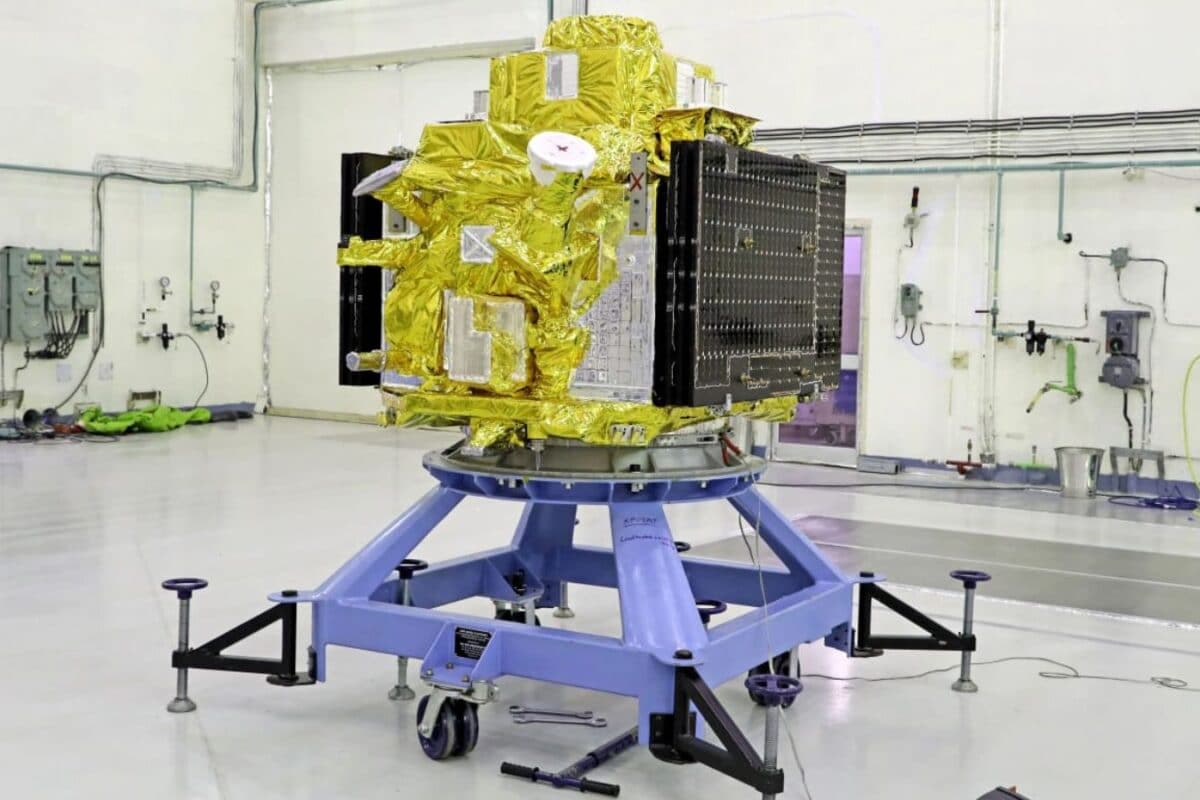
ISRO Invites Indian Astronomers To Explore XPoSAT Data For New Cosmic Discoveries Reported By, Edited By Last Updated: June 22, 2026, 15:40 IST The spacecraft orbiting 650 kms above Earth was India’s first dedicated polarimetry mission launched in 2024 designed to study Rapid Read Launched on January 1, 2024, on PSLV, the XPoSat currently orbits Earth in a near-equatorial orbit at an altitude of 650 kms. Indian astronomers have another opportunity to tap into data from India’s first- dedicated Launched on January 1, 2024, on PSLV, the XPoSat currently orbits Earth in a near-equatorial orbit at an altitude of 650 kms with its two scientific payloads studying the changing behaviour of The mission had marked a major milestone in India’s space science programmes when it was launched two years ago.
Now, Indian scientists and researchers engaged in astronomy at institutes/universities or colleges across the country can apply for the observation time on the satellite. They can send their proposals by July 25, and if they are approved and the targeted observations are collected, then the researchers will gain access to the data for their scientific study and analysis. Once the proposals are reviewed, the selected observations will be planned as per mission scheduling, and the data will be shared accordingly, said ISRO. After six months of proprietary period, the archived data will also be made available on the Indian Space Science Data Centre (ISSDC) and remain open to all registered users. The observations will be carried out between September 2026 and March 2027.
Also, since the satellite is operated in a pre-planned manner, the researchers will not be allowed at the Mission Operations Complex during the execution of their observations, the space agency added. The satellite carries two main payloads. The main payload POLI a polarimeter instrument in ISRO had earlier released some of the scientific data from the mission after its first call, which has already been published in international pee-reviewed journals. However now, it plans to further maximise the scientific returns from the mission, and released a second Announcement of Opportunity (AO) inviting new high-quality research proposals. News18 Newsletter Handpicked stories, in your inbox A newsletter with the best of our journalism submit About the Author Srishti Choudhary Srishti Choudhary, Senior Assistant Editor at CNN-News18 specializes in science, environment, and climate change reporting.
 The BriefWire