Are India’s airports ready to take off?
Actor and director Revathy loves flying from Kochi International Airport — and she flies for work at least twice a month. “It is designed in
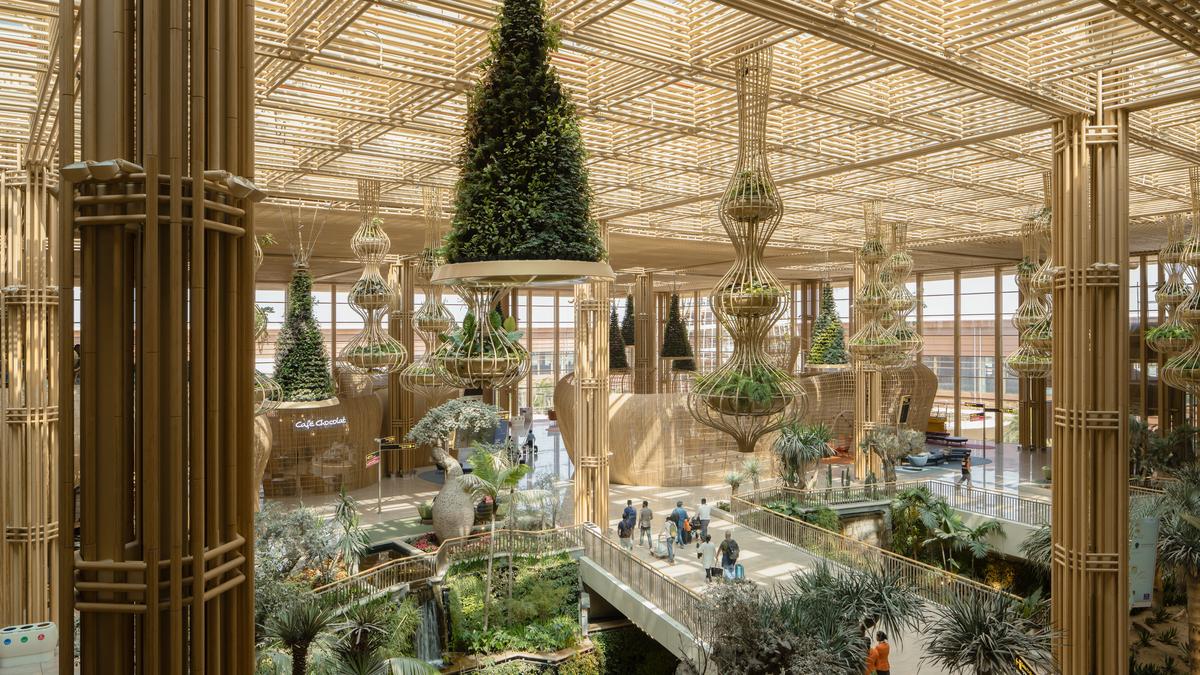
Actor and director Revathy loves flying from Kochi International Airport — and she flies for work at least twice a month. “It is designed in such a way that it has a single floor for most processes and you go through so easily. Even the pick-up area for cabs is organised so well,” she says. It handles 180-225 flights per day as compared to bigger airports like Delhi and Bengaluru, which handle 800 to 1,450, respectively. “Goa’s airport was also comfortable when I flew from there with my parents, who both used wheelchairs. But Bengaluru’s T2, while beautiful, is too long a walk!” For millions of Indians who choose to fly, airport design is crucial. It makes all the difference between a pleasant travel experience and one filled with stress, serpentine queues and dimly lit interiors. Airport architecture and design are no longer about just efficiency. Today, globally, the focus is on modernising terminals, enhancing sustainability, and creating intuitive design to improve passenger experience. And India is catching up, even while collapsed roofs and glass panels shattering continue to make headlines. “Terminal 2 in Mumbai is well maintained and easy to get through. Also, the staff are attentive. While travelling from there last year, I had not booked a wheelchair. But they noticed my gait and made it a point to request one for me. It made the whole journey so much smoother, and a welcome reminder how these positive experiences leave a lasting impression.”Yvonne RasquinhaSenior traveller Big three in the news Indian airports, in fact, are having a moment — and not just on social media, where newer builds are attracting likes, views and kudos for their biophilic design, craft, and sustainability-forward expressions. This month, the inauguration of the Navi Mumbai International Airport signalled a step forward in hi-tech airport design rooted in Indian tradition and exemplary performance. Designed by Zaha Hadid Architects, its lotus-inspired geometry and dual column system are striking. The lotus takes the form of 12 sculptural columns with anchors that rise like unfurling petals, while 17 mega columns carry the weight of the concentric petal-like roof canopies. Each roof segment is modelled to manage daylight, wind pressure, and monsoon drainage. Inside, among other design interventions, the check-in hall uses light architecture — such as hollow columns that act as vertical light wells, drawing sunlight deep into the passenger halls — to lend an airiness to the space. Last month, at the International Architecture Awards in Athens, Guwahati International Airport’s Terminal 2 was feted for its cultural storytelling. Inspired by Assam’s role as the ‘gateway to the Northeast’, it draws on the resilience of local bamboo and the elegance of its orchids for its design. “The kopou phool or foxtail orchid is a symbol of beauty and celebration, and Assamese women wear it during the Bihu festival. In the terminal’s design, this elegance is paired with the versatility of bamboo,” explains Nuru Karim, principal architect of Mumbai-based Nudes Architecture, who designed the soon-to-be-inaugurated terminal. Karim roped in local craftspeople to work on the bamboo structures, and made sure motifs from the region found pride of place — from the traditional jaapi (headgear fashioned from the leaves of palm trees) featured across the terminal’s decor, to the wall panelling that integrates the gamocha pattern with its lovely interplay of red and white. Another highlight: a ‘sky forest’. “The landscape design features tropical and subtropical plants native to Assam, alongside bamboo groves and flowering shrubs,” shares Karim. But before it all, there was Bengaluru’s Kempegowda International Airport Terminal 2, which made headlines in 2023 when it bagged the prestigious Prix Versailles Special Prize for an Interior for bringing the ‘garden’ into the airport terminal. From bamboo bells suspended from high ceilings dripping with local plants, to lantana elephants and even an indoor waterfall and cactus garden, the design was carefully curated to reflect conversations with locals, says Peter Lefkovits, principal architect at Skidmore, Owings and Merrill (SOM). “We spoke with people who grew up in the city and reminisced about tree-lined streets and a certain nostalgic longing for that era. Our aspiration for the terminal was to integrate sustainability using locally sourced materials — ivory brown granite, umber red bricks, and steel, and integrate local art forms.” Between the gate concourses and the terminal building, the “forest belt” spans a 90-metre-wide stretch of planted landscape as passengers cross open-air bridges.
 The BriefWire