These mountains in Albania kept this giant underground lake hidden for centuries; now it's the world's largest underground thermal lake
A hidden descent into Albania’s underground world Scientists confirm the world's largest underground thermal lake Why this thermal lake is scientifically unique What lives inside
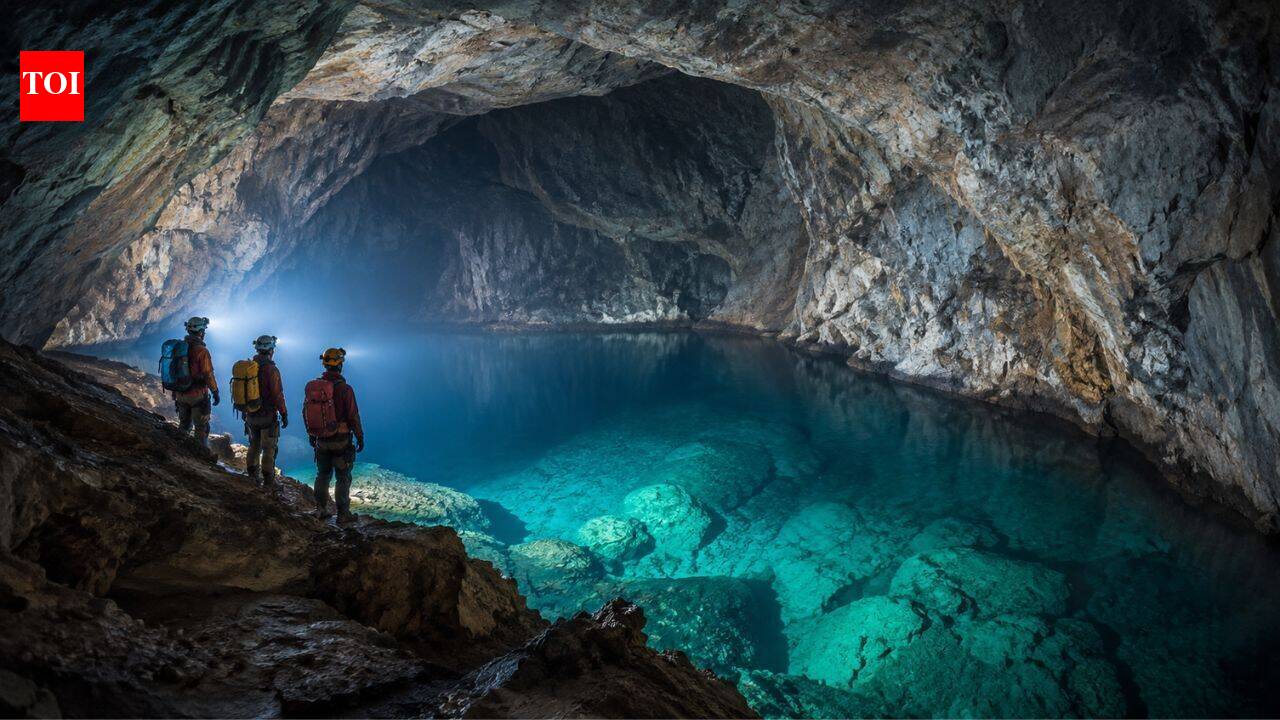
A hidden descent into Albania’s underground world Scientists confirm the world's largest underground thermal lake Why this thermal lake is scientifically unique What lives inside the hidden thermal lake For years, people living near the Albanian-Greek border had little reason to suspect that an immense body of warm water lay concealed beneath the mountains around them. The landscape gave away only small hints. Steam drifted from fissures in the limestone. Mineral springs surfaced in scattered locations. Beneath those signs, though, an entirely separate world existed out of sight. Far below ground, in darkness untouched by daylight, a vast thermal lake had remained isolated for an unknown span of time. Its existence only became known after cave explorers followed clues hidden within the region's geology and descended into a system that had never been properly mapped. What they found has since been recognised as the largest underground thermal lake yet identified.As reported by Albanian Monitor Ekonomi Magazine, the discovery traces back to exploratory work carried out by Czech speleologists investigating the mountainous border region of southern Albania.
Their attention was drawn to unusual geothermal activity appearing at the surface. Warm springs and visible vapour suggested that a larger source of heated water might be concealed somewhere beneath the limestone terrain.Tracking those signs led the team to a deep vertical shaft. The opening descended roughly one hundred metres into a cavern system that had not previously been documented. Reaching the bottom required a controlled descent through a narrow abyss before the explorers emerged into a hidden chamber. There, beyond the reach of natural light, they encountered a substantial body of thermal water. At the time, it was immediately clear that the lake was significant. What remained uncertain was its true scale.The first exploration provided only a rough understanding of the cave's dimensions. Conditions inside the chamber made detailed measurements difficult. The lake sat deep underground, access was limited, and the surrounding air contained hydrogen sulphide, creating an environment that demanded caution. Early sketches suggested the lake might be exceptionally large, but confirmation would require more advanced equipment than the expedition initially possessed. Several years passed before researchers were able to return with specialised scanning technology capable of producing precise measurements inside the cavern.When a larger expedition revisited the site, the results confirmed the earlier suspicions.
 The BriefWire