Czechia: Thousands march in support of public media funding
Prime Minister Andrej Babis' government has been accused of seeking to take control over Czech public media. The plan would leave broadcasters with a 15%
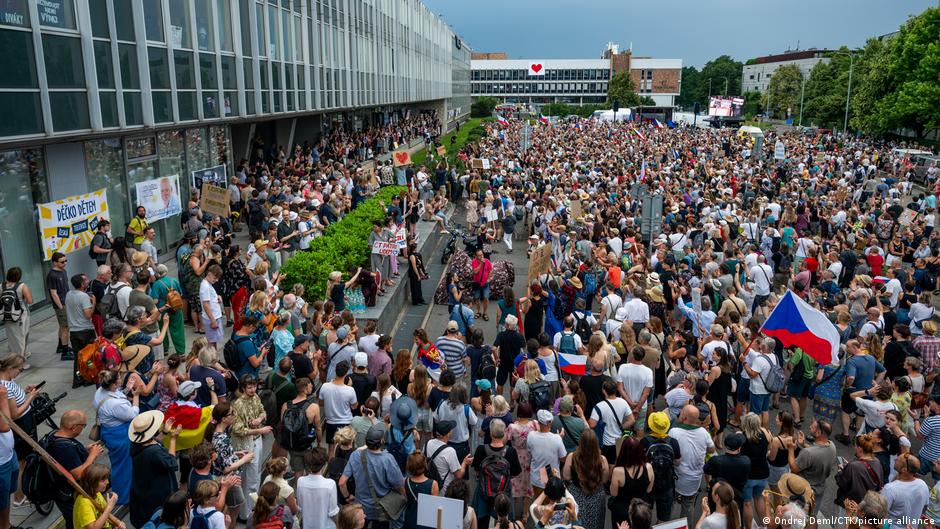
Prime Minister Andrej Babis' government has been accused of seeking to take control over Czech public media. The plan would leave broadcasters with a 15% funding cut and no guarantees of continued future funding. Thousands in the Czech Republic's capital, Prague, took to the streets on Sunday to reject a plan by the Czech government to overhaul funding for public broadcasters. Populist Prime Minister Andrej Babis' three-party governing coalition, which includes his ANO party and right-wing and far-right parties, has been accused of seeking to take control of the country's media. Critics of Babis have compared his moves to those of populist governments in Slovakia under Prime Minister Robert Fico and in Hungary under former Prime Minister Viktor Orban.
The protesters gathered in front of the Czech public television offices in Prague. "The media don't belong to politicians," said Mikulas Minar, a main organizer for the group behind the protest movement, dubbed the Million Moments for Democracy. "They belong to us all and we won't allow them to be stolen from us," Minar added. Marchers walked through neighborhoods carrying banners saying "Hands off public media." The demonstrations were shortened due to the heatwave currently plaguing Europe. Under the Czech government's plan, public media are expected to see a 15% reduction in funding Image: Ondrej Deml/CTK/picture alliance What is at stake for public broadcasters?
The overhaul of Czech public broadcaster funding was approved last week. In it, public radio and television would be financed from the state budget starting next year, and not from fees paid by individuals, households and businesses, as it is currently. Under the plan, public media are expected to receive 15% less funding than they have this year, and there are no guarantees that this funding will continue in the future. Public radio and television management has said the government's plan would force them to lay off hundreds of staffers. For his part, Babis has said he is not threatening the independence of public media, arguing that most taxpayers don't want to pay for the service and that it needs to save money.
His government has, however, often lashed out at both public and private independent media, arguing that it is biased against it. Edited by: Dmytro Hubenko
 The BriefWire