Germany could scrap law banning insults against politicians
Germany's special law prohibiting the insulting of politicians has led to cases that many people consider absurd. Some members of the government want to abolish
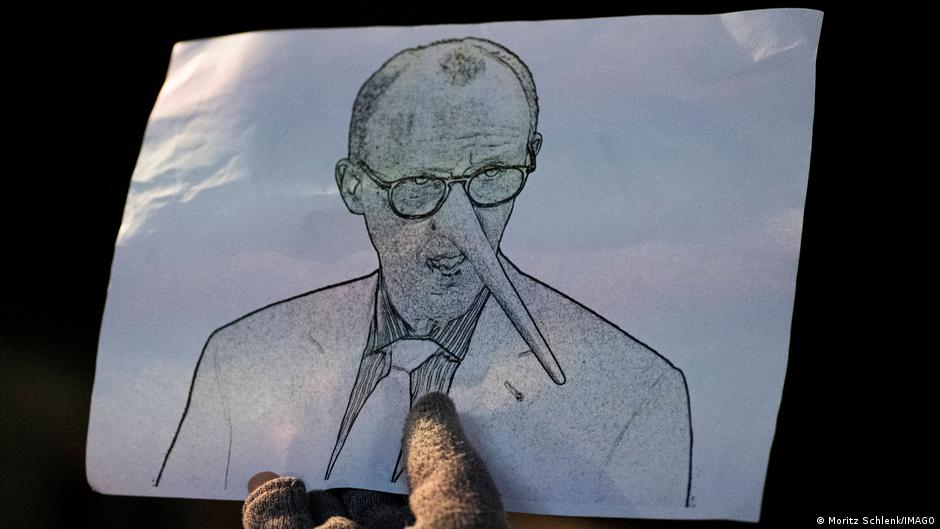
Germany's special law prohibiting the insulting of politicians has led to cases that many people consider absurd. Some members of the government want to abolish the law; others think there's a good reason to retain it. Germany is considering scrapping a special law that prohibits insulting politicians following a series of high-profile cases in which private citizens found themselves under investigation by the police for publicly calling politicians "Schwachkopf" (idiot), "Lügenfritz" (lying Fritz) or "Pinocchio" on social media. Section 188 of Germany's Criminal Code states that anyone found guilty of defamation "against a person involved in the popular political life" can theoretically be imprisoned for up to three years if the offense makes the politician's public activities "substantially more difficult." In practice, however, most prosecutions have ended with fines. The law was toughened in 2021, partly in response to the murder of the conservative Christian Democrat Walter Lübcke in 2019, to allow state prosecutors to pursue such offenses even if the politician in question does not press charges. Insults and attacks on politicians have been on the rise in Germany in recent years: According to statistics reported by public broadcaster ARD in May, police recorded 5,140 crimes targeting political representatives and party members in 2025. That was up from 3,690 such incidents in 2024 and 2,790 in 2023. As economy minister, the Green Robert Habeck was the butt of jokes but also the target of street and social media protest Image: IPON/IMAGO Freedom of speech? Or defamation? A number of cases have brought accusations of state overreach: In 2024, the home of a 64-year-old pensioner was searched after he described the Green Robert Habeck, the economy minister and vice chancellor at the time, as a "Schwachkopf" (idiot) on social media.
Though state prosecutors used Section 188 to justify the search, the man had also used far-right symbols that were banned on the grounds of being unconstitutional.Habeck pressed charges against the man, which only stoked his opponents' ire. Several politicians, mainly from the ruling center-right Christian Democratic Union and the opposition Greens, have suggested scrapping the law. "The idea was to better protect municipal politicians and institutions," CDU parliamentary group leader Jens Spahn told the Süddeutsche Zeitung in January this year. "But what has emerged is the impression: The powerful have created a special law for themselves." Erik Marquardt, a member of the European Parliament from the Greens, said he had received his fair share of online abuse, and acknowledges that politicians have become a public punchbag for all kinds of grievances. Still, he said, that doesn't mean politicians need a special law to protect them. "I don't know if we really need people's houses to be searched because of some stupid post," Marquardt told DW. "If you get insulted as a politician then you can decide for yourself whether someone should be brought to justice. It doesn't really matter if a politician is insulted or someone else." Mayors in Germany living with hate, threats To view this video please enable JavaScript, and consider upgrading to a web browser that supports HTML5 video No clear definition of 'insult' or 'defamation' The public debate has been marked with some seemingly absurd cases: Earlier this year, a Facebook user was fined €2,000 ($2,300) for calling Chancellor Friedrich Merz "Lügenfritz" in a comment beneath a post. Many conservative voters have accused the chancellor of lying because of what they see as his broken campaign promises. Even US government officials weighed in on the case.
 The BriefWire