All About INS Dunagiri, INS Sanshodhak And INS Agray, The Indian Navy's Newest Warships
All About INS Dunagiri, INS Sanshodhak And INS Agray, The Indian Navy's Newest Warships Published By, Last Updated: June 21, 2026, 12:01 IST The Navy
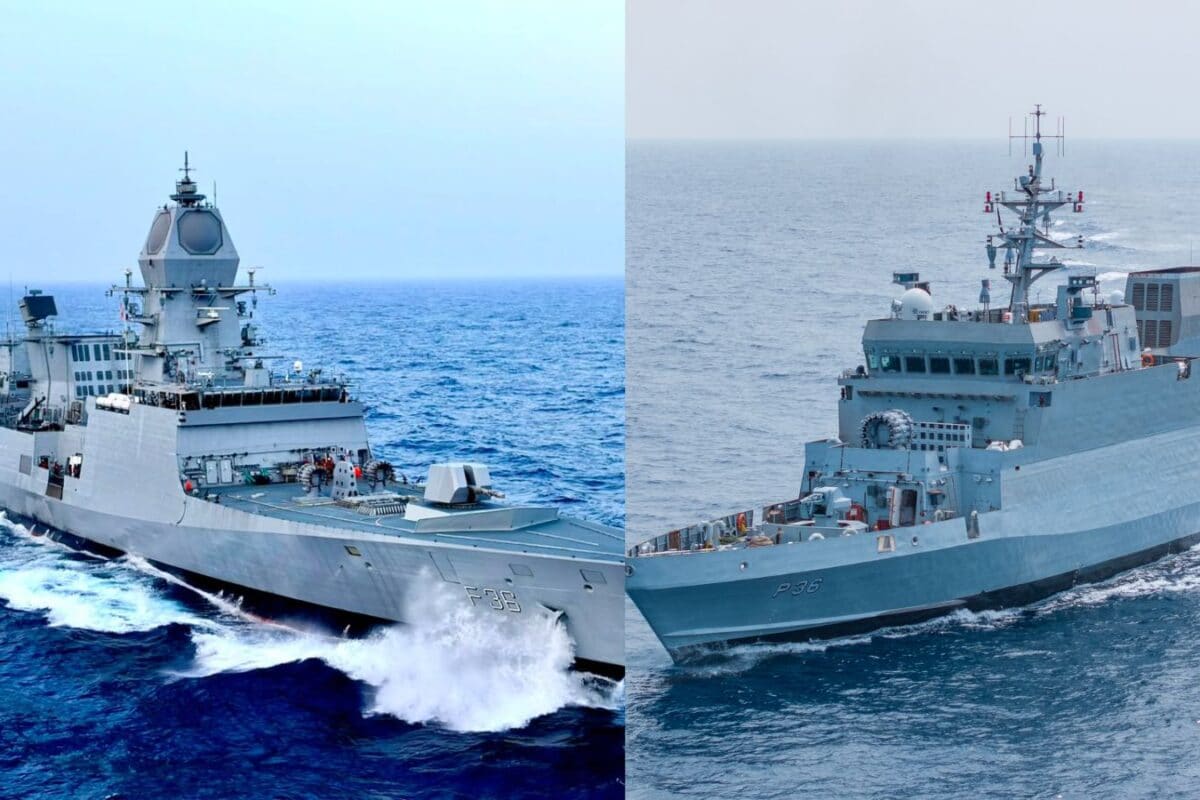
All About INS Dunagiri, INS Sanshodhak And INS Agray, The Indian Navy's Newest Warships Published By, Last Updated: June 21, 2026, 12:01 IST The Navy has termed the simultaneous induction a "tri-commissioning", highlighting the addition of three distinct capabilities to the fleet. Rapid Read Indian Navy Adds Three Strategic Platforms In Single Commissioning Ceremony. (PIB) Prime Minister Narendra Modi on Sunday commissioned three Indian Navy vessels in Kolkata, bringing into service platforms designed for blue-water operations, seabed mapping and coastal anti-submarine warfare. The induction of INS Dunagiri, INS Sanshodhak and INS Agray continues a steady expansion of the Navy’s fleet. Since January 2025, more than a dozen platforms, including destroyers, frigates, submarines, survey vessels, anti-submarine craft and support ships, have joined the force. All three ships have been constructed by Garden Reach Shipbuilders & Engineers (GRSE) in Kolkata. According to the Ministry of Defence, the vessels together have over 75 per cent indigenous content and involve the participation of more than 200 MSMEs. The Navy has termed the simultaneous induction a “tri-commissioning", highlighting the addition of three distinct capabilities to the fleet. INS Dunagiri Among the three, INS Dunagiri is the largest and most heavily armed. The 149-metre-long frigate displaces around 6,670 tonnes and can attain speeds of nearly 28 knots, or about 52 kmph. It belongs to the Navy’s Project 17A, which focuses on building Nilgiri-class stealth guided-missile frigates. Stealth features make the vessel harder to detect through radar and sensors. INS Dunagiri is equipped with BrahMos surface-to-surface missiles, medium-range surface-to-air missiles, Multi-Function Surveillance, Track And Guidance Radar (MFSTAR), sonar systems, electronic warfare equipment and anti-submarine weapons.
Project 17A succeeds the Shivalik-class Project 17 frigates already in service. Other ships under the programme include INS Nigiri, Himgiri, Taragiri, Udaygiri and Vindhyagiri. Explaining the role of these warships, a serving Navy officer said, “At the strategic level, these multi-mission frigates are capable of operating in a ‘blue water’ environment — deep sea far from shore — dealing with both conventional and non-conventional threats." The officer added that integrated construction methods involving extensive pre-outfitting have helped reduce overall construction time. The ships are designed for anti-surface, anti-air and anti-submarine warfare roles. INS Sanshodhak Unlike the missile-equipped frigate, INS Sanshodhak is meant for survey operations. Classified as a Survey Vessel-Large (SVL), it is tasked with gathering oceanographic and hydrographic data, including seabed characteristics, water depths, navigational channels and port approaches. The vessel is about 110 metres long, has a displacement of around 3,300 tonnes and can sail at speeds of up to 18 knots, or nearly 33 kmph. It carries autonomous underwater vehicles, remotely operated vehicles and multi-beam echo sounders for underwater data collection. Though not designed for combat, survey ships play a key role in naval operations. A Navy officer who has served aboard such vessels said, “Warships and submarines do not operate in an empty blue space. They move through waters shaped by depth, seabed features, currents, reefs, channels, ports, underwater slopes and coastal clutter. Knowing this environment helps ships move safely, submarines plan routes, ports update charts, and forces prepare for operations. It also supports civilian needs such as safe shipping, disaster relief, ocean research and coastal development." INS Sanshodhak is the fourth and final ship of the Sandhayak-class Survey Vessel-Large programme.
 The BriefWire