Are Ukraine's drones really exposing Russia's air defense gaps?
Once seen as almost impenetrable, Russian air defenses are now under growing strain from Ukrainian drones. A recent attack on Moscow has reignited debate over
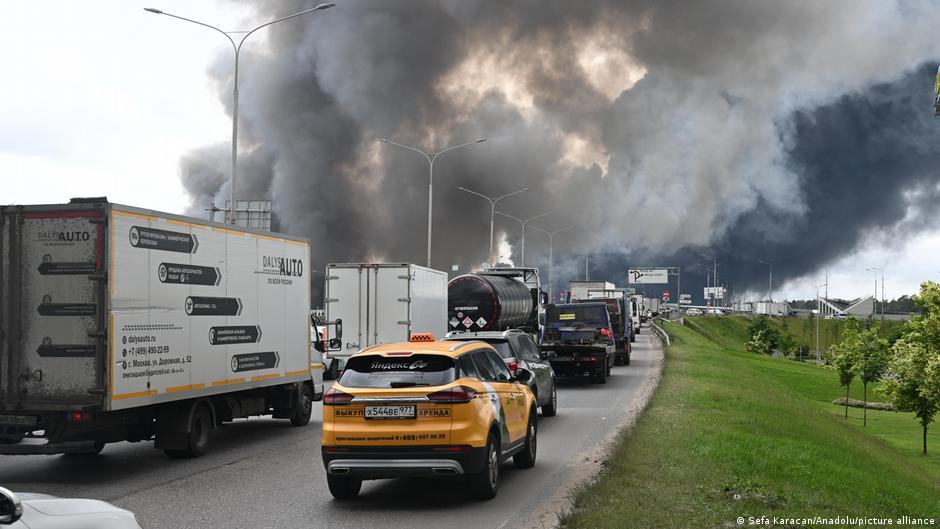
Once seen as almost impenetrable, Russian air defenses are now under growing strain from Ukrainian drones. A recent attack on Moscow has reignited debate over Russian vulnerabilities. Ukrainian drones appear to be getting better at bypassing Russian air defenses to strike critical infrastructure. After Ukrainian drones hit locations across Moscow on June 18 — the largest attack since the start of Russia's full-scale invasion of Ukraine — a debate was sparked about holes in the country's defense net. A major oil refinery in Moscow, which supplies 40% of the region's fuel, was set alight and production appeared to have halted for several days after the attack. There were also evacuations at Russia's largest airport. Eyewitnesses flooded social media with footage of what looked like failed air defense interceptions of the drones. "That impression forms among non-specialists, who see a missile fly past a drone without hitting it," Ruslan Leviev, a Russian dissident, military analyst and founder of the investigative group Conflict Intelligence Team, told DW. Ukrainian drone attack hits Moscow oil refinery To view this video please enable JavaScript, and consider upgrading to a web browser that supports HTML5 video Exiled Russian journalist Ivan Filippov tracks pro-Kremlin bloggers and noted their growing alarm that Ukraine had found a gap in Russian defenses. "They don't want the war to stop — they want a more effective war," Filippov told DW, meaning radical reform of the defense ministry and Russia's military-industrial complex.
"But I think they understand perfectly well that these reforms are impossible. So these texts tend to be pessimistic." Anatoliy Khrapchynskyi, a Ukrainian aviation expert and former air force officer, attributed the breaching of Moscow's air defense on June 18 to a combination of two factors: A systemic degradation of Russia's defense architecture and the technological evolution of Ukraine's strike capabilities. Leviev wasn't so sure. His team did not record weakening of Russia's defenses because it actually downed more than 90% of the UAVs over Moscow. But the few that managed to get by Russian air defenses caused substantial damage. Leviev believes the core issue is quantity. As the scale of attacks is increasing, this challenge is the same for both Russia and Ukraine: Mass drone attacks demand more hardware than any industry can supply. Russia's weaknesses Russian systems, including the Pantsir-S1, were designed to counter classic, large-scale attackers like cruise missiles, Khrapchynskyi told DW. They were calibrated against highly radar-reflective targets made of metal — but modern drones are often made from composite materials like plastic or plywood. This means those systems are basically "blind" to small drones. The sheer size of the Russian territory is a challenge on its own. Building an unbroken "air wall" or a single "dome" is impossible, Leviev said. And Moscow is an even easier target for drones because of its high urban density.
 The BriefWire