Transnational Terror: The Dubai-Pakistan Trail Behind The Ranchi RSS Office Petrol Bomb Attack | Exclusive
Transnational Terror: The Dubai-Pakistan Trail Behind The Ranchi RSS Office Petrol Bomb Attack | Exclusive Reported By, Last Updated: June 20, 2026, 20:21 IST The
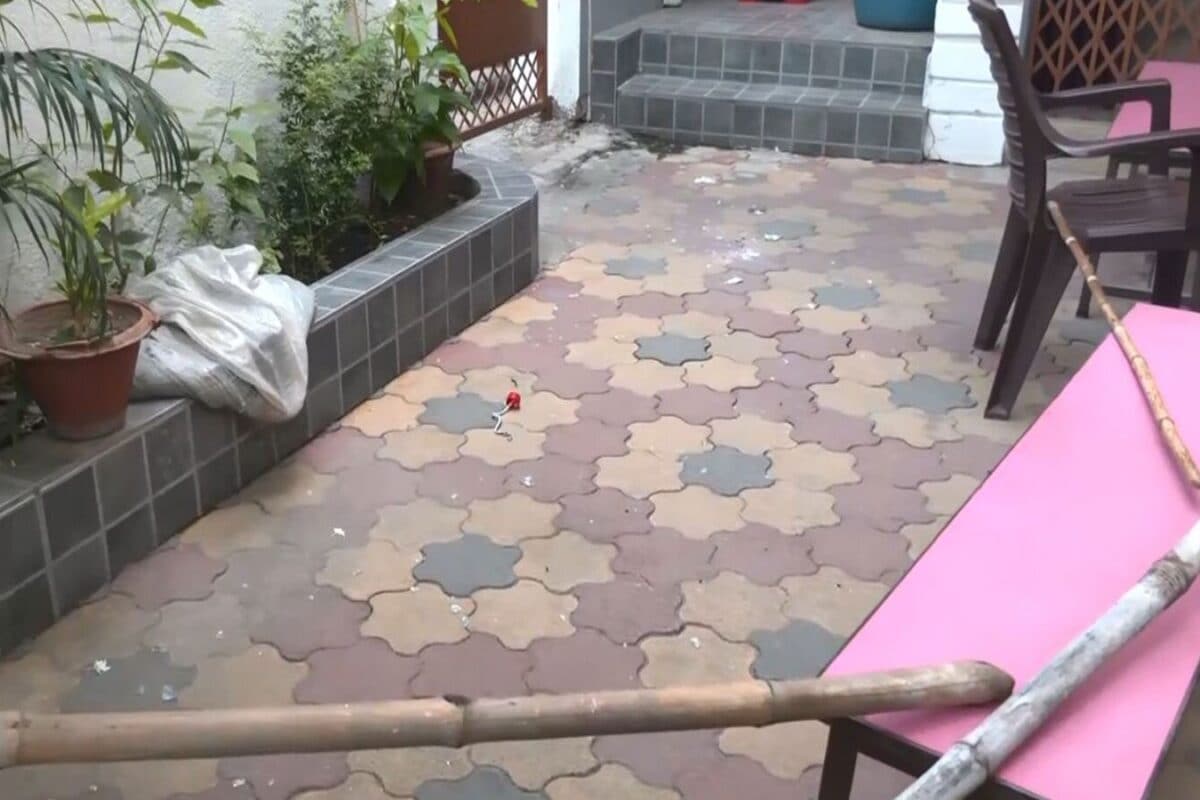
Transnational Terror: The Dubai-Pakistan Trail Behind The Ranchi RSS Office Petrol Bomb Attack | Exclusive Reported By, Last Updated: June 20, 2026, 20:21 IST The primary focus for security agencies has now shifted to tracing the financial trail to determine how funds were transferred to the module from Dubai and Pakistan A petrol bomb was reportedly thrown at the RSS office in Ranchi on late Tuesday night, according to Ranchi Police. File pic/ANI CNN-News18 has exclusively accessed the Ranchi Police interrogation reports of the suspects arrested for the recent attack on the Rashtriya Swayamsevak Sangh (RSS) provincial office in Ranchi. The confidential findings reveal a highly coordinated, trans-border terror operation orchestrated by an international network spanning India, the United Arab Emirates (UAE), and Pakistan. According to top police sources, the root of the conspiracy was traced to Dubai, UAE, where two of the arrested youth—identified as Saif Ansari and Aman Ansari—had recently travelled and stayed. During their time in Dubai, the duo was approached, compromised, and systematically radicalised by a Pakistani national named Shahbaz Rana, who operated under the aliases “Bhatti" and “Rana Sahib".
Local intelligence files indicate that Rana functions as a high-value asset for the Pakistan Inter-Services Intelligence (ISI)-funded terror outfit, Tehreek-e-Taliban Hindustan (TTH). This confirms earlier CNN-News18 reports that classified the Ranchi incident as a premeditated terror attack rather than a localised act of vandalism. While in Dubai, the Pakistani handler provided the Ansari brothers with specialised digital training. This included the dissemination of instructional videos demonstrating how to construct sophisticated petroleum-based explosive devices. After being formally recruited into the TTH fold, the youth were tasked with returning to India to execute targeted missions against national organisations, with the RSS provincial headquarters in Jharkhand’s capital selected as their primary target. Encrypted Execution and Real-Time Proof of Strike To plan the logistics and evade detection by Indian domestic intelligence agencies, the module relied heavily on a secure digital infrastructure. The suspects maintained constant communication with their overseas handlers using Botim—an internet calling app widely hosted and used in the UAE—alongside WhatsApp, through which they received real-time operational commands.
 The BriefWire