Navy To Induct Three Indigenous Platforms In A Massive Upgrade To India's Maritime Might
Navy To Induct Three Indigenous Platforms In A Massive Upgrade To India's Maritime Might Reported By, Last Updated: June 20, 2026, 16:22 IST Prime Minister
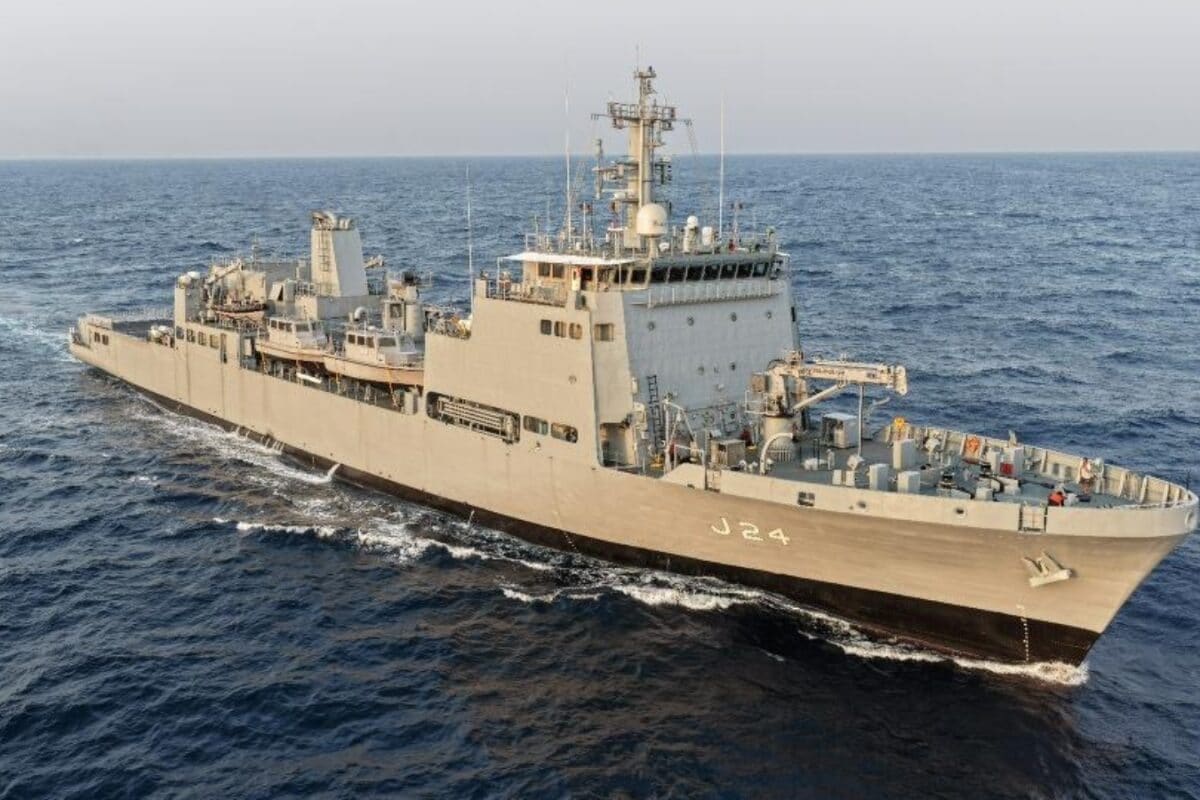
Navy To Induct Three Indigenous Platforms In A Massive Upgrade To India's Maritime Might Reported By, Last Updated: June 20, 2026, 16:22 IST Prime Minister Narendra Modi will on Sunday commission the three indigenous platforms, strengthening the Navy’s strike, anti-submarine and ocean-survey capabilities. Rapid Read Unlike conventional warships, INS Sanshodhak is designed to collect information rather than project firepower. Prime Minister Narendra Modi will on Sunday commission three indigenously built naval platforms that collectively bring missile-strike capability, submarine-hunting prowess and ocean intelligence assets into service. It is one of the most diverse capability inductions undertaken by the Indian Navy in recent years. It is only the second time that the Navy will induct three powerful indigenous platforms simultaneously. The vessels have been designed to operate across different dimensions of maritime warfare. All three platforms were designed by the Indian Navy’s Warship Design Bureau and constructed by Garden Reach Shipbuilders & Engineers (GRSE) in Kolkata. INS Dunagiri At the forefront of the induction is INS Dunagiri, the fifth Project 17A stealth frigate and one of the most advanced warships built in India.
Equipped with BrahMos supersonic cruise missiles and the Medium-Range Surface-to-Air Missile system, the frigate enhances the Navy’s offensive and defensive combat capabilities. Designed for blue-water operations, Dunagiri can undertake anti-air, anti-surface and anti-submarine missions. The warship combines advanced sensors, integrated surveillance systems and network-centric warfare capabilities, enabling it to operate independently or as part of a larger naval task force. Dunagiri is the fifth ship of its class, with the Navy expecting two more in the coming months. A total of seven ships of the class were contracted by the Indian Navy. INS Agray The second vessel, INS Agray, has been designed around a mission that has gained increasing prominence in naval planning around the world: anti-submarine warfare. The fifth ship under the Arnala-class Anti-Submarine Warfare Shallow Water Craft programme, Agray is equipped with lightweight torpedoes, indigenous anti-submarine rocket launchers and advanced shallow-water sonar systems. The vessel is designed to detect, track and neutralise hostile submarines operating in coastal waters and near critical maritime infrastructure. As submarine activity in the Indian Ocean Region continues to attract the attention of regional navies, platforms such as Agray are expected to play a critical role in securing India’s littoral waters.
 The BriefWire