‘Pakistan Doesn’t Have Press Freedom’: JD Vance On Why Iran Deal Details Were Kept Under Wraps
‘Pakistan Doesn’t Have Press Freedom’: JD Vance On Why Iran Deal Details Were Kept Under Wraps Published By, Last Updated: June 20, 2026, 13:10 IST
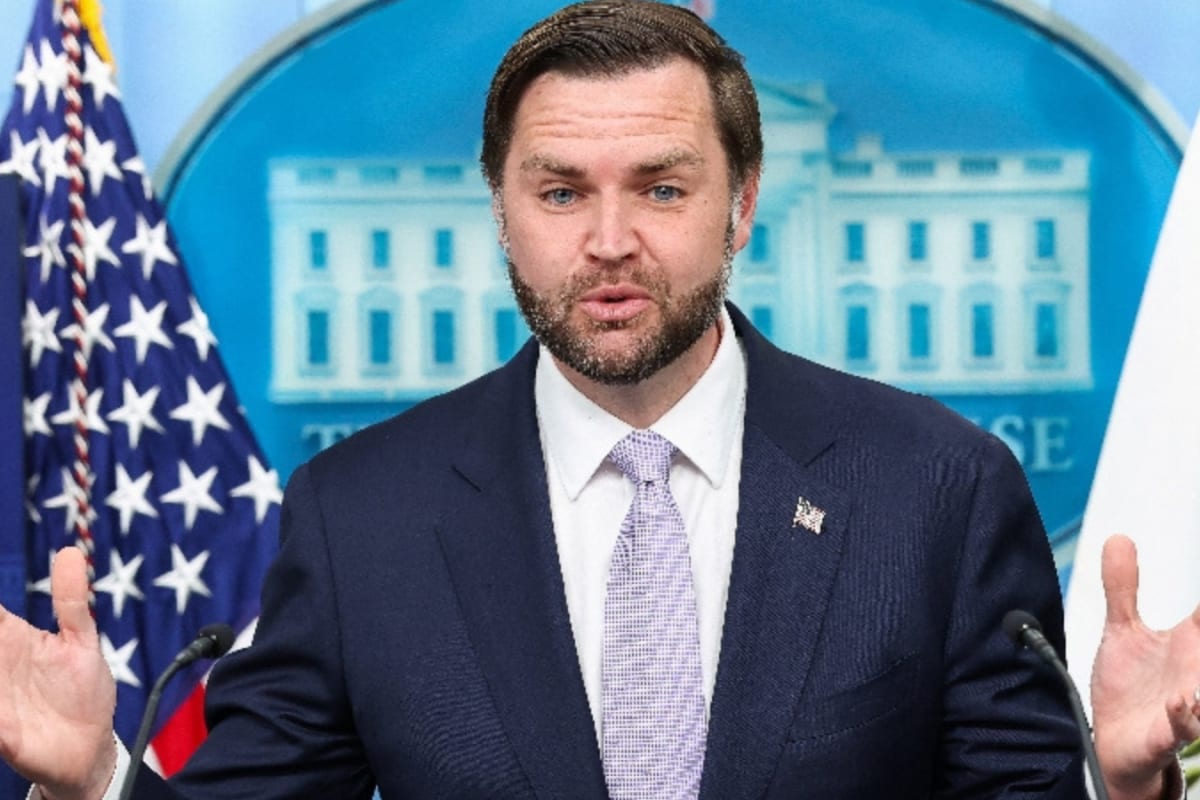
‘Pakistan Doesn’t Have Press Freedom’: JD Vance On Why Iran Deal Details Were Kept Under Wraps Published By, Last Updated: June 20, 2026, 13:10 IST Vance made the remark while responding to questions about the timing of the deal's publication. Rapid Read United States Vice President JD Vance (Source: Reuters) US Vice President JD Vance joked about Pakistan’s press freedom while explaining why Washington had delayed releasing the terms of the Iran peace deal. “In the Pakistani and Qatari systems, they don’t quite have the First Amendment and freedom of the press," he said. Check LIVE Updates Here Vance remarked in response to questions over the timing of the agreement’s publication, drawing a light-hearted comparison as the United States worked on making the details public. The comments came amid ongoing efforts to finalise and disclose the terms of the accord. JD Vance:In the Pakistani and Qatari systems, they don’t quite have the First Amendment and freedom of the press.
Source: NYT pic.twitter.com/bp1ajruOir — Clash Report (@clashreport) June 20, 2026 US Envoy Heads To Switzerland For Talks Israel and Hezbollah reached a ceasefire agreement in Lebanon on Friday after the latest escalation in fighting threatened efforts to turn an interim arrangement to end the war in Iran into a broader and lasting peace deal in the Middle East. Meanwhile, US President Donald Trump’s special envoy, Steve Witkoff, is headed to Switzerland for the opening round of talks with Iran on a possible nuclear agreement, Axios reported on Friday, citing a US official. The move comes a day after Vance scrapped plans to participate in the talks, which had been postponed amid renewed hostilities in Lebanon. The flare-up has cast fresh doubt over negotiations seen as key to restoring global shipping through the Strait of Hormuz. The US-Iran Deal US President Donald Trump and Iranian President Masoud Pezeshkian on Wednesday signed a Memorandum of Understanding (MoU) aimed at ending the conflict in West Asia.
The agreement was signed by Trump after a dinner meeting with French President Emmanuel Macron at the Palace of Versailles near Paris following the G7 summit. As part of the 14-point US-Iran agreement, Tehran agreed to dilute its enriched uranium in exchange for broad economic relief. The MoU calls for an “immediate" halt to hostilities across West Asia, including Lebanon, and extends the ceasefire by 60 days. The agreement also covers the lifting of the US naval blockade, guarantees safe passage for commercial traffic through the Strait of Hormuz, provides sanctions relief to Iran and enables the release of frozen Iranian assets. It further commits Washington to facilitating a USD 300 billion reconstruction fund for Tehran. The conflict in West Asia erupted on February 28 after the US and Iran carried out coordinated strikes on Iran amid stalled negotiations over Tehran’s nuclear programme. In response, Iran launched attacks across the Gulf targeting facilities linked to Washington and later blocked the Strait of Hormuz, triggering turmoil in global economies.
 The BriefWire