Old and new challenges for the Human Rights Council as it turns 20
“Human rights were built for moments like this,” said Awa Dabo, the newly appointed Deputy High Commissioner for Human Rights, “when rights have come under
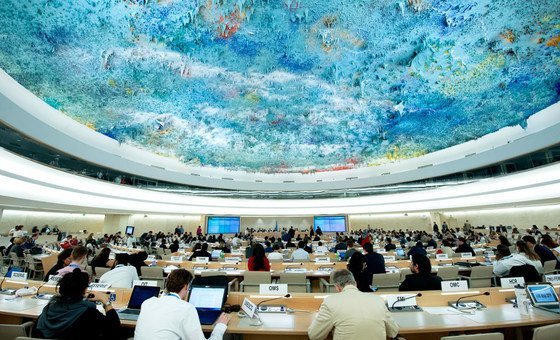
“Human rights were built for moments like this,” said Awa Dabo, the newly appointed Deputy High Commissioner for Human Rights, “when rights have come under pressure, when people need protection and principles must turn into action.” Created to replace the UN Commission on Human Rights, the 47 Member States of the new Council were urged to avoid “political point-scoring or petty manoeuvre” – the words of then Secretary-General Kofi Annan on 19 June 2006. Now, in its 62nd session in Geneva, the Council is busier than ever as it pushes for accountability in many new emergencies and unresolved crises. But, has it matched up to expectations? And has it adapted to a world where “human rights are under assault [and] violated flagrantly?”, as UN chief António Guterres underscored in a special event on Friday marking two decades of the Council. ‘It was not easy’ “Building the Council was not an easy task,” recalls Luis Alfonso de Alba Góngora, its first president. “Member States have very different views of what needed to be changed and what needed to be retained from the old Commission [on Human Rights]. It was not easy because the international context situation was not good either; there were countries that opposed the creation of the Human Rights Council and were not supporting the building of the new institution. There were conflicts in Gaza, as today, conflicts in Lebanon…It was not easy.” Every voice counts In common with other UN bodies, one of the Council’s aims at its creation was to include as wide a range of participants in its discussions, from governmental to non-governmental speakers and from independent investigators to civil society activists.
Tweet URL This level of participation “makes sure that Indigenous Peoples are represented” among others whose voices struggle to be heard, explained Volker Türk, High Commissioner for Human Rights. “I have been to many interactive panels that involve children and young people, but that involve also survivors and victims. That’s a model of participation that the UN needs to stand for and needs to even go further on.” Council-watchers will often hear the president, who’s appointed on a rotating basis from regional blocs for a year, reminding delegates gently and often that they should be respectful towards each other. The remark serves as a reminder of the lethal reprisals facing many human rights activists face today and of the key role the forum plays in raising their concerns. Special investigators Another key feature of the Council is its human rights investigators who are mandated to monitor situations of concern and report back to raise awareness and encourage action. There are around 50 Special Rapporteurs who are the “frontline for voices that are unheard”, maintained Farida Shaheed, Special Rapporteur on the right to education. “We also do speak when others fall silent, and sometimes people don’t like what we say. We’re bringing to the table things that are not always discussed.” Considered approach The Council has higher status than its predecessor as a subsidiary body of the UN General Assembly. It meets in three regular sessions a year and every time it does so, there are usually two dozen or more resolutions to consider on everything from advancing human rights in specific countries of concern such as South Sudan to freedom of religion or belief and the right to a clean, healthy and sustainable environment.
 The BriefWire