Quote of the day by Roman philosopher Seneca: "Anger, if not restrained, is frequently more hurtful to us than…"
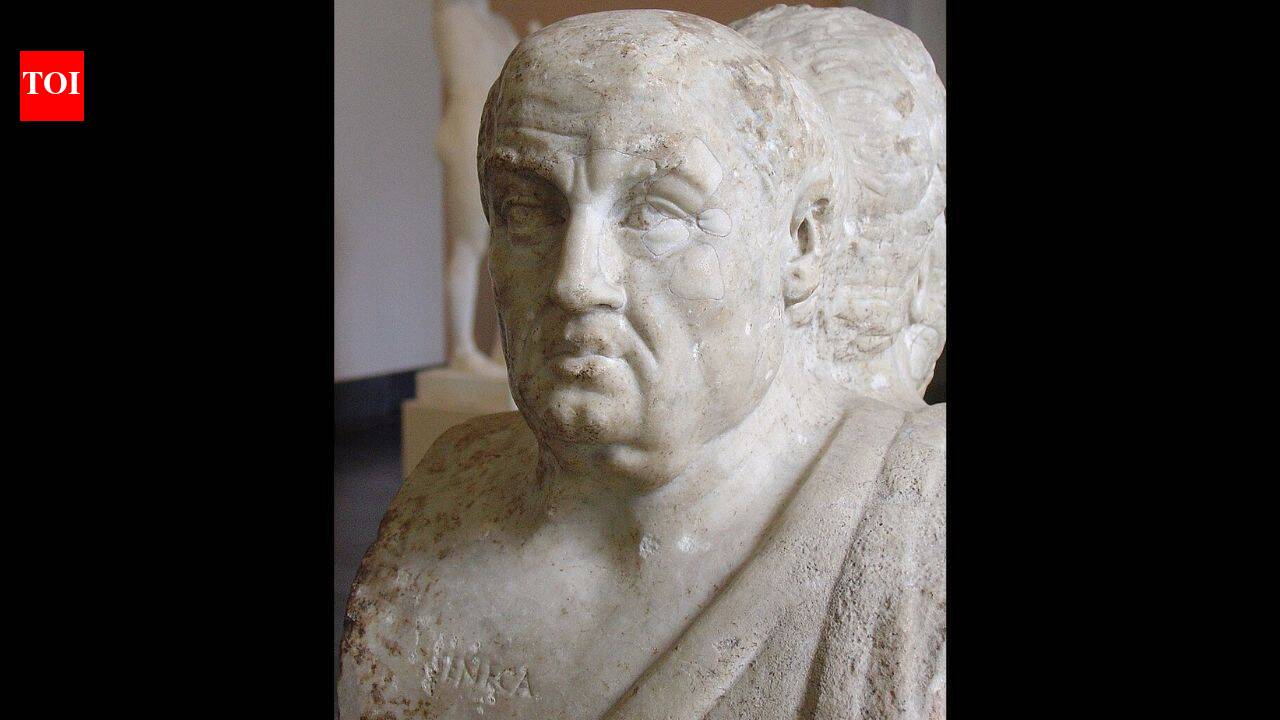
Seneca (Image: Wikipedia) Quote of the day by Seneca "Anger, if not restrained, is frequently more hurtful to us than the injury that provokes it."
Seneca (Image: Wikipedia) Quote of the day by Seneca "Anger, if not restrained, is frequently more hurtful to us than the injury that provokes it." Seneca: The man who literally wrote on anger What Seneca actually meant in this quote A philosopher who lived among monsters Why modern science backs him up How to keep anger from burning you Ask who the anger is actually hurting. The offence is usually brief, but the anger you nurse can wreck your whole day. The person who wronged you has often moved on. Notice that you are the one still burning, and a lot of the heat goes out of it. Let some time pass before you react. Seneca believed time reveals the truth, and that much of what enrages us turns out to be smaller than it first looked. A short delay tends to shrink anger down to its real, often modest, size. Call small things small. Many of the things that set us off are mere annoyances, not real harm. Refuse to turn a minor irritation into a ruined mood. Naming it as the trivial thing it usually is robs it of its power. Aim for calm strength, not cold bottling. Seneca was not telling anyone to swallow rage and seethe in silence. He wanted reason back in charge of the situation. Deal with the real problem clearly, once the heat has drained away. Why Seneca believed anger hurts the angry most Seneca spent years standing close to one of the most dangerous men in history. As tutor and advisor to the Roman emperor Nero, he watched up close what happens when a powerful person lets anger off its leash. Executions on a whim. Friends turned to enemies overnight. A whole court walking on eggshells. He saw, again and again, that the angry man often did more damage to himself than anyone had ever done to him.
So when Seneca wrote that unchecked anger usually hurts us more than the thing that set it off, he was not theorising from a quiet study. He was reporting from the front row.This is not a stray line someone later pinned on Seneca. He wrote an entire book about it, called On Anger, one of the most clear eyed things anyone in the ancient world ever said about the emotion.Seneca was a Stoic, part of a school of Roman and Greek thinkers who believed that reason, not raw feeling, should steer a life. To the Stoics, anger was not a bit of harmless steam. It was closer to a temporary madness, a state in which a normally sensible person says and does things they would never choose with a clear head. In On Anger, Seneca pulls the emotion apart piece by piece, asking where it comes from, what it costs, and how a person might get it back under control.This quote is the heart of that whole project, boiled down to a sentence.His verdict was blunt. My anger, he once wrote, is more likely to harm me than your wrong ever could.The idea flips the way we normally think about being wronged. When someone hurts or insults us, we focus all our attention on them and on the offence. Seneca asks us to turn around and look at what the anger itself is doing to us.His point is about damage and time. The original injury is often small and quickly over. A rude comment lasts a second. A bit of bad traffic, a snub, a careless word. But the anger we wrap around it can last for hours, days, sometimes years. We replay it, stew on it, lose sleep over it, let it sour our mood and poison our other relationships. Meanwhile, the person who wronged us has usually forgotten the whole thing and moved on with their day.
 The BriefWire