Lebanon: Is US-Iran peace deal a 'victory' for Hezbollah?
Lebanon's Hezbollah group has claimed that the US-Iran peace deal is a "great victory." The group, which is opposed to Israel, has certainly been bolstered
Lebanon's Hezbollah group has claimed that the US-Iran peace deal is a "great victory." The group, which is opposed to Israel, has certainly been bolstered by the deal. But what have they really won? "A great victory" and a "pivotal point for Lebanon" — that was how Naim Kassem, the leader of Lebanese group Hezbollah, described on Wednesday the memorandum of understanding that stopped fighting between Iran and the US this week. Kassem also thanked the Iranians for "linking the Lebanese arena" to the deal and "forcing Israel to stop its aggression." Hezbollah was founded in 1982 with support from Iran, and one of its primary aims then was to end Israeli occupation of southern Lebanon. It has both a military and political wing and the support of much of Lebanon's Shiite Muslim community. Today it plays a major part in Lebanese society and politics, has often been described as a "state within a state," and remains opposed to Israel. Since Kassem's comments, fighting has continued in southern Lebanon, with Hezbollah targeting Israeli soldiers and Israel continuing to destroy southern villages and use bombs and drones. Sixty days of talks between the US and Iran, during which details would be hammered out, were due to start in Switzerland on Friday but were postponed in the morning because of Iran's opposition to the fighting in Lebanon. Yet, despite it's troubled start, analysts say that the deal on the table favors Hezbollah's allies in Tehran. How 'great' a victory for Hezbollah? "This memorandum of understanding virtually gives Iran everything it wanted and Trump everything he had [before attacking Iran, together with Israel, in February]," says James M. Dorsey, an expert on the region at Singapore's Rajaratnam School of International Studies. "And certainly, at least initially, it looks like a victory for Hezbollah." But whether it really is, remains to be seen, Dorsey told DW.
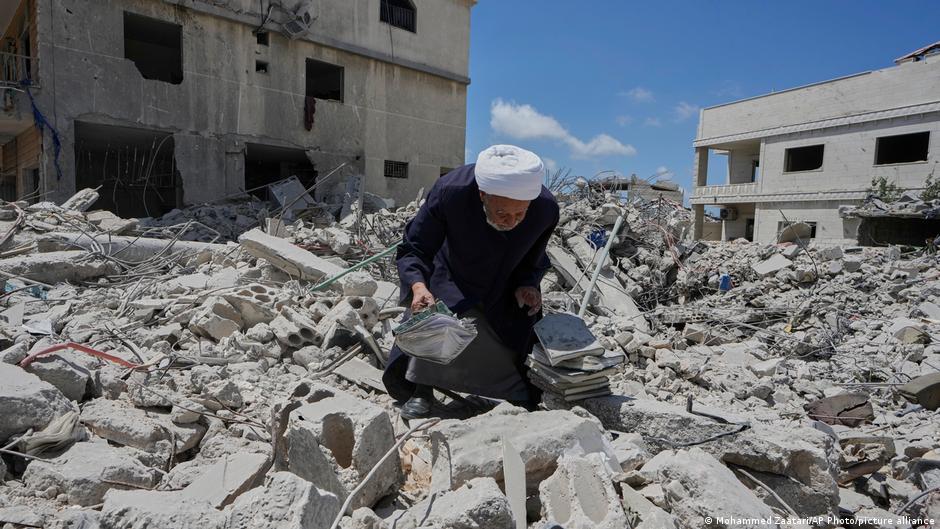
The first paragraph of the memorandum states that the US, Iran and allies will declare an "immediate and permanent" termination of military operations on "all fronts," including Lebanon. The deal, signed by the US, Iran and mediator Pakistan on Wednesday, also says that both will ensure "the territorial integrity and sovereignty" of Lebanon. Israel currently occupies around 600 square kilometers in southern Lebanon and calls this a necessary "security buffer zone" needed to protect citizens in northern Israel from Hezbollah rockets. Critics of Israel say it is an invasion and occupation. "The Iranians, for all practical purposes, said this means two things," Dorsey explained. "No more military action and an Israeli withdrawal from Lebanon. So the litmus test of the Iranian position is going to be whether or not Israel is forced to abide by those conditions, and whether Trump says to Israel, 'You have no choice.'" If Israel were to withdraw, this would be a gain for Hezbollah. Many of Lebanon's Shiite Muslim communities live in the south and more than one million have been displaced by Israeli troops, who have also demolished whole villages there. The United Nations Interim Force, or UNIFIL, actually established a buffer zone in Lebanon in 1978 after Israel invaded Lebanon but the buffer zone has been violated by Israel and Hezbollah Image: Hussein Malla/AP Photo/picture alliance More money for Hezbollah The US-Iran memorandum also mentions billions in reconstruction funding for Iran as well as unfreezing Iranian funds and allowing Iran to continue to sell oil. Diplomats in the region told the Reuters news agency that, once its funds were unfrozen, Iran had said it would send more money to Hezbollah. "If Iran's oil revenue resumes with no restriction on where it goes, the external pressure that was supposed to make Hezbollah's funding harder to sustain eases," Lebanese commentator Karim Chebaklo, who's also a board member with the Beirut's port authority, wrote in an editorial this week.
 The BriefWire