Czech government causes alarm with plan to scrap license fee
The Czech government has approved a bill to put the funding of public service media under direct political control. Critics warn that if passed, the
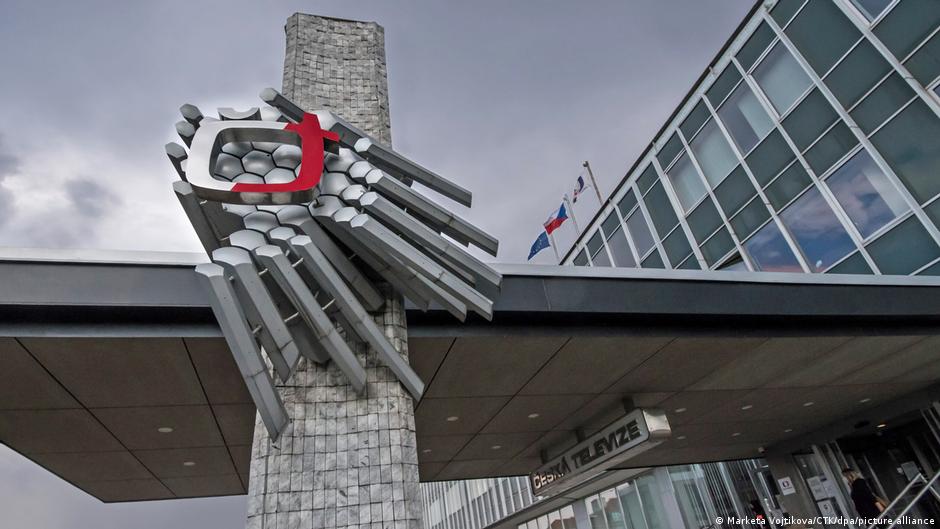
The Czech government has approved a bill to put the funding of public service media under direct political control. Critics warn that if passed, the bill would put a pillar of Czech democracy at risk. In their campaign ahead of last autumn's election, the populist and far-right parties that now make up Czechia's coalition government promised a revamp of Czech Television (CT) and Czech Radio (CRo). On June 15, the cabinet kept this promise by giving the nod to a corresponding bill. If approved by both houses of parliament and signed by the president, the legislation will from next year scrap the current license fee, which costs households and businesses the equivalent of €8.50 ($9.75) a month, and move funding of the two outlets to the state budget. Prime Minister Andrej Babis, a populist centrist billionaire, insists that the new model will be fairer, eliminating a "flat tax" that demands poorer households — not coincidentally the core of his electorate — pay the same as any other. He also said it will push CT and CRo to improve efficiency. "The public broadcasters are not making any cost savings and nobody controls them," he told a press conference. Czech journalists warn of dangers of public media reform To view this video please enable JavaScript, and consider upgrading to a web browser that supports HTML5 video 'Cultural vandalism' After 17 years of bickering, the license fee was finally raised by the previous government last year. Under the current government's plan, each outlet's annual budget would return to the level it had before the increase. That would cut CT's 2027 budget by about €41 million to €237 million, while CRo would have to make do with €16 million less at €85 million.
The directors of the two outlets warned that the "shocking" budget cuts would force mass layoffs and limit programming and broadcasting in the regions and for special interests. The cuts come despite CT and CRo enjoying the highest levels of public trust of any Czech outlets, as well as being the most trusted public service media organizations in Central and Eastern Europe and among those with the biggest audience reach. "In this context," said Vaclav Stetka at the European New School of Digital Studies, "the dramatic budget cuts represent an act of cultural vandalism." The directors of CT and CRo have warned that the proposed budget cuts would force mass layoffs and limit programming. Pictured here: Rene Zavoral, director of Czech Radio Image: Michal Kamaryt/CTK Photo/IMAGO European trend Defending the plan, the government says it is merely joining the majority in the EU. Most EU states "have already dropped this outdated financing method," declared Otto Klempir, a former funk musician installed as culture minister by the radical right-wing Motorists for Themselves party. While it is true that many European countries — including, France, Spain and the Scandinavian states — have moved away from a license fee model, experts have suggested that the comparison is not as straightforward as the minister suggests. Researchers at Charles University in Prague wrote that "a shift to funding from the state budget would not necessarily eliminate unfairness in terms of payment levels [...], as these depend on the structure of the tax system." Stetka said that the political culture in post-communist states is another factor. "In this region," he told DW, "the political elite has never accepted the independence of public media." No safeguards The Charles University researchers suggested that the direct funding model can "function relatively effectively" in countries with a high level of political consensus, stable political culture and high respect for the independence of public service media.
 The BriefWire