The chokepoint doctrine: How the Iran war exposed the rise of middle powers
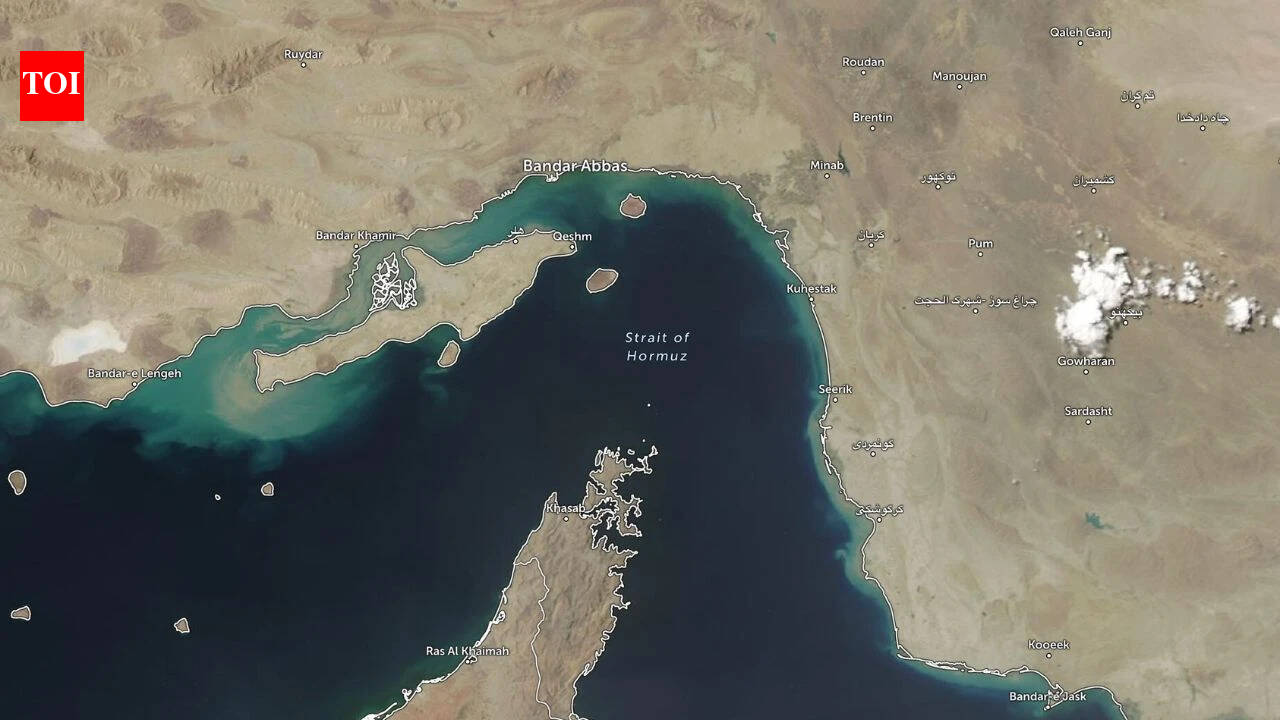
Real time satellite image of Strait of Hormuz (Dated: 19th June 2026) What is a middle power? Map depicting middle and transitioning middle powers. Previous
Real time satellite image of Strait of Hormuz (Dated: 19th June 2026) What is a middle power? Map depicting middle and transitioning middle powers. Previous greater powers are marked in a darker shade. Source of data: Wikimedia Commons Iran: The chokepoint playbook Global map showing where Iran's frozen assets are kept across the globe. Two winners, one fault line Consequences in Asia The middle power moment — or delusion? A trend bigger than one war Lowy Institute Asia Power Index 2025 edition What it means Sixty days. That is how long the United States and Iran have given themselves to negotiate a final deal, a window that will determine how the current world order will function.So how did Iran, a country so embroiled in its own internal chaos, bring the most powerful nation on earth to the table, and force it to negotiate on Iranian terms?The answer is not ideology, not a nuclear deterrent, not even military strength. It is geography.Iran fought the world's most powerful military to a stalemate, not with nuclear weapons or a conventional army that could match American firepower, but with control over a chokepoint the world cannot do without.That is the first lesson for anyone trying to understand the new global order. Middle powers do not rise through military supremacy or ideological appeal. They rise through leverage, and leverage, in 2026, means control over something the world cannot bypass.The Institute for Economics and Peace, in its January 2026 report The Great Fragmentation, counts 16 middle power nations globally, nearly double the nine that existed at the end of the Cold War (to be noted, IEP does not consider transitional powers in this list). They define middle powers as states with meaningful regional influence and specialised global capabilities in specific areas. These are countries that exercise influence through multilateral institutions, alliances, and niche specialisations rather than direct power projection.That definition is useful but incomplete. TOI spoke with Saptarshi Ghosh, a senior political risk analyst based in London, who said: "The first issue is defining what a middle power is. What leverage do they have? Middle power has to have economic heft. Nuclear weapons don't give much leverage beyond a point — North Korea, Pakistan."The corrective Ghosh offers is simpler than the academic literature suggests. Middle powers rise when they control something structurally irreplaceable — a resource, a corridor, a chokepoint — and are willing to use that control as a negotiating instrument.Iran has Hormuz. Kazakhstan has uranium, 40 per cent of the world's supply, sitting at the crossroads of China and Europe along routes whose value just rose sharply because Hormuz turned unreliable. The UAE has diversified so aggressively that oil is now just 25 per cent of its GDP, the rest split across logistics, finance, tourism and technology.The Middle East conflict has stress-tested exactly how much a middle power can push back and stand for itself.Iran entered the war in a condition of severe economic distress. Its frozen assets abroad exceeded $100 billion, roughly a quarter of its annual GDP, scattered across China ($20 billion), India ($7 billion), Qatar and Iraq ($6 billion each), the US ($2 billion), the EU ($1.6 billion) and Japan ($1.5 billion).Its currency had been in freefall for years. Its infrastructure was ageing, and anti-government protests had become frequent enough that they later became the pretext for the strikes that began on February 28.But despite all the shortfalls, Iran managed to prolong its conflict with America to a degree that few would have bet on.The reason is simple.
 The BriefWire