Guinea-Bissau: Opposition leader house arrest raises stakes
Opposition leader Domingos Simoes Pereira remains under house arrest months after the Guinea-Bissau coup, deepening a political crisis and raising tensions with international partners. Nearly
Opposition leader Domingos Simoes Pereira remains under house arrest months after the Guinea-Bissau coup, deepening a political crisis and raising tensions with international partners. Nearly seven months after last year's military coup in Guinea-Bissau, the continued house arrest of opposition figure Domingos Simoes Pereira, leader of the African Party for the Independence of Guinea and Cape Verde (PAIGC), has developed into an international issue. A Guinea‑Bissau military court earlier this month ordered Pereira to remain under house arrest after fresh questioning over allegations he plotted a coup against the military government, AFP reported, citing his lawyer. While Portugal and other Portuguese-speaking states are calling for his release, the military leadership in the West African nation's capital, Bissau, dismisses the criticism as interference in national sovereignty. What led to Pereira's arrest? On November 26, 2025, three days after the presidential election, Guinea-Bissau was waiting for the official announcement of the results by the Electoral Commission, as most of the votes had already been counted. At 12:40 p.m. local time, gunfire and panicked screams erupted around the presidential palace and the Electoral Commission building. Two hours later, a statement aired on state broadcaster TGB announcing an army takeover. A group of army officers said they had seized power and deposed President Umaro Sissoco Embalo Image: Patrick Meinhardt/AFP The electoral commission said on December 2 it could not complete the election process after armed men seized ballots and vote tallies from its offices and destroyed servers storing the results, reported Reuters. A Transitional Council took over governance and, under international pressure, announced new presidential and legislative elections for December 6, 2026.
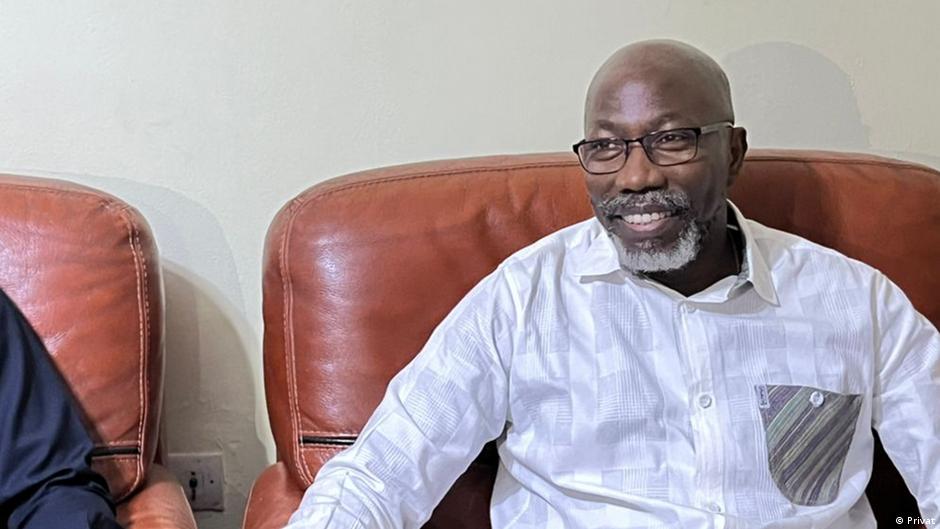
Among the first people arrested was Domingos Simoes Pereira, leader of the African Party for the Independence of Guinea and Cape Verde (PAIGC), and one of the country's most prominent politicians. "This regime knows that it lacks legitimacy; it was not elected by the people," Pereira said shortly before his arrest. "Its power rests solely on force. We refuse to accept that," he told DW. "We demand that the political process in our country proceed in accordance with the constitution." Pereira was released into house arrest in January after being accused of involvement in at least two attempted coups, in 2023 and October 2025. Lawyer: no legal basis for detention Pereira's lawyer, Roberto Indeque, said that his client has not been formally provided with any legal justification for his detention. "Domingos Simoes Pereira has been questioned twice before a military court since his arrest, and those hearings made it clear that he had absolutely no involvement in preparing a coup," Indeque said. He added that prosecutors had not submitted any request for pre-trial detention. "Yet he remains detained, even if it is in his own home," he said. "Detention is detention; legally, there is no difference." Opposition sees political calculus The PAIGC considers its leader's detention part of a broader effort to weaken the Bissau-Guinean opposition. "They want to remove the opposition leader from the political arena so that, in the next elections, they can push through their own candidate with virtually no resistance," said PAIGC spokesperson Muniro Conte, who also questioned the legality of the measure. "House arrest is completely illegal," he said.
 The BriefWire