Entire Ram Mandir management needs to go: Nripendra Misraf lags deep flaws
Amid the controversy over alleged misappropriation of donations at the Ram Temple in Ayodhya, Ram Janmabhoomi Temple Construction Committee chairman Nripendra Misra, has called for
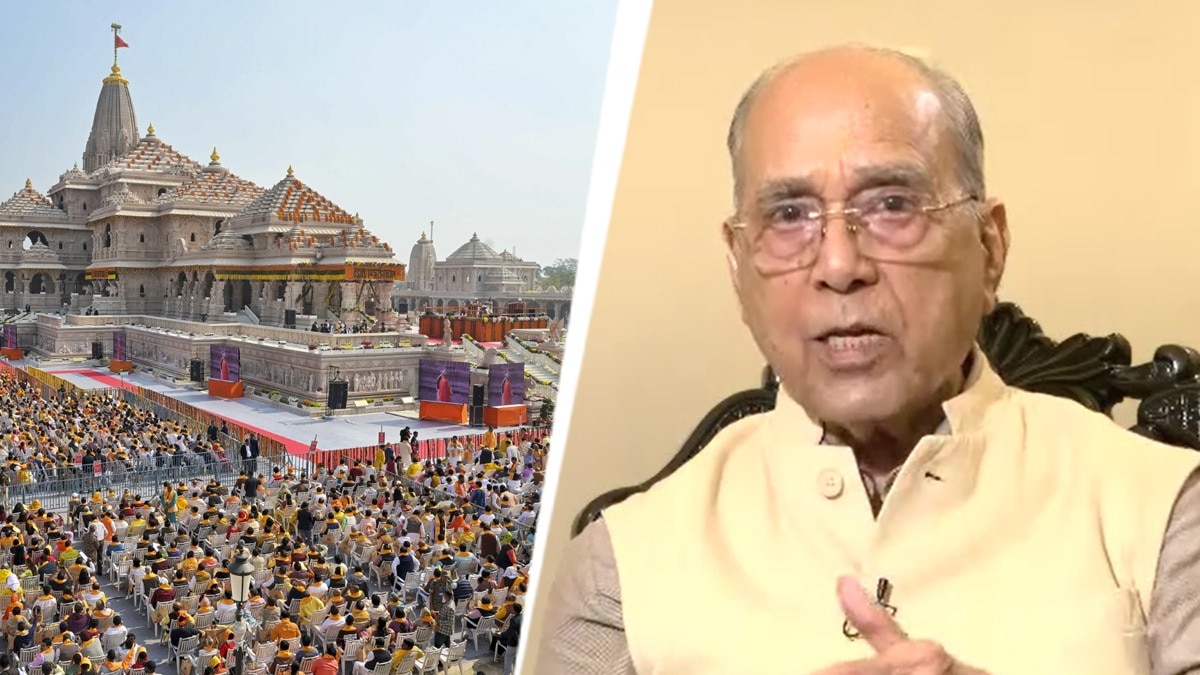
Amid the controversy over alleged misappropriation of donations at the Ram Temple in Ayodhya, Ram Janmabhoomi Temple Construction Committee chairman Nripendra Misra, has called for a complete overhaul of the shrine's management system, saying the episode has exposed serious lapses in supervision, accountability and compliance with established procedures. In an exclusive interview with India Today TV, Misra said the alleged irregularities were not only a challenge to devotees' faith but also a stark warning about weaknesses within the temple's administrative framework. Read Full Story "I have not formally submitted any proposal, but I have shared my views publicly. My firm opinion is that the entire management structure should be reorganised and entrusted to experienced professionals," Misra said. The controversy erupted after allegations surfaced of discrepancies in the accounting of temple donations, with claims ranging from around Rs 7 crore to much higher unverified amounts. The allegations triggered a political storm and led to the recovery of cash from the residence of a temple employee. Subsequently, the UP government constituted a three-member Special Investigation Team (SIT) to examine donation registers, vault records and CCTV footage. The Shri Ram Janmabhoomi Teerth Kshetra Trust has denied any wrongdoing, maintaining that its accounts are regularly audited and that no irregularities have been detected. Explaining the existing administrative arrangement, Misra said much of the temple's functioning is based on an informal volunteer-driven system rather than a clearly defined institutional framework. "At present, the management functions in a different manner. Most of the people working there are volunteers. They are informally told how to perform their duties, but there are no written orders, no fixed responsibilities and no proper distribution of work," he said. According to the officer, nearly 1,500 people are engaged in various activities within the temple complex, making a formal and accountable management structure essential. He argued that such a large institution, which receives massive footfall and donations from devotees across the country and abroad, requires clearly defined administrative protocols and accountability mechanisms.
'TRUST OF DEVOTEES HAS BEEN HURT' Referring to the donation theft controversy, Nripendra Misra, a retired IAS officer and former Principal Secretary to Prime Minister Narendra Modi, said the incident has raised serious questions about the systems that were meant to safeguard devotees' offerings. "This incident is certainly a challenge to the faith of devotees. At the same time, it is a question mark for all the different wings of the management system," he said. The remarks come amid growing scrutiny of the handling of donations and valuables offered at the Ram Temple, one of the country's most prominent religious sites. Misra revealed that he had examined documents and directives issued between 2023 and 2025 regarding the handling and counting of donations and found that detailed Standard Operating Procedures (SOPs) were already in place. "I have studied certain documents containing instructions issued between 2023 and 2025. There was a detailed SOP. Had it been followed, we would not be witnessing this situation today," he said. Highlighting the level of detail in the guidelines, Misra said the SOP even specified the clothing to be worn by personnel involved in counting donations. "It contained details such as what clothes a person entering the counting room should wear. Those clothes were to be provided by the State Bank of India. Every time a person entered or exited, checks were to be conducted. But from what I have informally learned, these documents were not implemented," he said. His comments suggest that the issue may not have stemmed from the absence of procedures but from the failure to enforce them effectively. SERIOUS GAPS IN HANDLING OF CASH AND VALUABLES Misra also pointed to deficiencies in the process of handling different categories of donations, including cash, coins and precious metals. Describing how devotees often offer valuables directly into donation boxes, he said the system relied heavily on trust and required robust oversight at every stage.
 The BriefWire