Japanese scientists convert food waste into biodegradable paper using a beloved noodle dish
In Japan, discarded udon noodles are finding a second life as paper The science behind Kagawa's udon paper Surprising durability of udon-based paper Challenges of
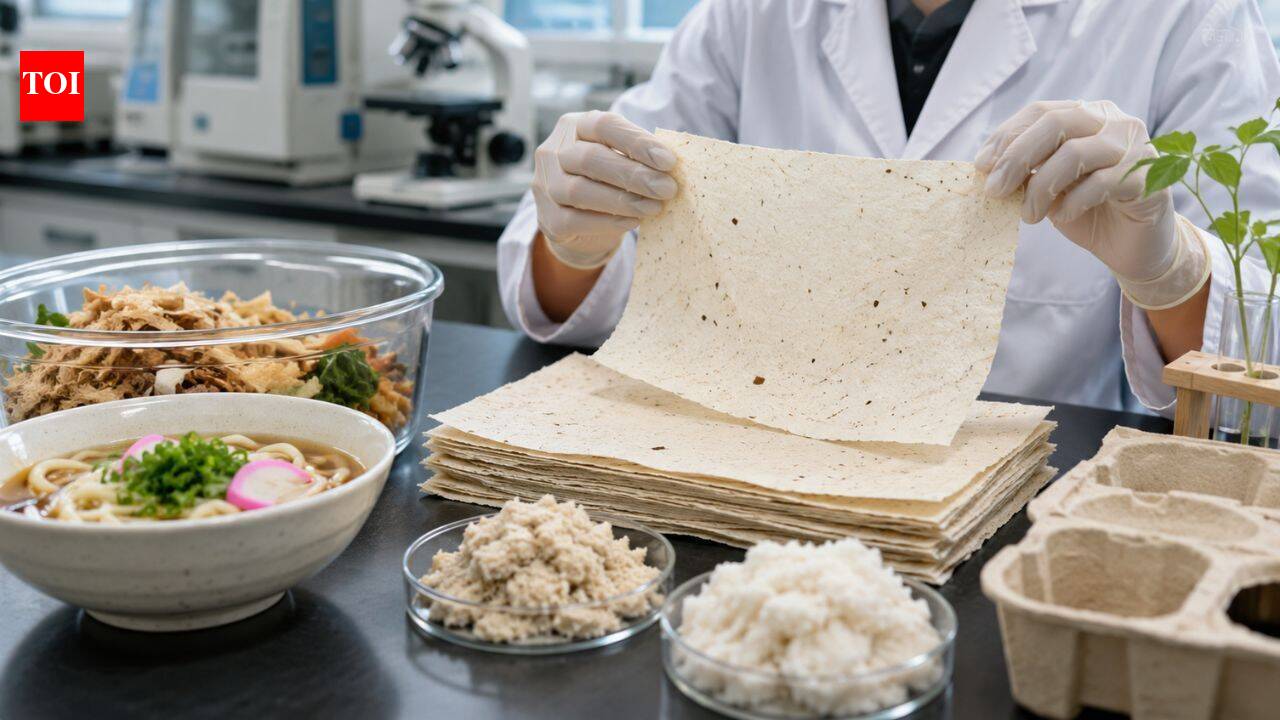
In Japan, discarded udon noodles are finding a second life as paper The science behind Kagawa's udon paper Surprising durability of udon-based paper Challenges of producing paper with living organisms How restaurants, researchers and workers share the process There is something quietly circular about the sight of yesterday's lunch becoming tomorrow's stationery. In Japan's Kagawa Prefecture, where bowls of thick Sanuki udon are part of the local identity, unwanted noodles are being given a second life that few would have predicted. Instead of heading for disposal, surplus udon is being turned into thin biodegradable sheets with a texture that recalls traditional handmade paper. The process sits somewhere between microbiology, environmental science and local craftsmanship. It is small in scale, almost understated, yet it speaks to a wider concern that many regions face: what to do with perfectly usable resources that lose their value long before they lose their potential.Kagawa is closely associated with udon. Restaurants specialising in wheat noodles are scattered across the prefecture and visitors often travel specifically to sample different varieties. Yet the popularity of the dish creates its own difficulties. Once boiled, noodles do not remain at their best for very long.
Portions prepared in advance and left sitting can lose their texture and flavour, leaving shops with stock that is difficult to sell.For years, a considerable amount of this food ended up being discarded. The waste was visible, repetitive, and difficult to ignore. It was this local reality that prompted Professor Naotaka Tanaka from Kagawa University's Faculty of Agriculture to think differently about what the noodles could become after their life as food had ended.The idea did not begin with paper at all. Tanaka had long been studying microorganisms and bacteria capable of producing cellulose, a natural material that forms the structural basis of plant cell walls and is used in many types of paper.At some point, the discarded noodles became part of that research. Their starch content offered a source of sugar once broken down, creating an environment where cellulose-producing bacteria could thrive. The concept sounded simple enough, though the result turned out to be unexpectedly elegant. The noodles are first mixed with water until they become a thick liquid. Enzymes are introduced to convert the starch into glucose, creating nutrients for the bacteria. Over several days, as the microorganisms grow, they gradually form a thin cellulose membrane that floats across the surface.That membrane is then carefully removed and left to dry naturally.
 The BriefWire