Hydration or ad breaks? Who are the real winners of FIFA World Cup's new rule
The FIFA World Cup 2026 has delivered everything football fans could have asked for. Stunning goals, tactical masterclasses, breakout stars and moments of pure drama
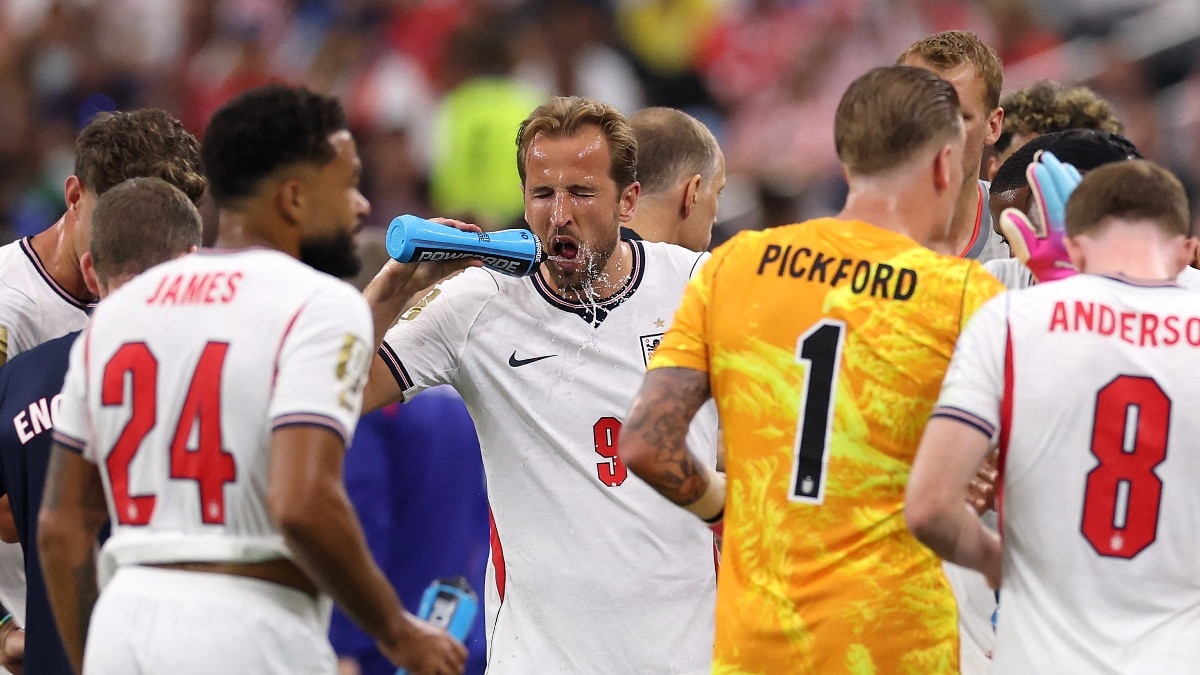
The FIFA World Cup 2026 has delivered everything football fans could have asked for. Stunning goals, tactical masterclasses, breakout stars and moments of pure drama have lit up the biggest stage in the sport. Now, let me get some water and come back. Annoying, right? Well, that's exactly the debate raging around the World Cup right now. Known as cooling or hydration breaks, the mandatory three-minute stoppage in each half has left fans, players, coaches and pundits sharply divided. Read Full Story FIFA introduced the rule for the tournament, under which match officials halt play around the 22nd minute of each half for hydration breaks. The stoppages are enforced in every fixture, regardless of weather conditions or temperature, with referees overseeing the timing to ensure consistency throughout the competition. The fans are angry with the hydration break. The fans boo the officials for calling for hydration break. pic.twitter.com/54vkmmabP7— OgaNlaMedia (@OgaNlaMedia) June 18, 2026 FIFA has also allowed broadcasters to make use of the breaks by inserting to maximise revenue, a first for football. As a result, viewers suddenly find themselves watching commercials in the middle of a World Cup match. In effect, football has begun to resemble a four-quarter sport rather than a game of two uninterrupted halves. But is it really necessary? That's the question many are asking. RUINING THE FOOTBALL EXPERIENCE? Football thrives on momentum. A comeback is rarely built in a single moment. It comes through sustained pressure, possession and players gradually finding their rhythm. A team chasing a goal often relies on maintaining intensity and forcing mistakes from opponents who are beginning to tire.
That is why many believe the essence of the game is being disrupted by these stoppages. Just when a contest begins to reach a crescendo and key players start finding their groove, the referee blows the whistle and everyone heads to the touchline. And it is not just supporters who feel that way. Players and coaches have openly questioned the need for hydration breaks in matches where conditions are far from extreme. "I think hydration breaks are a bit interesting because I was obviously watching almost all the games. Every time, going to commercial is not really something I like," Netherlands captain Virgil van Dijk told reporters. "I think for the neutral viewers on TV, it's also not great. So if it's really hot, obviously it will be good to have them. But I think you have to look at it on a game-by-game basis." USA coach Mauricio Pochettino echoed similar sentiments, saying the breaks only make sense when weather conditions genuinely demand them. "I don't like it. I only like it when the conditions are extreme," the USMNT boss said. "But when the conditions are good, it is unnecessary." The United States boasts several stadiums with retractable roofs and air-conditioning systems, allowing players to perform in comfortable conditions regardless of the weather outside. A CHANCE FOR COACHES TO RECALIBRATE? Brazil looked short of answers against Morocco before the hydration break arrived at the perfect time. The stoppage gave Carlo Ancelotti an opportunity to gather his players and pass on tactical instructions. Shortly after play resumed, Brazil found an equaliser through Vinicius Jr. and eventually salvaged a point.
 The BriefWire