Supreme Court Judge Calls For Human-Centric Approach To AI In Judiciary
Supreme Court Judge Calls For Human-Centric Approach To AI In Judiciary Reported By, Last Updated: May 19, 2026, 16:42 IST Justice Manmohan said these initiatives
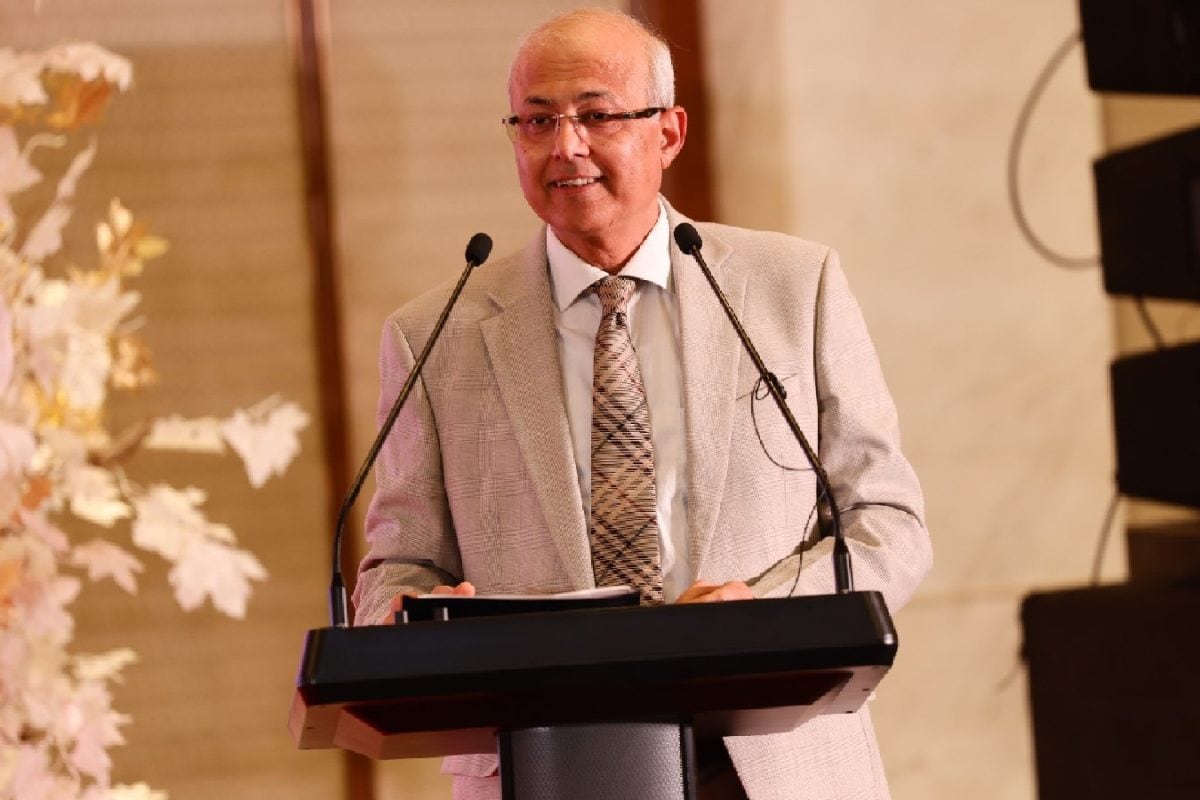
Supreme Court Judge Calls For Human-Centric Approach To AI In Judiciary Reported By, Last Updated: May 19, 2026, 16:42 IST Justice Manmohan said these initiatives form part of the broader E-Courts Phase III programme aimed at improving efficiency in the justice delivery system. Rapid Read Justice Manmohan, speaking at a memorial lecture in honour of former Union Law Minister and e Karnataka Governor Dr Hans Raj Bhardwaj. (IMAGE: SOURCED) A judge of the Supreme Court of India this week said Artificial Intelligence has the potential to improve access to justice and efficiency in courts, but warned that its use must be guided by clear principles, institutional oversight and accountability. Justice Manmohan, speaking at a memorial lecture in honour of former Union Law Minister and e Karnataka Governor Dr Hans Raj Bhardwaj, said AI must remain “assistive, not determinative", with judges retaining the final authority in decision-making. The Supreme Court judge said technology has long played a role in the administration of justice through fingerprint analysis, DNA evidence, electronic records and virtual hearings, but added that AI raises broader concerns related to fairness, accountability and judicial reasoning.
He identified three categories of AI increasingly relevant in judicial systems. Predictive AI uses historical data to forecast outcomes such as risks in bail or sentencing decisions. Generative AI can produce legal drafts, summaries and translations, while Agentic AI can independently plan and execute tasks with limited human supervision. “The question is no longer whether AI will be used, but whether its use will be structured by clear principles, institutional oversight, and enforceable accountability," Justice Manmohan said. Referring to India’s judicial system, the judge said the Supreme Court has already introduced several AI-based initiatives. These include SUVAS (Supreme Court Vidhik Anuvaad Software), an AI-powered translation tool that converts judicial orders and judgments into regional languages. He said the court has also introduced AI-based transcription systems for Constitution Bench matters and LegRAA, a generative AI tool trained on Indian case law to support legal research. AI tools are also being integrated into the electronic filing process to identify procedural defects at the submission stage.
Justice Manmohan said these initiatives form part of the broader E-Courts Phase III programme aimed at improving efficiency in the justice delivery system. Citing global examples, he referred to China’s AI-driven “Internet Courts", which reportedly resolve cases within minutes, but said such systems raise concerns over impersonality and the absence of human empathy. He also cited the COMPAS algorithm used in the United States to assess sentencing risks, saying the tool has faced criticism over opaque reasoning and racial bias. Justice Manmohan warned against AI “hallucinations", where systems generate false but convincing information, and referred to instances where lawyers submitted AI-generated legal precedents that did not exist. He also said algorithmic bias remains a major concern as AI systems trained on historical data can inherit prejudices related to caste, religion, gender or economic status. “Adjudication is not a mathematical computation, rather it is an art," he said. Rejecting calls for a complete ban on AI, Justice Manmohan advocated what he described as “digital seatbelts", referring to safeguards that protect society without stifling innovation.
He called for a regulatory framework for judicial AI, development of indigenous AI systems suited to Indian conditions, capacity-building within the judiciary, and inclusion of AI ethics and constitutional law in university curricula. News18 Newsletter Handpicked stories, in your inbox A newsletter with the best of our journalism submit First Published: May 19, 2026, 16:42 IST News india Supreme Court Judge Calls For Human-Centric Approach To AI In Judiciary Disclaimer: Comments reflect users’ views, not News18’s. Please keep discussions respectful and constructive. Abusive, defamatory, or illegal comments will be removed. News18 may disable any comment at its discretion. By posting, you agree to our Terms of Use and Privacy Policy Loading comments...
 The BriefWire